


There was a summer, not long ago, when millions of kids logged into the same game every evening, not necessarily to win — though winning happened, occasionally — but to be somewhere. To attend concerts by Ariana Grande or Travis Scott as active participants in events that existed nowhere else, that couldn’t be recorded because every attendee experienced something slightly different. To witness a rocket launch that tore the sky open, a literal tear in the fabric of the game world that every player saw simultaneously because they were all inside the same world. To watch a cube roll across the landscape leaving purple corruption in its wake, an object of no narrative significance that became significant precisely because it was inexplicable — players, deprived of explanation, created their own theories, rituals, pilgrimages, a whole mini-religion forming around an object the developers had placed almost as an afterthought. And finally, most dramatically, a black hole that swallowed the entire map and left players staring at darkness for forty-eight hours, during which millions of them stuck around. They waited. They posted memes. They formed communities around the fact of non-community.
Entertainment is something you consume. A place is something you inhabit. And the shift from consumption to inhabitation is the defining cultural transformation of the twenty-first century so far.
If you work in media planning, you already know the numbers. Gaming is larger than film and music combined. Fortnite alone has more monthly active users than most countries have citizens. But the numbers, as numbers always do, miss the point. The question isn’t how many people are playing. It’s what they are doing. And what they are increasingly doing, is living.
Culture has always formed wherever people repeatedly gather. The medieval marketplace was where news travelled, reputations formed, alliances were made, status was displayed, and the whole dense social fabric of a community was woven daily. The football terracing generated songs, rituals, fashion, a shared identity that outlasted the final whistle. The underground club produced more fashion, language, belonging, new ways of being together that spilled into the streets at closing time. The record shop did the same. Culture happened in places before it was packaged into products. The record, the film, the book — these were always the residue of a place, souvenirs of an experience that couldn’t be preserved in its original form.
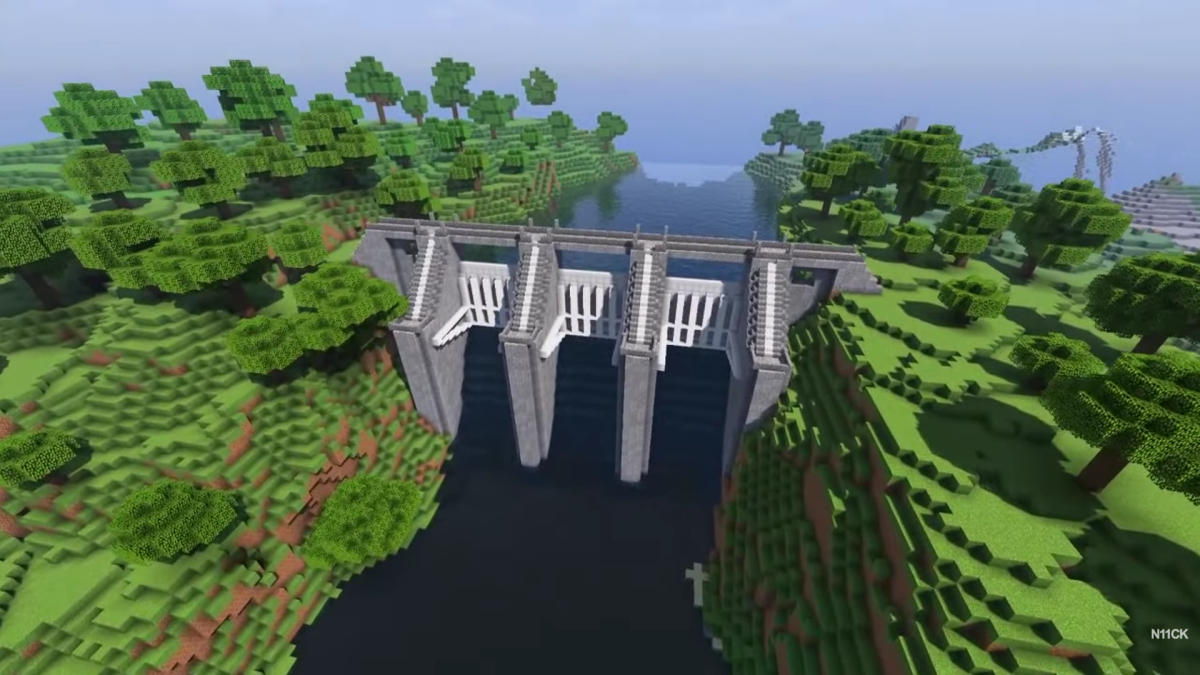
Today, millions of those encounters happen inside Discord servers, Roblox worlds, Minecraft realms and online games. The games industry didn’t set out to replace the village square, the football terraces or the nightclub. There is no conspiracy, no master plan. But for a generation growing up online — a generation that has watched the physical places of culture disappear, converted into flats, sanitised beyond recognition, or priced out of existence — games increasingly function as social infrastructure rather than just entertainment. They are where friendships are maintained, reputations are earned, groups form, rules are tested, identity is performed. It is a relocation of culture, from the physical to the digital, from the bounded to the persistent, from the temporary to the always-on.
This is why the metaverse failed, and why its failure should be instructive. Meta CEO Mark Zuckerberg understood that games were places, but he didn’t understand what made a place cultural. He thought presence was enough. He thought that if you built a room, people would fill it with meaning, which is like building a concert hall and assuming music will spontaneously generate from the acoustics. Meaning emerges from constraint, conflict, cooperation, the friction of human purposes meeting structured environments. The metaverse was a room without a game, and a room without a game is just a room. Compare that with Minecraft, which gives you infinite creation and exploration — a world that responds to your intention. Or Fortnite, which gives competition, live events and shared cultural moments that can only happen because the game is a place where everyone is present simultaneously, being a broadcast, each player both transmitter and receiver. Or Call of Duty, which gives identity, achievement and community – the kind of loyalty that no we-are-a-family corporation can touch. The metaverse had avatars and empty plazas. Games have rules, stakes, and something to do.
Ask someone what they remember about a game and they don’t describe a level or a plot point. They say: ‘remember when…’ Remember when we pulled off that impossible heist? Remember when everyone logged in for the live event? Remember when our group played every evening that summer? Those are cultural memories. They stick because they were experienced together. The ‘remember when’ is the killer hook because it contains, in its grammatical structure, the entire shift — the memory is of what happened in the place, something made by players together, in the space that the developers provided but didn’t control.
The games industry gets compared with Hollywood, which is understandable but wrong. Film directors tell stories but game designers build environments. An architect doesn’t decide what conversations happen inside a café. They create the conditions, for sure – the spaces, the routes, the rules, the incentives. People do the rest. Urban planner and sociologist Jane Jacobs understood this in 1961, long before anyone in games thought to apply it. The vitality of a street comes from the density of human purposes that the design makes possible. Game designers are urban planners, not film directors. Their achievement isn’t what they make. It’s what becomes possible inside it.
This makes games unusually good at producing belonging. You remember what you did, and what you did was part of what happened, which means your memory is a memory of creation — the creation of a moment that wouldn’t have existed without your participation. This is the difference between watching a concert film and being in the mosh pit. Games have found a way to make every player feel like they were in the mosh pit, because the mosh pit is a designed environment, and the design is good enough that the feeling is real. There is a persistent tendency — particularly among people who don’t play games (I don’t, but I observe), which includes most politicians, most journalists, and most people over fifty – to dismiss experiences inside games as unreal, virtual, somehow not counting. But the friendship formed under fire is real. The status earned through skill is real. The identity performed and recognised is real. What is virtual is the environment. What is real is the social relationship that the environment makes possible.
If you’re a media planner, a brand manager, or anyone who thinks about where attention actually lives, this matters a lot. And yet the advertising industry keeps making the same set of mistakes. The first is treating games as films with buttons – assuming their purpose is storytelling [sic] and interactivity is a delivery mechanism for narrative. Wrong. Yes, games can tell stories, but their meaning comes from what players do with each other, not what developers wrote. The story is the excuse for the gathering. No one returns to a game because they want to experience the plot again. They return because they want to be part of what happens next.
The second mistake is measuring through audience size alone. A large audience isn’t necessarily a culture. Culture appears through ritual, memory, participation and belonging. A reality show watched by ten million people may produce less genuine culture than a Minecraft server inhabited by five hundred, because the five hundred are doing things together while the ten million are only watching. A game world doesn’t happen identically if you’re away from it. Your presence changes it. That is the definition of a place rather than a product.
The third mistake is assuming developers control everything. Developers create conditions but the players create meaning. The most successful game worlds build systems robust enough to survive the unpredictable creativity of their inhabitants, provide tools without prescribing outcomes, set the stage and get out of the way. This is a design philosophy that separates games from every other medium, and it has profound implications for any brand thinking about ‘entering’ gaming. You don’t enter a game world the way you enter a media buy. You enter it the way you enter a neighbourhood — with patience, and with the understanding that the residents are doing something more important than consuming your message.
Once you understand that games are social infrastructure, success can no longer be measured in downloads, hours played, or even ad impressions. You are shaping communities, norms, memories, relationships, forms of identity that may last longer than the campaign. The rules of a game shape behaviour. The reward systems shape status. The architecture determines who meets whom. These are no longer product-design questions. They are cultural questions. They are political. And the games industry, having built the infrastructure, is now obliged to answer them.
We began the decade thinking of games as entertainment products — things to be consumed, reviewed, ranked, forgotten. We end it with something very different: environments where attention, identity and community now take shape. The dance hall closed. The record shop became a coffee chain. The football terrace was sanitised beyond recognition. And into the space left by all of these, a new kind of place emerged — not physical, not bounded, not permanent in the way buildings are permanent, but real in the only way culture requires. Real because people were there. Real because things happened. Real because, years later, someone will still say ‘remember when…’
This is a condensed excerpt from Eaon’s new book ‘This Is Pop’ that will be published in September 2026 by artsciencetechnology publishing.