


Carlotta Rossi Spencer is the head of branded entertainment business development at Banijay, and she has nothing whatsoever to say about her company’s bid to acquire rival production company All3Media.
Which is fine. I only asked because the story had been reported in the press a couple of days before I arrived at Banijay’s Shepherd’s Bush offices to interview Spencer, and I’m bad a small talk.
I really wanted to talk to Spencer about branded entertainment. I’d seen several media commentators predicting that in 2026 more brands would pivot to become content creators in their own right, and I was sceptical. Not of the effectiveness of good branded entertainment, but of brands’ commitment to producing it. Despite high-profile successes and numerous hype cycles, we still tend to reach for the same examples (Red Bull, mostly) when we talk about branded entertainment.
In this edited interview, Spencer talks about the costs and rewards involved in making branded entertainment, and why there’s more of it around than you may think.


So, how did you end up as the head of branded entertainment at a production company?
I always thought that branded entertainment was a sector we had to invest in, and Banijay is an entrepreneurial place to be. If you have a business that you want to explore, it is the right place to try and do it.
What keeps you interested in your job?
In branded entertainment, there’s always an evolution. There’s never a moment where this business is static. There’s never a moment when you’re like, ‘Oh, this business has to be done in a certain way.’
Have you amassed a good collection of celebrity anecdotes along the way?
I have, but I’m not gonna tell you about them…
On to branded entertainment, then. It’s more expensive than paid advertising and it offers no guarantees as to an audience. Why should a brand risk it?
I would love to disagree with this — and I’m going to.
There are ways of making it less expensive, especially on the production side.
You know better than me that a lot of times, big adverts cost a lot of money for 30–60 seconds. But [in branded entertainment] we’re talking about actual shows. So, they’re longer in terms of the time that you stay in front of a TV screen, and the platform is going to host that show for quite a long time. So, the long tail of something that you produce in the branded space is much longer.
And the investments are in line with the budgets. If I have a brief that says we have £5,000 for this production, we’re going to stay within that £5,000.
And the guarantee of viewership… this is true. It’s very hard to measure the impact of branded [entertainment] because it’s a mix of entertainment and commercial. So, you can’t apply the same parameters that you do with normal advertising. But because we are producers, we know what viewership is. We know what people will tend to watch, if it’s made in the correct way.
How big is branded entertainment as a channel of advertising?
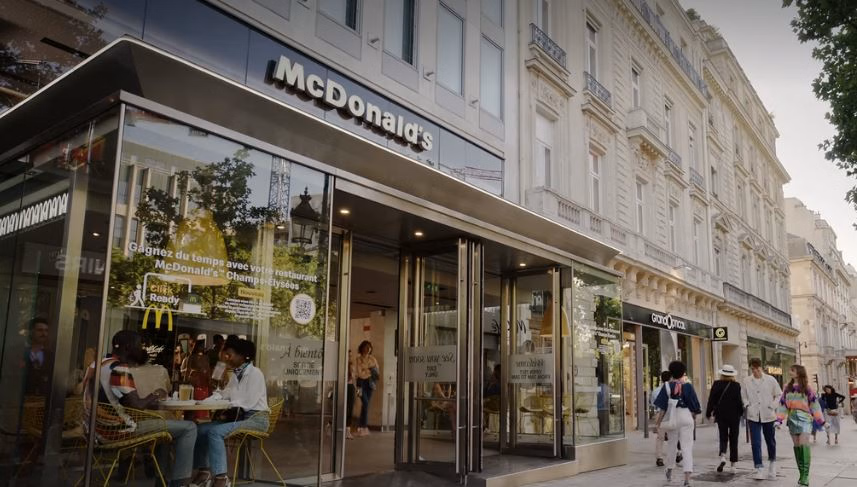
The expected numbers are around $400 billion a year spent in branded entertainment. The definition in this case is a bit wider, so it could be that you have a massive integration in terms of product placement, like Emily in Paris with McDonald’s. That’s a massive integration.
But it’s also considered branded entertainment what we do, which are shows where you don’t really see the brands. Dare to Defy, for example, is something we’ve done with Nissan on [Amazon] Prime, and you don’t really see Nissan. That’s pure branded entertainment.
Those numbers include more things than just pure 100% branded entertainment, but it is a big number and it’s grown from 2020 at a massive rate.
Is there, in your experience, a particular kind of brand or a particular marketing objective to which branded entertainment is suited?
The kind of brand is the kind of brand that understands that entertainment should be part of their marketing mix. So it could be anyone, from a car manufacturer to a high-end fashion brand or even an institution.
We work with a lot of different brands. We’ve done Maître Chocolatier with Lindt, we work with Nissan, we work with the tourism boards, we’ve worked with electricity providers, E.On.
It’s a mindset, and that really makes a difference. You have to learn and understand that entertainment is a different animal to advertising.
I’ve seen at least two cycles of excitement over branded content, but on neither occasion has this excitement seemed to result in a sustained take-up by brands. Do you agree with that analysis, and if so, why do you think that is?
It’s more than two cycles. If we look back, the first branded entertainment pieces were actually black and white. Soap operas are called that because of the fact that they had soap [sponsors].
Then there have been pieces of branded over time that have been successful, as you say. Intel did one of the best movies of the last 10 years and Santander did a great piece.
So if you look at these pieces, they are up there. It’s like Barbie [the movie], right? I always say that’s the maximum level of what you can do with a single brand.
But then under that there have been a lot of successes, and we’re continuing to produce branded content, otherwise we wouldn’t be in this business. The sustaining of this business is because people are still investing in it, so you can say I haven’t seen things, but it doesn’t mean that brands are not investing money.
Fair enough. It was a subjective analysis of the industry. It’s just, I see people in the industry getting very excited about brands becoming entertainers and content creators in their own right, but they almost always revert to advertising.
There’s a lot of things that we all see that are branded and you don’t realise it. That’s the secret to this. You are watching a piece of entertainment and then maybe you find out that there was a brand [behind it] because that brand is communicating on their own channels.
I think what has evolved is that now we’ve finally gotten rid of that snobbery about, ‘Oh, there’s a brand, so I’m not going to watch it because it’s like a big advert.’
No. People like us have made it much better in terms of the content that you’re watching because we’re making a show, otherwise that show would not be on air. It’s very delicate to make a good piece of branded.
Do you think that an audience fundamentally reacts differently to a piece of content when they know a brand is behind it? Can a piece of branded content push the same boundaries, address the same controversial topics, that a film or a TV show can?
The only way that you reject something like that is if the brand is too much in your face.
To my point earlier, the brand has to be happy, but what drives us and the people that make good branded is that we’re making a piece of entertainment. The worst thing that you can do is overusing the brand. There was a lot of talk about the second season of the Netflix show, Nobody Wants This, because there was a moment where there were too many brands.
People watching the show were going online saying, ‘I’m flooded with products’. When you start recognising it, then you’re done.
We did The Secret Life of 5 Year Olds: The Next Generation [a social-first version of the original show, which was also produced by Banijay, for Channel 4 digital]. When you watch the show, you never have the impression that it’s a branded show. It’s the original show cut down to five minutes, with the same kind of attitude from the kids, the same kind of strong personalities. And so that’s a secret — E.On was behind that.
Why did E.On think Secret Life was the best way to promote its brand?
Because they wanted to educate and make people understand how we use our energy, and the kids were just asked normal questions. How much time does it take to brush your teeth?
It was a bit of education in a fun way and it did very, very well for them.
Has the focus on short-term results among brands and the focus on measurement among marketers made it harder to sell branded content?
I don’t know if it makes it harder. There is not one way to measure it from the brand side. We have our ways of measuring viewership, and that’s not going to change. The point is how that content affects the product in the end, and those measurements are with the brand, not with us.
The point is an advert will sell you a product, branded does not sell you a product. It doesn’t even sell you — it gives you the sense of what the brand stands for and why you should use that brand.
Why are you choosing E.On over other [energy providers]? Because I understand what they’re trying to do, right? I understand that I can save. I understand how they treat their end product and their customers.
So, the time it takes to see the result is slightly more extended, that’s for sure, because shows are on air for a longer time, and the impact that those shows have on the brand might take longer, but everybody knows that.
If you think as a CMO you’re going to get short-term results from this, that’s wrong.
We did two seasons of Changing Rooms with Dulux and they sold 5 million more buckets of paint thanks to that show, but that’s over time.
It also really depends on what the brands are looking for. Entertainment can elevate the perception of the brand solely or it can help you sell more.
Nissan [meaning the Dare To Defy show referenced above] was more about their positioning in terms of how close they are to certain social issues. They didn’t have to sell the car through a show.
Have you ever tried to quantify what you think the ideal share of marketing budgets should be allocated to branded content?
This goes back to your original point about saying it’s very expensive, because it’s not that expensive. They’re not like in the millions range, they’re mostly under that. But if I were a CMO, I would put at least 20% in branded, and with the rest, do whatever you need to do. But that 20% is going to give you so much more in the long run.
Do branded content formats largely track trends in pure-play entertainment? When reality TV or game shows are more popular, will you see more branded reality TV and game shows?
Yeah, it goes with the flow. I think the hardest bit is the game shows because they’re so formatted. What are you going to do with brands?
Factual entertainment is a very good place, and documentaries are phenomenal.
Microdramas are something that of course everybody’s talking about, and I think is actually a good solution for brands because you can produce them in a shorter time. That is something we are looking at, of course.
Have there been any other new channels, technologies or formats that you think present new opportunities for branded content?
The biggest opportunity now, and it’s very interesting, is having different platforms that you can work with. We don’t have to go to a normal broadcaster. We can go to a streamer or an online platform. We can also produce for social platforms, which is quite interesting. We have an extension of Big Brother in Germany with very big influencers on their Twitch channel. Who would have said four years ago that we would have been doing this?
What does the future hold for Banijay and for branded entertainment in general?
For us it is about looking more and more to new platforms. It is about working with new talent that probably, you know, comes out of big YouTube successes. Creators are very important to us. Brands are going directly to creators, of course, but can the creators make that piece of content that will make that brand successful? Not always.
Before you go, what do you think is the most effective piece of branded content ever made?
For me it’s the kind where you really don’t know where the brand is, [and] it’s about the social issues.
We have a small documentary, which is not that small because it went to like 32 territories on Amazon, but it’s about mental talent related to physical health [Mind Games – The Experiment]
Basically, it’s an experiment where you have, like, a chess champion, and the experiment is what happens if we have these people work on their body. You want to watch it because you want to see if that physical exercise will boost the mental capacity of the people that you have in the documentary. It was paid for by a brand [Asics] but you don’t even see the brand.
So it’s a very good way of telling people they should move without saying, ‘Oh, you should go out for a run and use your shoes.’
Main image: Emily In Paris, Netflix