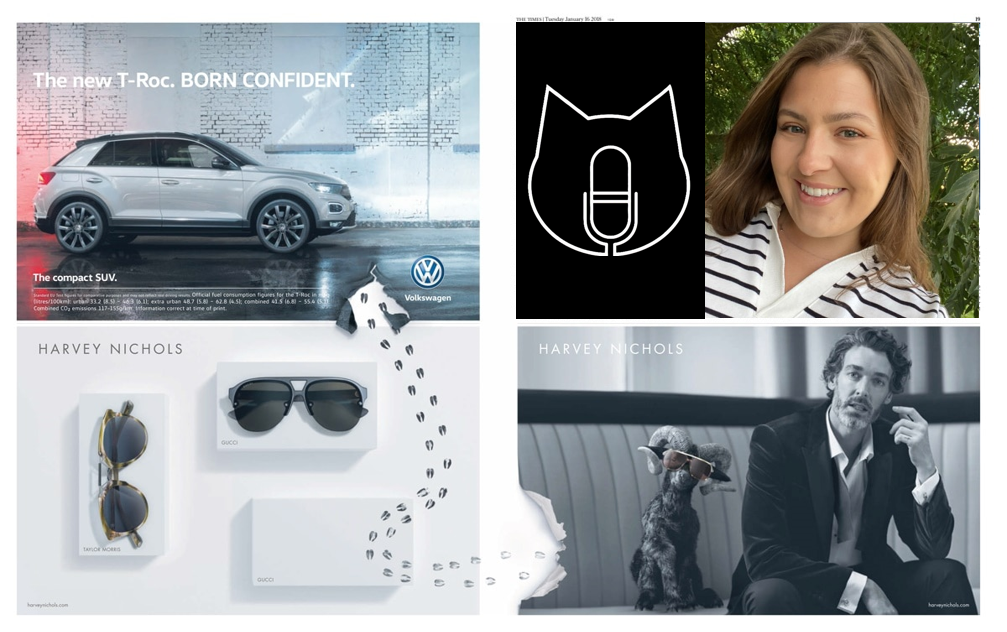
Media Futures Market — an unusual agency which acts as a floating media department for creative shops and brands — last month hired Nula Keeling as its first director of planning.
Keeling, who was previously at VCCP Media and has worked at Initiative and PHD, is charged with creating a media-planning framework for Media Futures Market and defining best practices.
So, who better to ask about the state of media planning, and what it’s been like to rise through the ranks of the discipline in the age of platform dominance?
In this interview, Keeling talks about the importance of keeping your autonomy in the age of AI, the benefits of working in the basement of PHD, and meeting Charli XCX.
What keeps you interested in media and marketing?
I still do this because the landscape is always changing, and it’s always changing based on how the culture is dictating what we need media to do.
The capabilities of media and placements are always going to need to change and service that culture. And that’s why it’s so important that we’re always thinking about culture before we’re thinking about media channels, deployment or activation because, fundamentally, that’s who we’re serving — we’re serving the cultural context, the context of the individuals we need to experience or play with our brands and products and services.
So what keeps me in media is the fact that we can do anything we want and we can make it happen. And I strongly believe that, based on the diversity of my career thus far, having gone from executing social media campaigns on Meta to organising Charli XCX’s album launch listening party, we can make anything happen. We can make media formats happen, we can create and we can continue to reinvent.
Did you get to meet Charli XCX?
I did. She was fantastic. She also wrapped up a £500 bar tab that was getting kicked around after the gig.
You started in the industry when it was, perhaps, most in thrall to the big platforms. Do you feel that limited your experience?
Fortunately, no. It was expected of me from day dot to not lose that innate curiosity and to always think creatively and tactically around activation. I worked on Sainsbury’s and Argos at the time [at PHD], and the way I was trained was to think about consumer rhythms and think human-first.
So, we would still diversify our spend into content-seeding partners, and really delve into engaged communities and understand what the benefit of that was over the ‘relative efficiencies’ that you’d see from Meta.
There was already a level of cynicism, even at that time, about whacking everything into Meta or YouTube. The Sainsbury’s team was in the basement of PHD at the time. Maybe that had something to do with it.
How has media changed over the course of your career and how has it affected the way you plan?
I think the biggest change has been the homogenisation of data, and that the behemoths have just got bigger and bigger.
And the biggest change in my experience over the last three agencies I’ve worked for has been, how do you retain autonomy as a planner?
Obviously that spills nicely into the whole AI conversation — utilising AI to supercharge your work while still enabling yourself to mine greater insights, and still having that lens of who you are speaking to, and that opportunity to think about culture and context.
How do you think the role of the media planner will evolve?
I don’t think we’re going to go back to the 1950s where media and creative are together in one place, but my hunch is that there’s going to be a resurgence of that integrated proposition. The fact that I’m here at Media Futures Market is testament to my belief that the future of our industry is going to be more about trusted partnerships with integrated propositions.
How do you think media consumption might change in the future?
I think it’s going to get more and more diverse. The consumer is more autonomous than ever. Like I said earlier, whatever the cultural context we live in, the media landscape will service whatever it needs to service. That’s not to say that the media landscape doesn’t influence certain things, but it will be economic and social factors that move the culture, and we’ll need to match that movement.
So I think that could mean more diversification. Yes, it did mean, probably five years ago, loads of short-form content and making sure your brand’s in the first two seconds, yada yada. But what we’re seeing now is really being able to create that distinctive brand communication that meets and engages organically with your audience, because they’ve got the ability to hand-select what content they’re viewing, and they are ultimately our directors in that regard.
So, it’s about how we make sure that we understand distinctiveness through the line for our brands because, ultimately, that diversification means that any one person could meet us on two points of the journey, or four or five or six or one. And it’s really important that we understand that, from your paid social handles and your organic content, right through to the way that you’re showing up on your outdoor posters, we’re thinking about typography consistently, thinking about tone of voice consistently, thinking about how we’re pervading through culture at any given moment.
Are there any skills or habits that have served you particularly well in your career so far?
It’s probably going to sound silly, but it’s that human touch. It’s picking up the phone. It’s being present.
The skill that I think has got me where I am today is understanding what’s the brief behind the brief. Asking, what’s the intonation here? What’s that thing that’s being unsaid?
You might be asking me for a social media plan, but why are you asking for that? It might be that you need this or that to happen within the organisation, but who is it on the board that you’re actually trying to convince?
Those considerations, even way beyond my immediate need to think like that, have served me well. I’ve not been influencing board papers my whole career, but when it got to the time that I needed to do that, I’d already been asking the types of questions that would lead me to those answers.
Are there any particular sources of information or tools that you use that make you better at your job?
The ones that help me quantify the experience that a human is having in a platform. That could mean working with attention-data partners, for example, because at this moment in time, those are some of the core data sets that help me, as a planner, to know that we’ve had an impact on a consumer.
It could be attention-data partners, it could be working with a suite of different collaborators to say, ‘Okay, how do we best quantify, based on what is available, what that experience looks like in-platform?’ And how could we then marry that up with a brand’s own data to say, based on the premium content on this publisher’s website, we saw a dwell time of X on site? But then we also saw a click-through onto the website that had even more dwell time on this landing page. So, you’ve got the data sources to understand what does that time spent actually equate to when it comes to a business outcome, whether that’s clicking out onto a certain page to find out more information, or driving an installation for smart meters.
The sources I’m looking at as a planner, from the theory right through to the activation, are the ones that tell me how I get a quantified understanding of the human experience with a brand, product or service.
If you could only use one source of data for planning, what would it be?
I think it would be attention. The rich work that Dr Karen Nelson-Field has done, which is synonymous with VCCP Media, is really important because it illuminates and begins to quantify for planners not only how a human is interacting with your brand, but also the cues it’s giving to the whole mechanism. So, what cues is it giving to how the creative is being received? And then you can start to think about that integrated proposition and how media and creative actually work together.
And I think that is the area that’s going to become richer and richer.
Do you subscribe to any particular views or theories about how advertising works?
I’ve tried to take a bit of a menu approach to the different models, like building mental availability and driving salience of your brand. I totally subscribe to those but I wouldn’t
necessarily say there’s one person or theory that I subscribe to.
The way that I’ve navigated my career thus far is, how do I feel like an extension of that marketing department or brand department that I’m working with? And how do I make sure that I’m up to date but that I’m very much thinking about what is the ambition of the CMO for the next five years?

Is there a piece of media planning that you weren’t responsible for that you thought was really good?
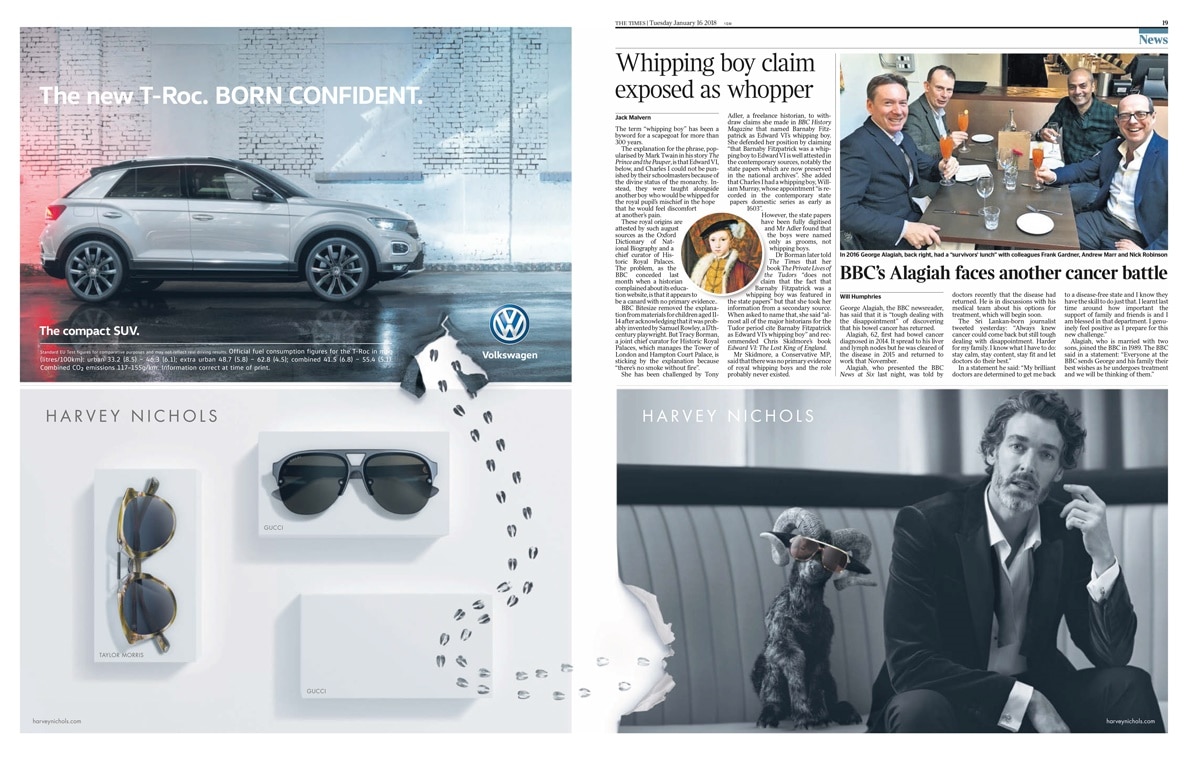
Maybe this is a cop-out because it isn’t recent, but the Volkswagen team at PHD did an activation called Bam The Ram. It was for the launch of the T-Roc car and the work that the team did at the time utilised the distinctive brand asset, which was literally a ram called Bam, who they pervaded through media placements. So the Volkswagen team actually organised with different clients within the Omnicom umbrella at the time to have Bam infiltrate their ads. That was so, so important to my development, not even being part of that campaign but just seeing the visuals and really understanding the story of that by virtue of being part of the agency at the time.
What’s a piece of media planning that you’ve done recently that you were really happy with?
Oh, what should I pick? I think one that I’m really proud of was with Amazon Music and our partnership with Fortnite, which was bringing and evoking the world of Amazon Music within that space for the gen Z audience, and really creating an appointment to view within that environment by working with different influencers and gaming partners to say, ‘Okay, this is when you’re going to be playing Fortnite because this is when we’re having these championships,’ and not just infiltrating or badging these audience spaces, but actually bringing something culturally relevant and utilising the game as a medium, a joyful habit of the audience and bringing something new, bringing more talent, bringing more conversation, more incentive to that environment. So actually giving that value-add from a campaign perspective is something I’m really proud of.
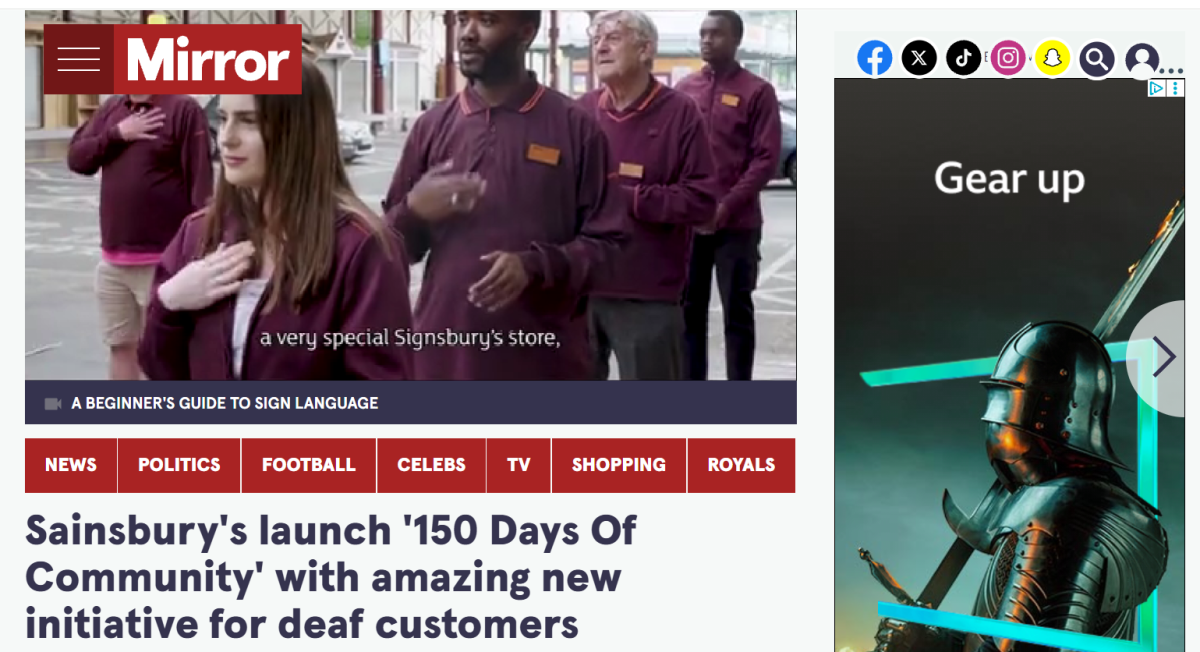
I’m also proud of one that’s maybe not so recent, which is when we did the Sainsbury’s 150th birthday campaign because again that wasn’t just something where we were badging; there was a whole community element as part of our communications plan — allowing different stores to champion their communities, whether that was the elderly community or the deaf employees. That’s a campaign I’ll always be proud of. Again, we weren’t just saying we’re supporting the deaf community, we were actually upskilling the nation on British Sign Language. The actual header of The Mirror’s physical paper was signed for the first time.