


How should a social media company market itself when the category it belongs to has become synonymous with addiction, anxiety and wasted time? Pinterest’s answer is to reject the label altogether, positioning itself not as a social media site, but as the antidote to one.
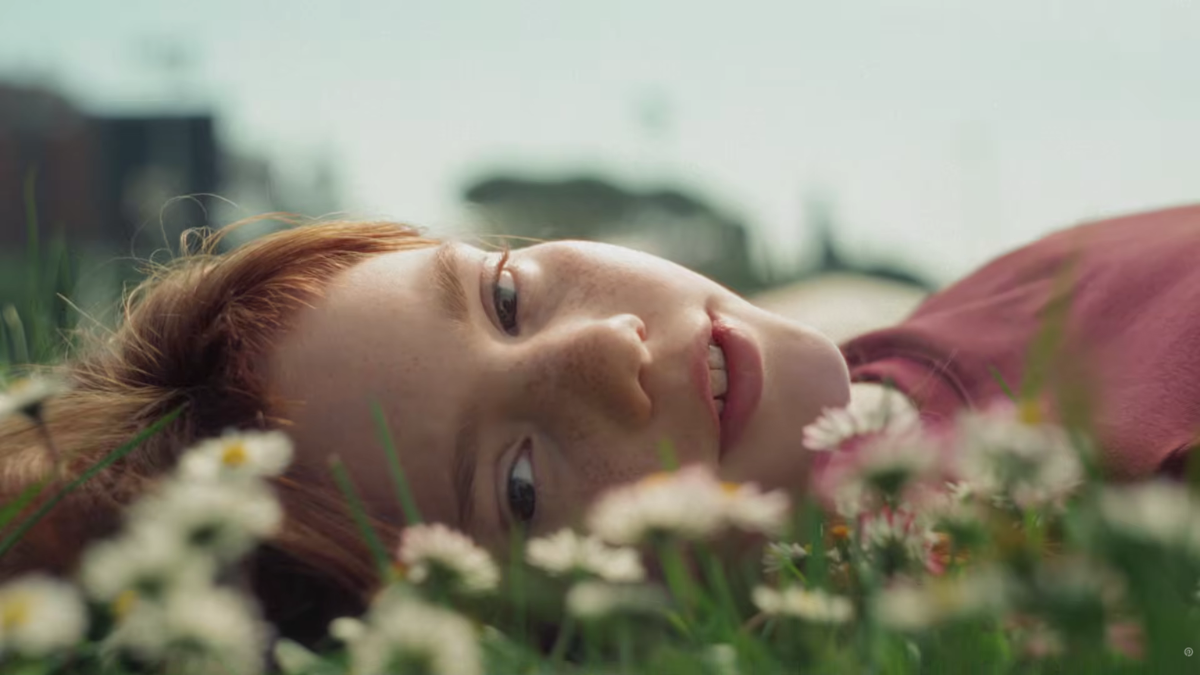
Its new campaign, ‘How Did They Do It?’, centres on a film produced by Pinterest’s in-house creative team. Built from archival photos and home videos of employees, it leans into pre-smartphone nostalgia and ends with the pointed line: ‘The best thing you can find online is a reason to go offline.’

Through the minute-long film, Pinterest is drawing a clear distinction between itself and its competitors, pitching itself as a tool to build a fulfilling life, in contrast to other sites that encourage endless scrolling.
Sara Pollack, Pinterest’s vice president and global head of consumer marketing, said: ‘Most US adults think their constant scrolling stems from a personal lack of self-control. The reality is that social media platforms were intentionally designed to keep you there.’
VP of global creative Xanthe Wells added: ‘Unlike other platforms, Pinterest doesn’t optimise for time spent. We don’t engineer for addiction. While other platforms are designed to keep you scrolling through other people’s lives, Pinterest is built to help you create the life you want to live, pin by pin.’
Strategist Will Poskett said it was the smartest strategic move he’d seen this year, saying that it leans into what Hamilton Helmer calls counter-positioning, a ‘move a challenger can make that the incumbent cannot copy, because copying it would cannibalise their existing business’.
‘It’s the rarest and most defensible kind of strategy, because it isn’t about being better. It’s about being differently constructed.’
Pinterest has been pushing this counter-positioning for a number of years already. The company has been avoiding the social media label for at least a decade, preferring to describe itself as a ‘visual discovery engine’. But this latest campaign is its clearest attempt to stand out from the pack. And it’s no mystery what the incentive is for doing so.
The term social media carries a growing weight of cultural and regulatory scrutiny. That reached fever pitch last month when Meta and YouTube were ordered to pay $6m after being found negligent in not providing a warning that their products could harm young people. The negative perception is illustrated by recent Ofcom data which found that Brits are posting less on social media.
For all its talk of being different, many of the platform’s underlying mechanics remain familiar. Its advertising model still relies heavily on user data. Pinterest has also bet heavily on AI, with users complaining that it’s increasingly littered with slop. And like its peers, Pinterest has faced serious questions about user safety — most notably in its role, alongside other platforms, in surfacing harmful content to Molly Russell before her death in 2017.
To Pinterest’s credit, it has introduced stronger safeguards in the years since, and its leadership has been more willing than most to publicly support tighter regulation, including calls for restrictions on under-16s. But the gap between positioning and reality remains an open question.
Pinterest is making this shift at a moment of financial and competitive pressure. Its share price is down roughly 17% year on year and remains well below its pandemic-era peak. The platform has also struggled to compete for advertising budgets against rivals such as TikTok and Instagram, which offer stronger engagement loops and more advanced targeting capabilities. Marketing itself as different to social media isn’t solely a moral stance but also a way to better appeal to advertisers.
Alongside the film, Pinterest activated at Coachella with what it claims is the festival’s first phone-free experience, inviting attendees to lock their devices away on entry.
At a festival that runs on visibility, that decision runs against the grain. Most brand activations are built to be photographed, filmed and shared. They are designed to travel far beyond the event itself. According to Vesper Ireland, founder of creative agency Vescorp, a well-executed Coachella activation can generate more organic reach in 72 hours than a significant paid media budget.
This year, that attention economy was in full effect. Heineken’s Clinker installation drew steady crowds, Barbie marked its festival debut with its ‘You Can Be Any Barbie’ experience, and Gap’s Hoodie House became one of the most talked-about activations of the festival, driving more than a million views online and a reported 5000% spike in search interest.
Sacrificing that reach to stay coherent to the broader strategy proves the company is serious about backing up its messaging, according to Poskett: ‘A line in a film is rhetoric. A pouch on your phone at the gate is evidence’.