


As more viewers choose ad-supported streaming over paid subscriptions, the shift to CTV is turning into a gold rush. In the US alone, connected TV ad spend is set to surpass linear TV by 2028, growing to nearly $46 billion.
But while original equipment manufacturers and leading apps can offer advertisers some certainty about their audiences, the open internet of CTV, which is dominated by free ad-supported streaming (FAST) and ad-based video on demand (AVOD) apps, is messier.
There are several challenges with programmatic CTV that need to be overcome: profile contamination, the account borrower problem, and weak signal data. All are leading to potentially wasted ad spend.
The Three Challenges of Programmatic CTV
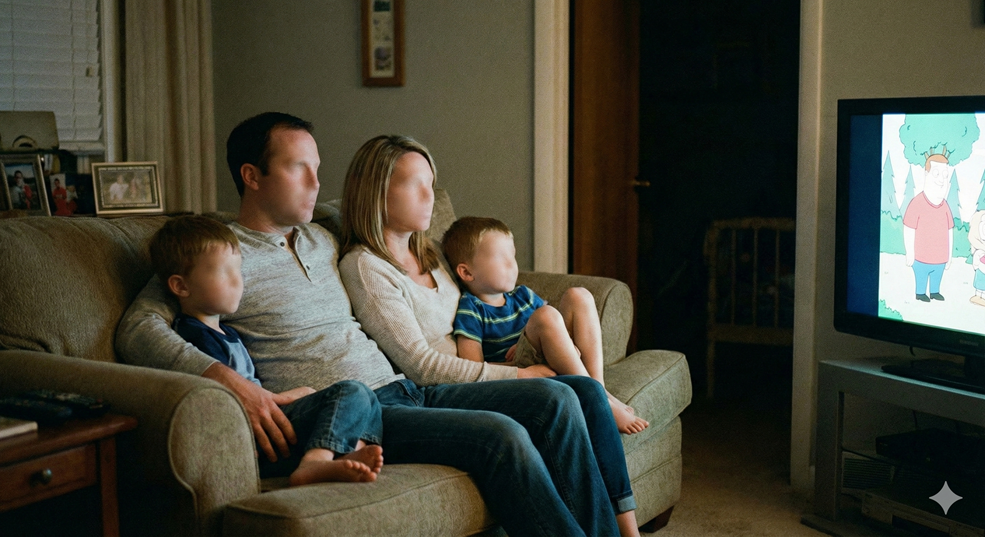
Before we can fix the problem, we have to be honest about it. Television is a communal media format, and its advertising is often one-to-many. As a result, the data fueling most open programmatic CTV campaigns suffers from three core challenges.
- Profile contamination: The appeal of most FAST services is that they’re frictionless (ie, no login required). While this is great for users, it’s a disaster for targeting. With no individual user profiles, all viewing habits in a home are blended into a single, muddled household profile. One person watches horror movies, and their partner watches rom-coms. The resulting programmatic household profile is a contradictory mess, and any advertiser targeting horror fans has a 50% chance of being wrong.
- The account borrower problem: Even on paid services, the person watching is often not the account owner. Fifty-six percent of Americans admit to sharing passwords and 20% of US households borrow at least one service from another. Your campaign, programmatically targeted to reach a 45-year-old high-income account owner, is just as likely to be seen by their 75-year-old retired parents.
- The weak signal problem: To compensate for this lack of data, other solutions rely on weaker, probabilistic guesses. This involves taking a household IP address and matching it against offline data, like a three-year-old auto registration or a two-year-old credit score. This data is outdated, telling you what a household was interested in, not what an individual is interested in right now.
The solution? A one-to-one model approach. Improve CTV targeting accuracy by meeting each viewer where they are. Collect relevant, high-intent data from individuals within households to inform ad buying decisions on the bigger screen.
The ‘one-to-one device’ truth signal
The fundamental flaw in CTV targeting is that it often starts with this messy, low-quality CTV data. Marketers need to obtain relevant, accurate data to make their CTV targeting the most effective. To do this, they need to start where audience truth lives, on their personal devices.
That means pivoting to where data is captured on one-to-one devices to gain a true reflection of individual users within a household, a better understanding of what audiences are engaging with, and where brands can influence purchase decisions.
For instance, knowing that a user has read three articles about new electric cars on their tablet, or browsed for luxury travel destinations on their mobile phone, is a powerful signal of individual intent, not a guess nor muddled with others in the household. Moving from guesswork to a consented, one-to-one action or a ‘truth signal’, allows for better understanding of who is present when CTV content is consumed.
That’s the direction that CTV audience targeting needs to start moving in.
Understand the individuals within households by nature of content consumption on one-to-one devices and then use it to build a household picture that accurately informs what is shown on the living room screen. This, in turn, makes CTV advertising highly targeted and relevant. The result — speaking to the right people at the right time in their purchase journeys.
Accuracy, not guesswork: why the one-to-one model wins
This ‘one-to-one in household’ model is a fundamentally more accurate and effective way to buy CTV. It directly solves the three core challenges of the industry.
With this model, it no longer matters if profiles are contaminated — if a household has both a fantasy film lover and an avid documentary watcher — as the data paints a more complete picture of individuals within a household.
It also solves the weak signal problem, as targeting becomes based on recent specific user activity, as well as the account borrower issue, because data from personal devices can identify individuals within a household.
Stop buying muddled profiles
The promise of CTV is real, but it won’t be achieved with muddled data and outdated guesses. Marketers need to stop buying anonymous household profiles and start reaching verified, high-intent individuals.
The key to accurate CTV targeting isn’t starting with the CTV — it’s starting with the individual. It’s why we’ve built Teads’ CTV Audiences to identify the relevant, one-to-one targeting signals from personal devices, allowing advertisers to extend that accuracy to the biggest screen in the home.
Households are full of individuals with different viewing habits, interests, and sometimes conflicting ideas of entertainment. We all have to raise our data game to better reflect that.
Main image created using Google Gemini