


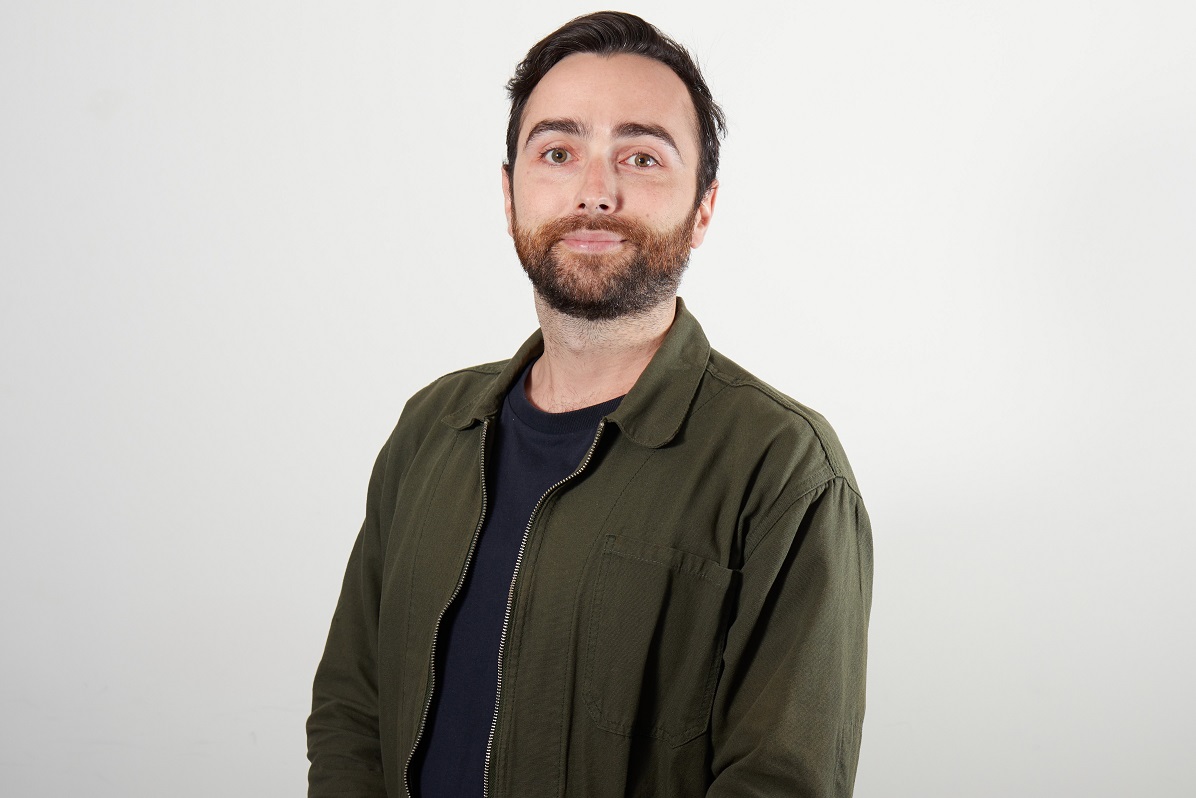
Jack Bellamy joined VCCP Media as head of strategy and creative partnerships in January 2025. Before that, he spent six years at Initiative (from which the agency’s CEO and CSO, James Shoreland and Will Parrish, also hail), and four-and-a-half years at UM in Australia.
After more than a decade in media, Bellamy tells MediaCat why partnerships are de rigueur, how media can be a distinctive asset for brands, and what he learned about AI from researching VCCP Media’s State of Independence report.
What keeps you interested in media and marketing?
I’ve been in the industry for about 12 or 13 years now, and I think what makes the job so great, to me, is that there’s a universally respected set of marketing frameworks and principles, but the way you apply them completely changes depending on the category you’re working on, or the client’s individual context.
Shifting from highly regulated financial services to a fast-moving entertainment partner just requires a totally different approach. That’s what keeps me hooked. One day I’m mapping consumer journeys for a financial services company, the next I’m standing under Wellington Arch at midnight watching a live projection of Madonna’s new album.
That application is where the fun is. It’s incredibly rewarding when you see a plan actually jump off the spreadsheet and manifest in culture.
You’re head of creative partnerships. It seems like a good time to be in that kind of role. Does it feel like a good time?
There are probably two forces at play that are making creative partnerships a really important part of the mix for clients and media planners to consider. The first is an audience force, which is the reality of ad avoidance. People have more ways than ever to skip or to block ads.
Creative partnerships are a way to get brands outside the ad break into more native environments that get them in the content or the experiences that people actually care about.
The second force is more structural. A brilliant partnership isn’t just a badge on a jersey; it’s a true exchange of equity, and that requires stewardship to protect and extend a brand world in a considered fashion. But that level of creative guidance is traditionally hard to access inside big media agencies. I think creative partnerships are tough to get right because they sit at the intersection of media execution and creative strategy.
That’s the main benefit of being at VCCP in this role. We have the entire brain trust under one roof.
Are there any theories or individuals that have shaped your understanding of how advertising and marketing work?
The core principles that have been espoused by the IPA, Ehrenberg-Bass etc, are the essential baseline for any planner. But my knowledge and confidence have really accelerated through more hands-on guidance. I was really lucky to have some brilliant mentors throughout my career, and also industry forums, like the APG, but historically there’s been a bit of a gap in training for media planners, when it comes to marrying technical platform execution with the fundamentals of brand planning — really understanding a brand’s positioning, its distinctive assets, its tone of voice and the cultural spaces it has built equity in — and how all that might influence your approach to media.
That’s why a few weeks ago when the Media Planning Group launched, it was such a fantastic milestone, and it was really rewarding to share some of my own experience, and present the media creativity module alongside Emily Fairhead-Keen from LEGO.
What I spoke a lot about was that I think media has the capacity to be a distinctive asset in its own right. Usually, that language belongs to the creative agencies, and I think it’s something that media agencies could adopt. It’s definitely something we’re doing at VCCP Media. We have this huge opportunity to help clients craft a distinctive media behaviour that actually extends their brand world and gives them another edge over their competitors.
What skills are you focused on acquiring to make sure you’ll always be valuable to clients?
Taste. Many people much more eloquent than me have pointed out how important taste is in the AI world that we’re living in. AI is raising the floor but the ceiling remains the same, and it still requires people who can identify genuinely good work quickly and consistently.
So, I want to develop and demonstrate good taste across a much wider set of marketing levers than just paid media, and that’s part of the reason why I was so drawn to VCCP in the first place, with their philosophy of ‘it only works if it all works’. I find that really compelling. We get to learn so much from around the VCCP Group, from brand planning to design to behavioural science, and then find ways to apply that knowledge in our media planning.
To circle back to a point I made earlier, around thinking about a brand world and how that applies to media, that was a construct we borrowed from another part of the group. I don’t think there’s that many media agencies who are kind of thinking like that at the moment.
If you could only use one source of data in your media strategy, what would it be?
I think it would be the business data of the client. I think everything starts there. It’s really hard to solve a marketing problem if you don’t know what the business problem is.
VCCP Media recently published a report on consumer behaviour, called The State of Independence. What’s the headline from that?
The core headline of our research is that public trust in traditional institutions has hit an all-time low. But the British public isn’t just sitting back; they’re stepping up and taking more control. We’re seeing a surge in what we termed active agency — people proactively seeking out alternative tools and platforms to navigate everyday frictions.
One of the key themes that we spoke to in the research was riding the wave of social self-help, and how this need for self-reliance is radically rewriting our own media consumption. We’ve seen a big shift where people are defaulting to LLMs as a personal life coach. We’re defaulting to social search as our user manual for life.
I was having dinner the other week with friends who had a new baby and they referred to ChatGPT as the third parent in their household, which I think really hammered it home.
What I find interesting is this behaviour isn’t isolated to a single demographic. It’s quite universal, and it’s triggered more by moments of need. So, the opportunity for brands is how can we leverage transitioning from targeting static audience segments that can be reached in any environment to actually trying to buy those specific behaviours — placing brands squarely within the context of problem solving or surrounding the moments where consumers are actively looking for help, if that’s relevant to the category that you exist in?
There’s a few good examples that I think I’ve seen from brands who’ve done this remarkably well. The Vaseline Verified case study that won a bunch of awards last year was such a good example of, instead of fighting or ignoring viral UGC beauty hacks on TikTok, they decided to try and own the context.
Was there any data from the research that was particularly surprising?
It challenged some of the assumptions I and many others have around AI adoption. We probably presume it’s wealthy inner-city professional workers using it the most, but actually what the research showed was how pervasive it was across the entire country. The other thing was just the extent to which we have allowed LLMs to become our coach. I outsource a lot of high-stakes decisions, whether that’s in health or finance or career, to my friend ChatGPT as well.
Did ChatGPT tell you to join VCCP?
It may have had an influence.