


Clipper is one of the only major brands in an aging category that is bringing in younger shoppers. It is the UK’s fastest-growing tea, with 6.6% growth and around 1 million new households this year alone, at a time when most of its competitors are in decline.
Clipper’s brand controller, Caroline Rose, is part of top-rated B Corp company Ecotone and farmer-owned cooperative Ocean Spray, making her an expert in promoting socially conscious brands to savvy younger shoppers. Now, she is overseeing Clipper’s bid for millennial tea drinkers which sees the brand giving away eco-holidays, sponsoring festivals and partnering with social-first creative agency Formidable.
She sat down with MediaCat to tell us how she targets younger generations in a category where the bulk of buyers are seriously set in their ways.
How is tea performing in the UK, as a category?
It’s a little bit difficult. It’s declining as a category, but that decline is very much driven by black tea which is drunk by older people who end up dying eventually. Our parents’ generation drank six or seven cups of tea a day, and these days they just drink a little bit less. Younger shoppers are very engaged with tea overall, but they’re drinking less of it because they’ve been tempted by other drinks: the millennials are very much a coffee generation.
I think tea, as a category, has failed to be exciting. The only thing driving excitement is matcha and chai latte.
How are you appealing to younger drinkers?
The big shift with millennials is that they want to put good products inside them. They don’t just care about what goes into their body, but the impact it has on people and the planet.
Another thing you have to do is capture the audience. Millennials aren’t necessarily into material things as much as experiences. Last year, and for the next few years, we’re sponsoring Glastonbury. Being able to provide things that are unique and appealing to that generation is priceless because you’re proving that your product has all the attributes that they’re looking for, but also that you get them from a lifestyle perspective.
For me, there’s three things to engage the younger audience: showing your product and the purity of it, that it’s good for people and the planet, and engaging them with something they find relevant. It’s creating that kind of community with a brand that gets them.
The visuals and aesthetics are important as well. It’s kind of copying from coffee culture. You have to provide something that is a little bit more exciting and fits into the lifestyle. Take matcha. Matcha is a revolution, it’s amazing. They provided an experience and a very clear functionality. Coffee gives you the jitters, matcha is natural energy and doesn’t. The experience is more appealing than just boiling water and a tea bag.
Clipper’s ethical credentials have long been a major element of your branding. Do you have evidence that this facet of the brand has increased sales?
I already talked about how the tea category is in decline, but when you look at organic and Fairtrade teas, they are growing by 7.4%. Of course, that’s from a small base, but that really shows the desire of the younger audience to make informed choices.
How does the recent Eco Holidays campaign fit into your overall social strategy?
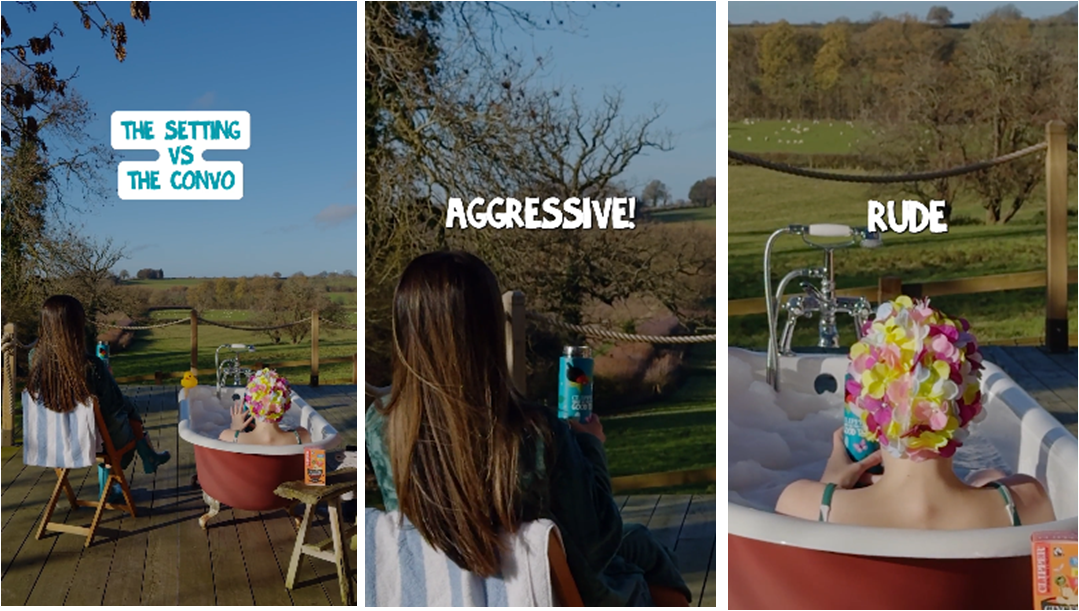
It very much fits into our media strategy. We partnered with Canopy & Stars because like us, they’re B Corp, so there’s real authenticity to the partnerships. We know our millennial targets are interested in art, music, festivals, nature. We wanted to provide them something very unique but equally aligned with our values.
That’s where social-first creative agency Formidable came in. We created hub content: it’s a senior brand ad, not at the master-brand level, there to target people who’ve been exposed to the master brand element already with more humour. When you think about a lot of tea brands, you don’t really smile. We’re very joyful, and humour is something that really connects with the millennial audience.
How do you manage paid media vs earned media?
We see it more in terms of awareness and how much I put into the consideration and the conversion bucket. If you’re a brand like Twinings, everybody knows about you, you might need to put that money differently. For this stage of our brand, we put the bulk of our spend in the consideration and the conversion part of the funnel. 40% is on awareness, with video and paid social. The more organic social and shopper and activation and uncapped promotion is where we put 60% of our budget.
We just put money behind it. We have our always-on social, and the content is very integrated, because we shot it while Formidable was doing their shooting. We reiterate the chance of winning an eco-holiday in our latest campaign, people are exposed, we retarget them through YouTube, we retarget them through paid social and the Formidable videos. It all feels very integrated and very similar in a seamless ‘oh, I’ve seen you’. This time is a bit different because there is a call to action about winning the tickets. When someone goes into stores, we’re closing that customer journey.
Do you think the Meta/YouTube addiction lawsuit will have any impact on how you use social?
I’m probably not knowledgeable enough to talk about this. I don’t anticipate it affecting us so much because we’re targeting older people and we’re wholesome. The beauty of marketing is you know who you’re targeting and where they are. You just have to find the right platforms to reach them.
Which channels are most valuable to Clipper?
It’s difficult to say because they all have a different role. We have a multi-point strategy to drive shoppers through our funnels. We use video on demand, online video and paid social to drive awareness and our branding message. We use point of sale in-store and online to retarget those who’ve seen the video. Then there’s promotion, on-pack, partnership. All channels have a value, because it can’t just be awareness and nothing else, you can’t just do promotions and nothing else. You need all of that consumer journey and all those different channels.
The way we approach the channels is more about creative content. When you do VOD, it’s more master-brand content. When you’re doing shopper activation, it’s about your win message. I think that’s what you need to do to drive that shopper through that funnel.
Having a good media agency is the key. Then you measure, measure, measure and adapt.
How do you measure the effectiveness of your advertising?
Our media agency will provide us with how the campaign is performing against certain creatives: are we delivering the number of impressions that we said? Are we delivering the view-through rate that we said? We can also measure which creative works best. For example, the three ads we have for this campaign, one is working great, but two are working much harder, so we put more money behind those.
Then when we do our full post-campaign analysis, we will use a data agency, Circana. They can do immediate study. For example, we don’t advertise throughout the UK, we advertise in the regions where we can win. In the north, our distribution is not great. With immediate study, very clever people with data can look at a store where you’ve had the same promotion and there was no media because it’s outside your region, and they can look at other stores where we have the same level of promotion and activation, and effectively strip out the media lift for the proportion of sales that we can directly attribute to media.
We also do a brand equity study twice a year, where we ask consumer targets who have been exposed to the advert questions before the campaign and after the campaign. We’re able to measure whether the awareness grew, whether consideration grew, and whether some of the attributes of our brand grew.
What makes a media agency invaluable to and beloved by you?
They need to provide good market, media market and audience insight. Because if you don’t know and understand, then you could be wasting your money.
And then strategic recommendation based not just on this insight, but also your budget. If you don’t have a huge budget, you could blow it in a week. Being nimble and flexible is very important, having the ability to change if things don’t perform and don’t work.
Also really important for me is good communication and collaboration. We have weekly meetings during the campaign with my media agency to look at how we’re tracking.
And in the end, a bit of fun and it being nice to work with them. I respect them, they’re the expert in their field, I’m the expert on my brand.
You’ve previously said you want to ‘disrupt’ the tea category. What does that mean?
Very different products. A lot of products are not Fairtrade, it’s a boring old teabag, it’s been done the same for 300 years at least. We have unique products: natural, nothing added, Fairtrade, organic.
I think bringing joy into a stuffy and boring category is also really important, and creating excitement with engaging partnerships. Retailers tell us the category is boring. We’re able to have some shopper excitement, some displays, some gondolas [end of aisle displays]. Whether it’s Glastonbury, Canopy and Star or Wilderness, it drives people down the aisle in a category that’s declining.
What’s your biggest challenge as a brand, right now?
I think the biggest challenge is educating the public that there is tea, but then there’s good tea. Ours is 100% organic certified, 100% natural, no pesticide. We’ve got an unbleached tea bag. We don’t have any plastic. We’re Fairtrade. We’ve been very much leading the way.
It’s not easy, because it’s an education job, and it takes time to challenge people on their existing tea drinking habits. It’s a challenge to find the message that is going to really resonate and create that change. That’s hard.
We once heard a tea marketer describe their product as ‘day beer’. Do you call it that at Clipper, too?
No, I think of it more as a cup of joy.
*Correction 27/04: This article was edited to clarify that Caroline Rose is still part of Ecotone, as the company owns Clipper.