


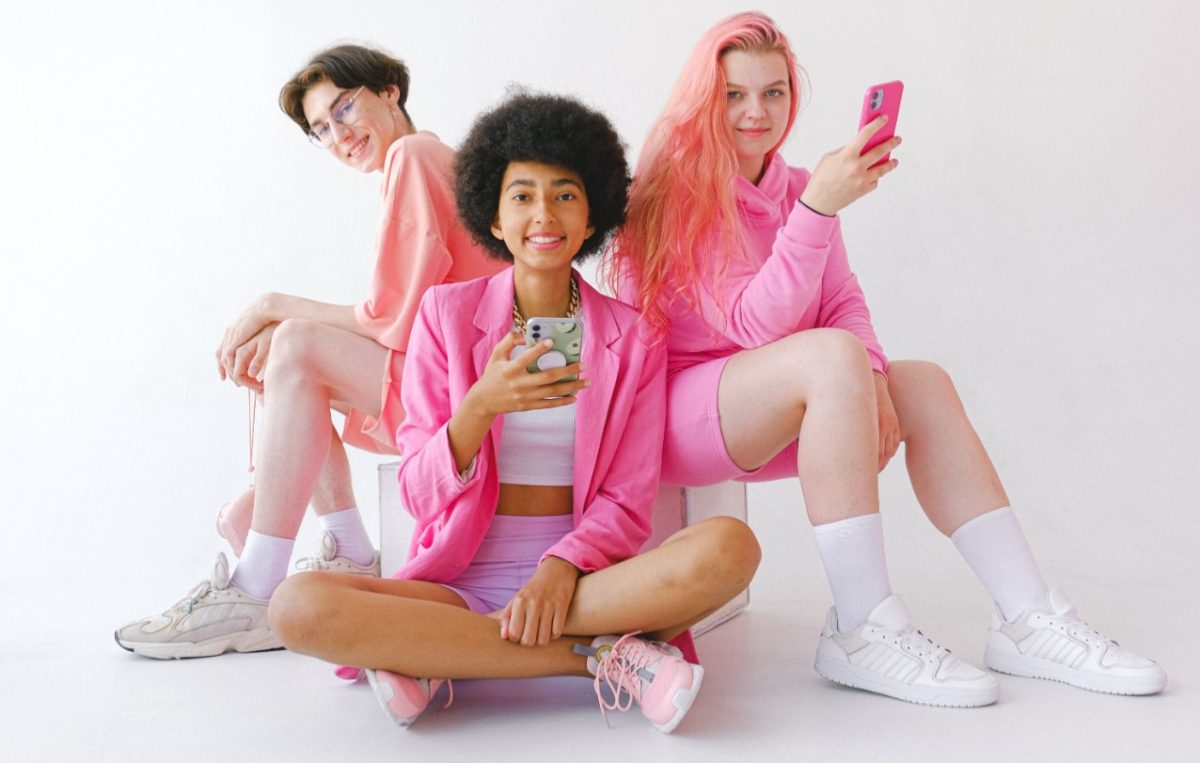
Time spent on social media does not increase teenagers’ mental health problems later on, according to a new piece of research.
In a study published in the Journal of Public Health last month, lead researcher Qiqi Cheng and team demonstrated that the amount of time adolescents spend on social media or gaming is not ‘a major causal factor in their mental health difficulties’. The field of studying how tech usage, and social media in particular, impacts young people’s mental health is a contested one, but this new study does appear to shine a different light on the topic.
The study had 25,000 teenagers (aged 11 to 14) self-reporting their usage of social media and gaming as well as their emotional wellbeing, which were monitored for symptoms of anxiety and depression.
While self-reported data can be unreliable, the scientists did speak to participants about a wide range of technology use and how they were interacting with social media platforms or games, such as whether their time had been spent actively chatting with friends or passively scrolling through a feed.
While the study found that more time spent gaming or on social media did not result in more symptoms of mental health difficulties the next year, that does not mean no correlations were found between the two. In particular, boys who exhibited more symptoms of anxiety and depression were found to spend less time gaming the next year, potentially supporting findings by the American Psychological Association that around a third of teenagers find gaming helpful for their mental health.
Co-author Neil Humphrey told the Guardian: ‘Young people’s choices around social media and gaming may be shaped by how they’re feeling but not necessarily the other way around.’
Earlier research has previously found more of a connection between time spent on social media and poor mental health outcomes for teenagers. However, this may in part be due to the approach of this study, which tracked both technology usage and symptoms of anxiety and depression over a longer period of time and studied whether more social media use or gaming lead to worse mental health in the following year, rather than looking at total numbers for mental health outcomes and time spent online.
Indeed, many scholars looking at the relation between tech and mental health in young people use as their major evidence the fact that social media use has risen in tandem with more mental illness diagnoses in teenagers and young people. In Generations, Jean Twenge argues that the rise in ‘deaths of despair’, that is, suicide, drug overdoses and liver disease, from 1999 to 2019 can only be explained by the rise of social media.
Twenge wrote: ‘Every indicator of mental health and psychological well-being has become more negative among teens and young adults since 2012 [the point at which smartphone penetration breached 50% and three out of four teens began using social media everyday]’.
Evidence supporting both negative and positive effects was found in one study published in Healthcare in 2024. This systematic review of scientific literature on children and teenagers’ use of social media and its effects on their mental health showed social media ‘has both positive and negative effects on childhood mental health, with factors such as age, gender, social support, and parental involvement playing significant roles’.
At a time when the UK government is believed to be considering stronger restrictions on under-18s online activity, this new data may provide support to those opposed to social media bans and restrictions.
How do social media use, gaming frequency, and internalizing symptoms predict each other over time in early-to-middle adolescence? was written by Qiqi Cheng, Margarita Panayiotou, Turi Reiten Finserås, Amanda Iselin Olesen Andersen, and Neil Humphrey, and published in the Journal of Public Health on 5 December 2025.
The Impact of Social Media on Children’s Mental Health: A Systematic Scoping Review was written by Ting Liu, Yanying Cheng, Yiming Luo, Zhuo Wang, Patrick Cheong-Iao Pang, Yuanze Xia, and Ying Lau, and published in Healthcare on 27 November 2024.
Main Image by Anna Shvets.