


Agencies
- Cindy Rose has instructed WPP agencies to stop using LiveRamp following Publicis’ planned acquisition of the platform, arguing clients need ‘total independence’ and control of their own data. Rose positioned WPP’s Open platform as deliberately flexible and non-locking, contrasting it with Publicis’ ownership of data infrastructure.
- US Senator Elizabeth Warren warned that mergers approved under the Trump administration could face future legal challenges or even retroactive break-ups if Democrats regain power. This includes Omnicom’s $13.5bn acquisition of Interpublic among a wider wave of mega-deals. ‘As soon as Trump took office, corporations came knocking at the White House door to get their pro-monopoly deals approved,” Warren said.
Media owners
- The UK is considering rules requiring major social platforms to make content from ‘trusted’ news providers — such as the BBC, ITV and Channel 4 — more prominent in feeds and search. The culture department is considering it to counter misinformation as social media becomes a primary news source, particularly for younger audiences.
- Sky, owned by Comcast, has agreed terms to acquire ITV’s broadcast and streaming arm in a deal worth about £1.6bn. The transaction would separate ITV’s Media & Entertainment division from ITV Studios, with ITV also gaining Love Productions as part of the wider asset swap. Spokespeople for ITV and Sky declined to comment. Comcast did not respond to a request for comment.
The deal aims to create a stronger UK streaming competitor against global platforms like Netflix and Disney+. - Meta has relaunched Facebook Creator Studio as an AI-powered platform aimed at helping creators grow and manage content more efficiently. The updated tool includes a chatbot-style assistant, personalised performance insights, and AI-generated comment replies designed to streamline engagement.
Meta says the move responds to creator demand for a dedicated workspace and supports monetisation and brand partnership growth. The relaunch is part of Meta’s broader push to retain creators and keep them active on its platforms amid competition for creative talent and attention. - Walmart is expanding its advertising ambitions with a $1.4bn acquisition of connected TV ad-tech firm Vibe.co, in a move aimed at challenging Amazon’s dominance in digital advertising. Vibe.co’s platform helps small and mid-sized advertisers buy streaming TV ads more easily and measure performance using commerce data.
The deal strengthens Walmart Connect’s broader retail media strategy by linking TV advertising with Walmart’s shopper data and closed-loop measurement. It also signals Walmart’s push to grow higher-margin ad and membership revenue streams, positioning advertising as a key growth engine alongside its core retail business in competition with Amazon.
Brands
- Starbucks is piloting a TikTok Creator Network that formalises employee-generated content as a paid marketing channel. It makes it the first brand to trial a custom Creator Network with the social media platform. The programme builds on its existing ‘Green Apron Creators’ initiative and allows selected employees to receive briefs and ad revenue share for content distributed via TikTok.
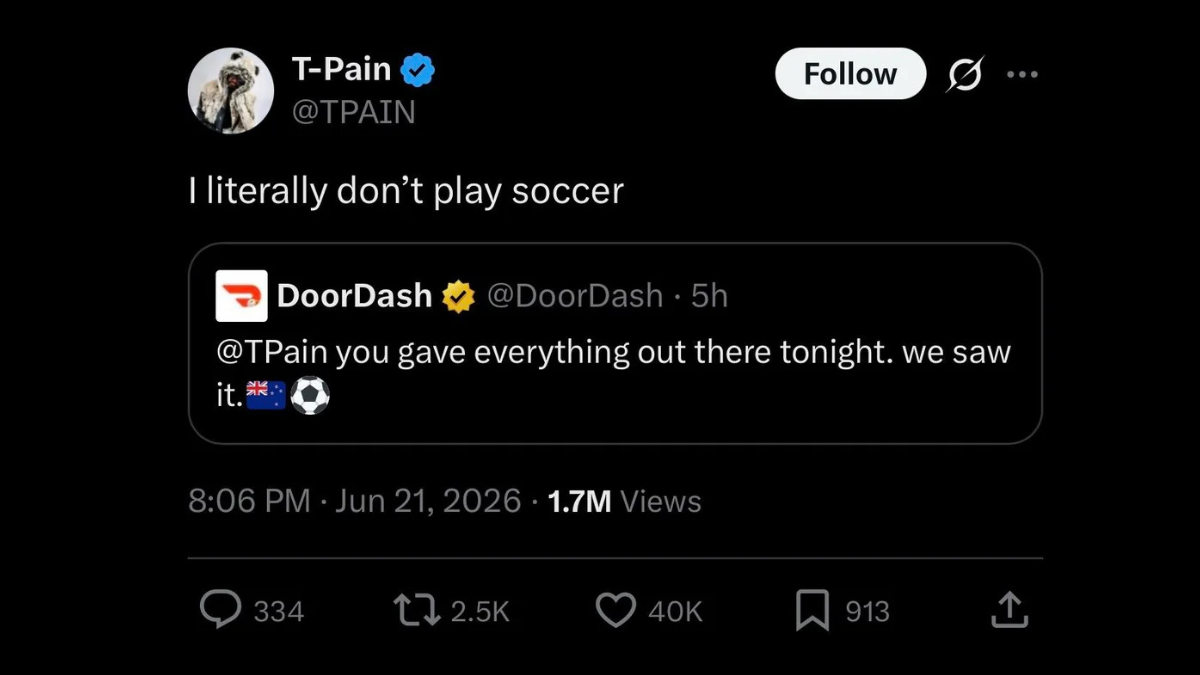
Developed in partnership with TikTok, it reflects growing evidence that Gen Z often discovers brands through employee-created content rather than traditional advertising. - DoorDash ran a World Cup-themed social media stunt after (deliberately) confusing rapper T-Pain with New Zealand footballer Tim Payne due to their similar names. The campaign involved repeated X posts tagging T-Pain during match coverage, prompting exchanges that generated strong engagement and viral visibility. DoorDash later confirmed the activation was intentional, framing it as a way to ‘fuel the frenzy’ around live sports moments.
Consumer
- Research from Hub Entertainment Research shows Gen Z audiences are increasingly open to TV advertising as streaming costs rise, with ad intolerance falling to a record low and only around 10% of viewers now saying they ‘can’t tolerate’ ads, while just under one-third would pay an extra $4–$5 per month to avoid ads. Gen Z in particular is more likely than older groups to accept ad-supported streaming if it reduces cost, with over a third preferring fewer but more targeted ads, reflecting stronger demand for relevance.
The research also finds that although nearly all Gen Z viewers multitask during ad breaks, around eight in ten still say they continue listening to ads while doing so, reinforcing that attention is fragmented rather than lost. - McKinsey’s State of the Consumer 2026 highlights how AI is rapidly reshaping shopping behaviour, with clear generational divides. Gen Z is driving adoption of new discovery and purchase tools: 28% already use generative AI for shopping (vs 16% of baby boomers), and 60% regularly use AI-generated search overviews (vs 29% of boomers).