


Nike: full-year (30.6.26)

What’s the topline? Nike reported flat full-year revenue of $46.4bn and a 3% decline in net income to $3.11bn. Marketing spend was broadly steady, with demand creation up 1% to $4.8bn for the year, while Q4 marketing spend fell 4% to $1.2bn. Gross margin rose 8.9% in the quarter, but mostly because of a $986m tariff-related refund. Nike’s stock fell around 4% after the earnings call and is down more than 35% in 2026 so far, reflecting investor concerns around weakening performance in China and soft demand in other key markets.
Any interesting insights? Nike’s move towards a ‘lots of littles’ marketing strategy, where instead of relying on a single big campaign, it builds continuous storytelling across micro-communities. The World Cup was a clear test case: rather than one hero film, Nike is running a 12-week programme of content, collaborations and drops, still anchored by a traditional star-led spot but driven by multiple smaller cultural moments.
As CEO Elliott Hill put it, Nike is ‘rewriting our own marketing playbook’ and no longer treating major tournaments as single moments, instead using them to build sustained engagement over time. He said the aim is to engage different communities in relevant ways, with ‘every beat, every story’ acting as a doorway into the brand, reflecting how younger audiences engage with sport ‘on their terms’. Nike also highlighted early traction, pointing to 1.5 billion views in the first week of its World Cup storytelling as evidence of scale being built through multiple connected touchpoints rather than one dominant campaign.
Jet2 Plc: Full year (8.7.26)
What’s the top line? Revenue up 4.3% to a record £7.5bn, costs up 4.5%, operating profit margin stable at 5.9%. Smiles all round.
Any interesting insights? Marketing spend fell by 9% to £259m, reflecting a lower cost per customer acquisition as the company moved money ‘into pricing to attract later bookings in a competitive marketplace.’
The ‘Nothing Beats’ campaign that took on a life of its own in 2025, and which will haunt Jess Glynne for the rest of her career, was credited with increasing awareness and consideration among the under-35s by five percentage points. In the coming year, Jet2 wants to increase brand awareness in the south of England, where it is less well-known, using ‘targeted, personalised customer activity’ and ‘greater media weighting’.
According to CEO Steve Heapy, 80% of Jet2’s bookings are direct, and 43% of direct bookings came from customers who have travelled with the brand more than six times — a 23% compound annual growth-rate in three years.
As such, Heapy talked a lot about deepening customer relationships with data and technology, and personalised messages. Adobe enjoyed a few shout-outs during the earnings call.
LLMs haven’t had a discernable impact on the business yet, in terms of how people search and plan holidays, but the company is monitoring the trend ‘very closely’.
Levi Strauss & Co: Half-year (8.7.26)
What’s the topline? Levi Strauss & Co. reported second-quarter revenue of $1.56 billion, up 8% year-on-year, with organic revenue growth of 6%. Operating margin improved to 7.8%, and the company raised its full-year 2026 outlook.Levi Strauss & Co
Any interesting insights? The brand is stretching beyond its denim-trouser heritage, positioning itself as a ‘denim lifestyle’ company. CEO Michelle Gass said categories outside denim bottoms contributed around one-third of top-line growth, as it expands into areas such as tops, dresses and seasonal apparel, and evolving into ‘a head-to-toe denim lifestyle destination’.
Gass also pointed to Levi’s World Cup stunt, where a stadium logo restriction was turned into a viral marketing moment by covering up the Levi’s logo, generating around 1 billion press impressions and becoming the most-viewed social post in the brand’s history.
The company is set to have a more disciplined approach to promotion in the rest of the year, as CFO Harmit Singh said lower advertising and promotion spending in the second half, alongside distribution savings, would help drive further margin expansion. It spent $437m on advertising in the full-year ending 30 November 2025.
PepsiCo: Half-year (9.7.26)
What’s the topline? Q2 revenue was about $200m ahead of expectations, at $24.18bn, while adjusted EPS narrowly missed the $2.21 forecast. The softer earnings performance reflected margin pressure in North America, with higher costs and weaker consumer traffic weighing on results.
Any interesting insights? CEO Ramon Laguarta said PepsiCo is playing with price and portions to ‘get volume back into our categories’ as household budgets get tighter.
PepsiCo also pointed to the continued growth of its ‘permissible’ portfolio, including functional beverages, portion-controlled snacks and better-for-you options designed to appeal to more health concerned buyers. The company also noted a decline in ‘impulse’ purchases in channels such as petrol stations and convenience stores, while it continues to ‘accelerate’ away-from-home occasions as a growth opportunity.
Netflix: Half-year (16.7.26)
What’s the top-line? Second-quarter revenue was $12.56bn, narrowly missing analyst expectations, while earnings per share of $0.80 came in a cent ahead of forecasts. More importantly, management is predicting 11% FX-neutral revenue growth in the third quarter, a slight slowdown from Q2, prompting investors to question whether growth is beginning to moderate.
Any interesting insights? One of the more revealing moments came when co-CEO Greg Peters pushed back on the industry’s obsession with viewing hours. ‘All hours are not created equal,’ he said, arguing that live programming delivers disproportionate value despite accounting for only a fraction of total viewing. Netflix expects live content to represent around 5% of its content budget this year but only 1% of viewing hours. Yet, Peters noted, six of the company’s ten biggest subscriber sign-up days over the past five years have been driven by live events.
Peters also suggested Netflix is moving away from viewing hours as its primary measure of engagement. Instead, he said the company evaluates a combination of viewing ‘quality, variety and quantity’, arguing these are better indicators of subscriber satisfaction, retention and advertising performance.
The company also sounded increasingly confident that its expansion beyond traditional TV is paying off. Co-CEO Ted Sarandos said Netflix’s fledgling video podcast strategy is generating ‘incremental’ viewing, particularly on mobile and during the daytime. ‘The definition of TV has broadened, and our definition has changed along with it,’ he said, framing podcasts, vertical video and games as a natural extension of the service rather than a change in direction.
Advertising was discussed largely in terms of execution rather than new product launches, but Netflix reiterated that it sees significant headroom in its ad business. Peters said the gap between revenue generated by ad-supported subscribers and those on the standard plan is ‘narrowing’, describing it as an opportunity for future growth. He pointed to continued investment in the company’s advertising technology, including ‘more ads products’, expanded measurement and making it ‘easier for folks to transact with us’.
Nestlé: Half-year (23.7.26)

What’s the topline? Despite organic sales growing by 3.6%, Nestlé reported a 2.5% decline in total reported sales from the first half of 2025, driven largely by negative exchange rates. This growth was increasingly volume-led rather than price-driven. Restructuring costs and asset write-downs meant that reported net profit fell 31.4%. Marketing investment climbed to 8.9% of group sales.
Any interesting insights? Rather than spreading its advertising budget thin across its vast footprint, Nestlé is sharpening its focus and slashing media spend from 400 brands down to just 135.
Nestlé is also shifting budget away from legacy media and towards digital retail media, influencer-led campaigns, and AI integration across its marketing and innovation stack, further streamlining its marketing budget.
CEO Philipp Navratil emphasized that the strategic goal is ‘flawless execution’ across brand visibility, sharp shelf pricing, and digital engagement.
Unilever: Half-Year (28.7.26)
What’s the topline? It was Unilever’s best quarterly performance since 2010, in terms of volume sales, which increased 5.5%. CEO Fernando Fernandez said that volume growth was his ‘overriding priority’ because it’s ‘a true measure of demand, and [an] even more important signal of progress during times like this of heightened volatility’. That said, the company expects pricing to lead growth in the second half of the year, as it passes on higher commodity costs to customers.
Any interesting insights? Marketing spend is 16.1% of turnover, ‘with incremental investment focused on our power brands’, according to CEO Fernando Fernandez. These power brands, like Dove and Vaseline, now represent 78% of Unilever’s turnover.
Fernandez said it was too early to know the impact of Unilever’s Fifa World Cup marketing blitz, but that ‘regaining market leadership in deodorants [in the US] gives a sense that this has been working.’
AI search will favour big brands, according to Fernandez, and Unilever is ‘activating LLM rankings in more than 20 markets for more than 20 brands.’ While this has not yet led to a decrease in the cost of media for the company, Fernandez said that it ‘is something that is changing very fast’.
He also praised Unilever’s performance at Cannes (35 awards), saying it demonstrated the company’s ‘ability to rethink how we create demand in this world of infinite content and distribution through algorithms.’
Fernandez cited the partnership between Liquid IV and the Amazon Prime show, Off-Campus — in which the main character becomes an ambassador for the brand — as an example of a creative execution ‘designed to travel, earn attention, strengthen brand equity, and convert into growth’.
Coca-Cola: Half-year (28.7.26)
What’s the topline? Q2 organic revenue increased 6% year on year, giving Coca-Cola confidence that it will meet its 5% growth target for 2026. This performance is in spite of volatile and uneven consumer environments across the world. To navigate these K-shaped (or bifurcated) economies, Coca-Cola is cultivating both affordable and premium brands.
Any interesting insights? CEO Henrique Braun reiterated his three priorities for the company’s next growth phase: ‘Becoming even more consumer-centric, remaining constructively discontented, and placing digital at the core of every connection.’
To achieve customer-centricity, Coke is abiding by the ‘the four I’s’ — insights, innovation, intimacy and integration. Braun said that the company’s World Cup marketing demonstrated this, combining global comms with market-specific activations and generating 25 million first-party data points.
Coke wants more people to consume its products on ‘evening occasions’ and it’s leading that effort with a redesign of Coca-Cola Zero Sugar, although not much information was given in terms of specifics.
Selling, general and administrative expenses (which includes marketing spend) were up for the quarter, at $3.7bn, weighing on profitability a little bit.
No mention was made of Coca-Cola’s new brand font, which a lot of people have said reminds them of the lettering of Marlborough cigarettes.
Danone: Half-year (28.7.26)
What’s the topline? Like-for-like sales rose 4.2% to €7.2bn ($8.2bn) and H1 operating margins reached 13.3% (+12 bps). Full-year guidance remains unchanged at 3-5% like-for-like sales growth.
Any interesting insights? Shifting consumer behaviours drove Danone’s strongest results. ‘The food industry is at a tipping point,’ chief executive Antoine de Saint-Affrique said. ‘Health through food has never been more relevant’.
High-protein dairy ranges are delivering double-digit global growth for the company in every region. Danone is building science-backed benefit platforms, expanding gut-health offerings through Kefir and fibre-enriched formats, while scaling medical nutrition brands like Fortimel and Nutricia to meet the demands of ageing populations. As a result, non-traditional channels like hospitals, pharmacies, and home care ‘continue to grow two-to-three times faster than in mass retail’.
That functional focus is actively reshaping Danone’s marketing playbook. In North America, the company is reframing Silk from ‘plant-based’ to ‘plant-powered’. By mirroring Alpro’s successful European playbook, this shift allows media planners to expand the target audience beyond niche dietary segments into mainstream, performance-focused lifestyle demographics.
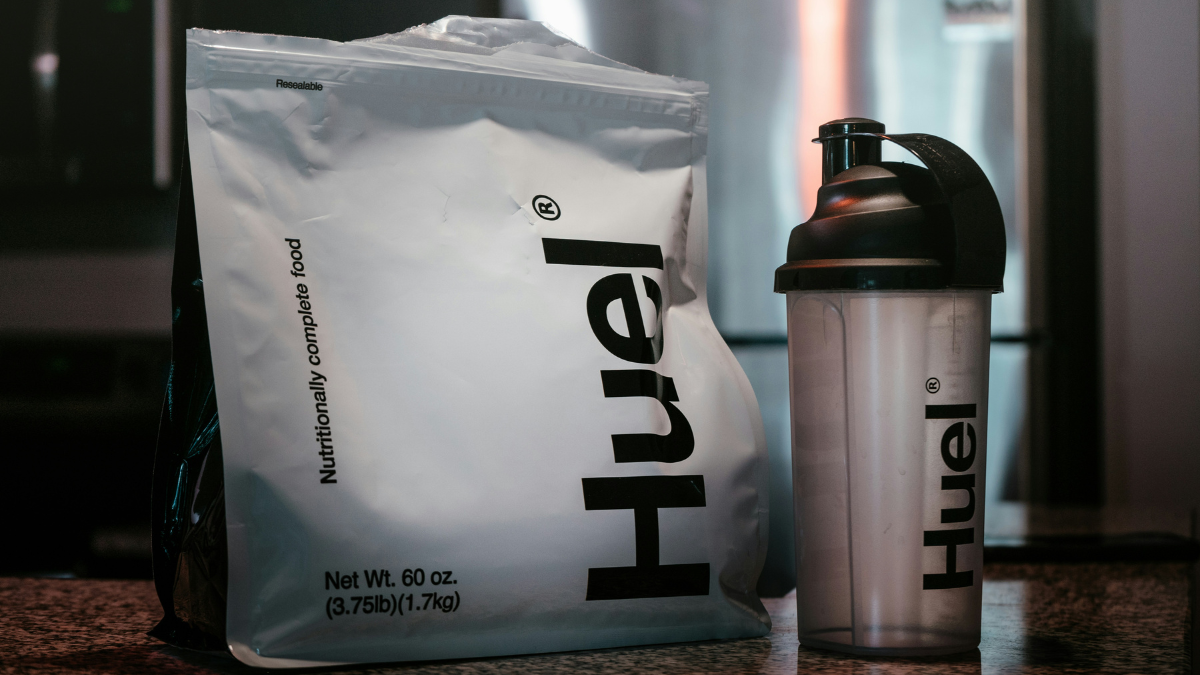
Meanwhile, the proposed €1bn acquisition of Huel imports an agile DTC engine capable of generating 300 to 400 digital assets a month with ‘virtually no advertising above the line’, according to de Saint-Affrique. The brand’s model relies on community management and performance-driven content, giving Danone direct access to digital-native consumers without needing massive traditional campaign budgets — although best practice indicates that it will need to embrace broad-based marketing to grow past a certain point.
Direct channels were equally central to Danone’s crisis response following an infant formula recall, where the company swapped generic PR releases for virtual factory tours and targeted healthcare messaging to rebuild trust on the ground.
Mondelēz: Half-year (28.7.26)

What’s the topline? A solid Q2 2026 performance that beat Wall Street estimates on both revenue and earnings, prompting management to raise its full-year revenue growth outlook to at least 2%.
Any interesting insights? CEO Dirk Van de Put told investors that Mondelēz will continue to reinvest in marketing and promotion, having seen that reinvestment grow by double digits in this half. Media spend is up, and Van de Put attributed this to investing more in AI-driven targeting and creative production.
COO and global CFO Luca Zaramella added: ‘We have the strong belief that reinvesting in our brands is really the best thing’.
However, management is focusing this spend on a handful of large-scale initiatives across fewer platforms, going for what Van de Put called ‘bigger and fewer bets’. One example discussed in the results was Mondelēz’s partnership with Lotus Bakeries to produce Biscoff-flavoured Milka and Oreo products, which Van de Put said could be a $500M-to-$1B opportunity within the next few years.
Procter & Gamble: Full-year (29.7.26)
What’s the topline? Organic sales in Q4 were flat. For the full year, net sales were up 3%, mostly thanks to favourable currency exchanges and a little bit because of price increases. It’s tough out there for the FMCG company, as a result of volatile commodity prices and cautious consumer spending, but the new CEO, Shailesh Jejurikar, called 2026 a year of foundation building.
Any interesting insights? Jejurikar reiterated the three big changes for P&G to navigate: ‘media fragmentation, the changing retailer landscape, and inflation.’
Fragmenting media is forcing the company to seek deeper, more complete connections with customers, and adapt its marketing to ‘reduce time and steps from awareness to purchase’. Core SG&A expenses increased 4.1% in 2026, mostly as a result of P&G investing more in marketing, and the company’s CFO promised to continue to invest in media and seek to make the spend more efficient in the year ahead.
Retail media is a particular area of interest for the brand. Jejurikar says it’s a channel in which having scale helps, and one of the things they’ve been looking at is using it to get ‘a much better demand signal generation to marketing content’.
Following a period of price increases post-Covid, P&G is steadily bringing back more discounts and promotions, although Jejurikar noted that they are not a sustainable way to build the business, and instead use them primarily to drive trials.
In terms of consumer behaviour, well-off consumers continue to buy larger pack sizes to find value, said Jejurikar, while less well-off customers switch to smaller bundles and hunt for promotions.
L’Oréal Half-year (30.7.26)

What’s the topline? L’Oréal beat expectations in the first half of 2026, with sales rising 5.8% to €24.2bn ($27.75bn). Adjusted like-for-like sales growth reached 6.5%.
Any interesting insights? Chief executive Nicolas Hieronimus says the company continues to benefit from the ‘dopamine effect of beauty’ with consumers turning to affordable luxuries amid economic uncertainty. Why he doesn’t just call it the ‘lipstick effect’ like everyone else is unclear.
Hieronimus highlighted e-commerce as beauty’s fastest-growing channel, pointing to continued momentum on Amazon and growing success on TikTok Shop, where the company says it is getting better at ‘playing the TikTok Shop game’.
He also said younger consumers are increasingly using large language models to research beauty products, prompting L’Oréal to establish dedicated taskforces to understand how AI surfaces recommendations. Rather than favouring the biggest brands, he argued, LLMs reward high-quality product data, scientific evidence and professional endorsements.
The company also revealed how rapidly AI is reshaping both marketing and product development. L’Oréal now uses AI to produce more than 500,000 pieces of social-first content every month, while the technology has accelerated innovation by allowing researchers to analyse exponentially more molecules and bring new products to market faster.
Backing all of this is sustained investment in marketing. Advertising and promotion spending rose to almost €8bn, accounting for 32.6% of sales, up from 31.9% a year earlier. Hieronimus said L’Oréal is willing to increase advertising behind products that gain early momentum: ‘If you think you can take it higher with more fuel, we’ll put more fuel in it.’
AB InBev: Half-year (30.7.26)

What’s the topline? Organic revenue in the second quarter increased 5.6% to $16.7bn, year on year, while volumes increased 0.9% overall, with beers up 1.1% and non-beers down 1.1%.
Any interesting insights? CEO Michel Doukeris stressed the company’s focus on its ‘mega-brands’, like Michelob Ultra and Busch Light.
‘Investment in our megabrands and mega platforms continued to build portfolio brand power, with sales and marketing investment reaching $4.1bn in HY26, up 9% versus HY25,’ said Doukeris. ‘…Through our mega platforms, we are placing beer and our brands at the center of culturally relevant moments for consumers, including the Winter Olympics, Roland-Garros, the FIFA World Cup and Wimbledon.’
Apparently the company created a strawberries-and-cream-flavoured Stella Artois for Wimbledon, which is upsetting.
Adidas: Half-year (30.7.29)

What’s the topline? Quarterly sales of €6.7bn ($7.72bn) lifted Adidas’ full-year sales guidance. Profit, however, came in below forecasts as higher marketing investment weighed on margins.
Any interesting insights? Adidas deliberately sacrificed profit to spend more on marketing. The sports brand splurged €212m more on marketing than expected during the World Cup. CEO Bjørn Gulden repeatedly stressed this was a conscious decision to maximise the cultural moment rather than protect quarterly profits. Gulden said they decided to ‘invest even more to pave the opportunity for the future’. Adidas expects normalised marketing spend in the second half of the year.
Gulden further argued that not everything worth measuring can be measured. Asked how the company evaluates the return on marketing investment, Gulden pushed back on the idea of calculating a single ROI, saying: ‘To calculate an ROI doesn’t really work’.
While digital channels can be measured ‘much more accurately’, the company argued that upper-funnel activity should instead be judged through a broader mix of brand health, engagement, demand and retail performance. ‘Everything that is upper funnel has actually helped us all the way down to the lower funnel,’ Gulden said.
The comments came after a World Cup campaign that Adidas described as ‘the best-executed campaign that has ever happened in this industry’. Rather than treating the tournament as a sponsorship, the brand activated across fan festivals, concerts, influencers, retail, social content and local market executions. ‘Why activate something in a market that is not relevant?’ Gulden said, explaining that campaigns were tailored by geography rather than rolled out uniformly.
McDonald’s: Half-year (4.8.26)
What’s the topline? Revenue rose 4%, year on year, to $7.1bn, while net income increased to $2.36bn, broadly in line with forecasts. Global comparable sales grew 1.3%, just below analyst expectations, as weaker US performance offset stronger international markets.
Any interesting insights? Chief executive Chris Kempczinski admitted the fast-food chain’s marketing ‘didn’t deliver against expectations’ in the second quarter, citing a packed calendar that included a new beverage, a revamped value menu, and partnerships with K-Pop Demon Hunters and Fifa. ‘It’s tough to break through when you have that many messages out there’, he said.
Kempczinski reflected on how marketing itself has changed. ‘It was television advertising. You would build a marketing campaign at the beginning of the year, then execute that marketing campaign. Today that model doesn’t work anymore,’ he said. Instead, McDonald’s wants to lean further into creators and influencers, arguing that marketing is ‘evolving to something different because the world is changing’ and said ‘we need to change with it’.
While partnerships around properties such as Fifa or Minecraft can create ‘cultural moments’, Kempczinski warned that ‘you’re not going to promo your way to long-term value creation’. Instead, he said marketers should spend more time communicating enduring brand strengths, while using collaborations more selectively.
McDonald’s also contrasted the performance of global blockbusters with locally tailored campaigns. CFO Ian Borden said the company’s Fifa activation ‘provided a lift to the business’ but still ‘underperformed versus our expectations’. By comparison, Germany’s Grimace campaign, which saw the mascot return alongside a menu of purple-themed products, generated 57 million social media views while strengthening the brand’s emotional connection with consumers and driving sales.
Kraft Heinz: Half-year (5.8.26)
What’s the topline? Kraft Heinz beat Wall Street expectations in the second quarter, reporting revenue of $6.26bn and adjusted earnings per share of $0.56, ahead of analysts’ forecasts.
Any interesting insights? Kraft Heinz is doubling down on marketing as it looks to reignite growth. The food giant increased its incremental investment budget for 2026 from $600m to $700m, with the additional $100m going ‘almost entirely in marketing’ after executives said early improvements in market share and consumer demand had given them confidence to spend more.
CEO Steve Cahillane acknowledged growing pressure from retailer private labels, saying Kraft Heinz had been ‘very surgical’ with pricing to compete, but said that marketing — not deeper discounts — is the focus of its latest investment.
The company plans to use the additional marketing budget to support its biggest brands and partnerships, including new long-term deals with Disney and the NFL. Cahillane described Disney as ‘brilliant marketers’, saying the partnership would span co-branding, merchandising, licensing and activations across its parks, hotels and cruise lines to build stronger ‘emotional connections’ with consumers.