


Tortoise Media’s acquisition of The Observer was one of the defining media stories of 2025. Previously, Tortoise had been best known for its audio output, newsletters and membership-driven journalism, which led to some nervousness about it taking control of a 230-year-old newspaper.
On the other hand, it was also a show of faith that established journalism brands can still be an asset, if they successfully adapt to new reader habits and revenue models.
More than a year into the acquisition, The Observer is building out that strategy across subscriptions, audio, newsletters, events and digital products. Jack Riley, chief customer officer at the group, is leading much of that audience and product work. Having worked across titles including The Independent, HuffPost and BuzzFeed, he has seen first-hand how digital publishing models have evolved over the past two decades.
In an interview with MediaCat, Riley discusses building a news brand without over-relying on platforms, being inspired by The Atlantic, and how AI has helped the company rapidly build products and infrastructure from scratch.
What’s a chief customer officer and how did you become one?
I’ve been here a year now in the chief customer officer role, helping realise a reader revenue-supported model for The Observer across audio and the digital subscriptions we launched last year.
The goal is to create products, digitally and in print, that are worth paying for. As we bring The Observer to life digitally, we make it seven days a week rather than just Sundays and knit together the great things Tortoise had built previously.
From my background, I spent a lot of time in pure digital media. I started my career at The Independent, so I’ve seen that trajectory over the last 20 years of how people created their first wave of digital products.
Can you briefly describe the strategy behind Tortoise Media acquiring The Observer?
The acquisition happened before I joined, but the opportunity was to put Tortoise’s work on a bigger platform while properly realising The Observer digitally and bringing it into the modern era.
The paper didn’t really have an audio or newsletter footprint, while Tortoise had built newsletters, events and a strong audio business around long-form series and licensing. What The Observer already did incredibly well was news, politics, sport, food, investigations, culture and lifestyle under a brand people recognise and love.
What have you been doing to increase the audience for The Observer?
The first hurdle was almost a physical milestone: is the paper there on a Sunday for people to buy?
Then it became about building the reach and awareness of the brand digitally, where The Observer hadn’t previously had a standalone presence.
We built observer.co.uk, launched newsletters and social accounts, and created a pipeline for stories to move across print, audio and digital platforms. Then, [we] had a huge hit story — Chloe Hadjimatheou’s Salt Path investigation [detailing alleged fabrications in Raynor Winn’s 2018 memoir] — which was a great accelerant.
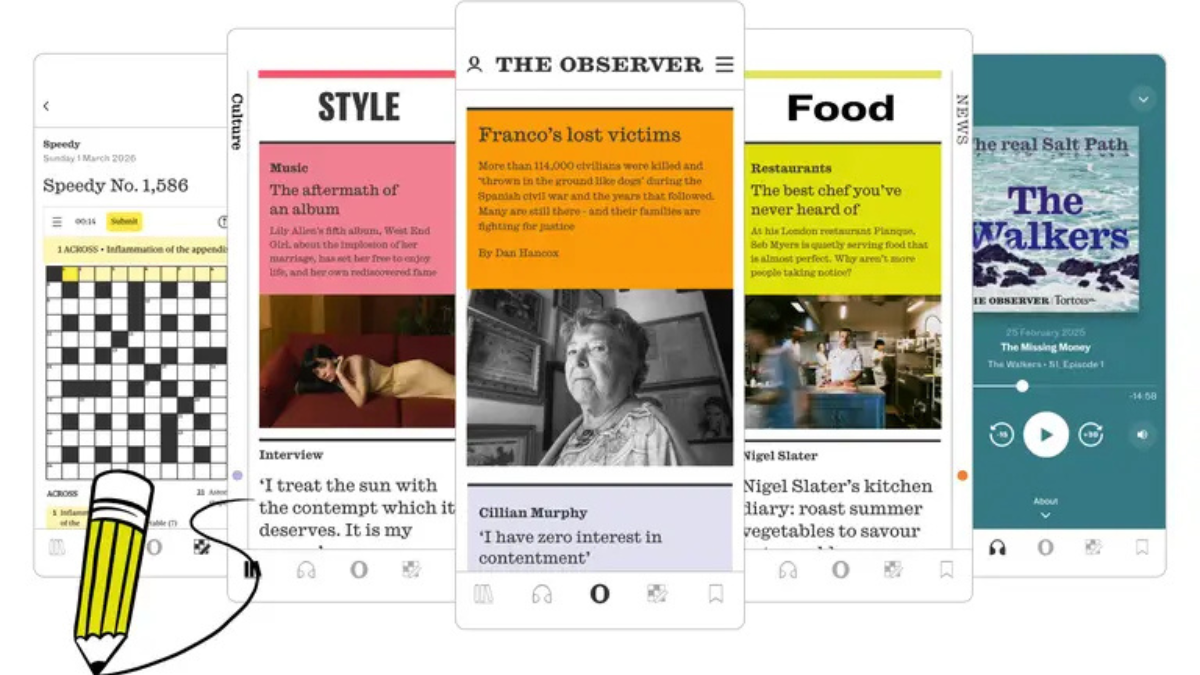
At the end of November, we launched digital products with a subscription model built in. Print subscribers now get digital access as well.
The Tortoise and Observer offering now sits under one umbrella subscription, giving readers access to everything through observer.co.uk or the app. That includes recipes from Nigel Slater, puzzles, ad-free and bonus audio, and subscriber-only apps.
What’s your relationship like with advertisers?
I think what we’ve managed to avoid is the traditional tension between reader revenue and advertising. Building things from scratch at a time when there’s so much change going on gives a good opportunity to redefine how advertising and subscriptions work together.
If you look through the paper, you’ll see amazing brands advertising there — brands advertising in The Observer and nowhere else, and brands that weren’t advertising there previously. The advertising team under Mike Duffy [chief commercial officer] has built really good relationships quickly. The next phase is bringing that to life digitally.
We’re saying to partners that we want it to feel like a special personal relationship and figure out how we can help them, rather than piling them into a stack with many layers of demand. That strategy is going really well so far.
Have changes in search and social affected your plans?
The AI disruption of Google has been a topic for as long as we’ve owned the paper. We think of it through an audience lens: it’s a great way for people to sample Observer journalism and discover who we are.
We think we have a lot to offer across ecosystems. We do trustworthy, authoritative, well-researched journalism. We don’t do thin layers of search content, and that feels like the part most at risk in this ecosystem. We’re proud that our stories are genuinely original and add something meaningful. Platforms know we’re not playing an algorithmic cat-and-mouse game — we’re trying to provide real value.
What does your digital audience look like at the moment and what is the ambition for the next few years?
The ambition is to grow paying customers for The Observer. We have three OKRs [objectives and key results] this year.
One is growing paying customers across print, digital and audio subscriptions. Another is engagement — making sure the journalism reaches people and reflects the quality of the brand.
We launched with a single subscription model, but we’re also considering how to serve readers who want specific parts of the offering.
We want to establish The Observer brand in the market first. Then we’ll look at different product structures and ways of packaging things. We’re still in the phase where we want people to become Observer subscribers and build new daily habits alongside the Sunday habits readers have had for a long time.
Is there a publication you look to as a model for this transition?
We’ve taken a lot of inspiration from The Atlantic. They have the courage to define what a story is for their readers and how to tell it natively for digital audiences, not as something secondary to print.
The Atlantic built its subscription business over a long time and now has a strong subscriber base that supports the type of journalism we’d all like to see more of, even when the economics aren’t there immediately.
What are the biggest changes in how audiences consume news?
For much of the last decade, publishers focused on distributed content across platforms like AMP, Instant Articles and Apple News. Stories were distributed into many different places, each with their own economics and audiences.
That model has shifted. People now recognise the value of a direct relationship with readers and the importance of habits associated with a publication’s own brand rather than intermediary platforms.
There’s also recognition that no single economic model will work. Most publishers need diversified revenue streams — advertising, reader revenue, events, audio, licensing, and B2B. The sophistication of publishers’ monetisation strategies has increased significantly.
The biggest shift has been moving from the platform era to a more direct, subscription-focused era. It’s a more honest relationship with audiences about the cost of producing quality journalism and the responsibility media owners have to build sustainable business models.
How are you using AI?
Building systems, processes, and the tech stack from scratch today is very different from even five years ago. From the development side, we’re able to build and deploy features quickly and at a high standard in ways that weren’t possible even a year ago. Over the last few months of last year, we passed a tipping point where the quality of the work and the workflows around it became truly viable.
There’s no way we could have built the products we have in the time frame we did otherwise. Six months ago, we didn’t have the apps, the subscriptions, or the infrastructure we’ve now built. In six months, we’ve essentially built a viable national newspaper tech stack.
We’re also generating broader and deeper insights from our data platforms. AI helps produce reports, investigate data, summarise performance, identify trends, and alert us to developments earlier. You can receive a briefing first thing in the morning before everyone has logged on, telling you what happened the previous day and what actions to take.
What is your strategy for dealing with AI companies?
We’re very partnership-oriented. We believe our journalism is valuable and shouldn’t be commoditised or freely available without value exchange. We’re happy to work with others to figure out responsible ways to bring that value to readers in different formats, but we’re not willing to give it away.
There are two sustainability questions. One is the sustainability of The Observer itself — if you don’t value journalism properly, you lose the ability to fund it sustainably. The second is the sustainability of the broader ecosystem. We know many people will move toward AI-enabled ways of consuming information.
We don’t want to ignore that trend. Where there are responsible ways to participate, we want to engage. But we also recognise that journalism has gone through many moments where something looked like the future and didn’t develop as expected.
What keeps you optimistic about publishing over the next five to ten years?
There are more ways to deliver great journalism than ever before. Audio is a particularly important one. For younger audiences — audiences that news organisations have often struggled to reach — podcasts are a vibrant, native ecosystem for news.
Culturally, there is also more recognition that people need to directly support the journalism they want in the world. Ten years ago, many readers assumed journalism would simply appear through Facebook or Twitter in a frictionless way. In reality, that system relied on a complicated and opaque set of transactions involving licensing, monetisation, data, and programmatic advertising.
People increasingly recognise the importance of directly supporting trustworthy journalism. I think younger generations understand that, too. They recognise the importance of reported, reliable journalism and knowing where information comes from.