


Rasmus Rudnik spent the past four years handling the media AP Moller-Maersk, as the world’s largest shipping container company charted a course through emotional brand building to shift perceptions among its B2B customers.
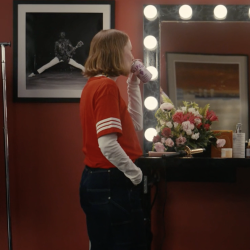
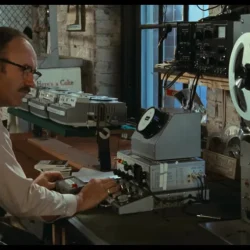
As head of marketing media, Rudnik helped Maersk to make ads that looked like action movie trailers and sitcoms, developed a search strategy for the £28.7bn company, and managed relationships with agencies and media owners.
Following a restructuring earlier this year, as part of which Maersk cut 15% of corporate positions, Rudnik spoke to MediaCat while on gardening leave, about being an evangelist for human psychology in marketing, how brand storefronts are changing, and what makes a good agency partner.
What keeps you interested in media and marketing?
I’m interested in how marketing, and subsequently media, works as a business function for companies. I often see that marketing is the first place they cut funding or, when times get tough, someone comes down and says, ‘Well, marketing is a cost center…’
I don’t believe that. I believe that if you want your business to succeed you need to go where the business is. It doesn’t matter whether you work in B2C or B2B, if the market is there, you need to tell the story of who you are. It’s not all about visibility; it’s about creating moments and working with customer psychology. The human psychology of marketing in media is something that I’m very interested in.
What informs your views on human psychology? Are you a big reader of behavioral economics books, or do you prefer to look at what measurements and metrics tell you?
Both. You could call me an evangelist of this human part of what we do. My mantra is marketing is not an exact science. Of course, the data backs what I believe, but my starting point is that when you work with people, you have to work on people’s terms. Just because an ad is shown, it doesn’t mean that it’s understood or that there’s a human reaction behind it. So the intersection of media and creative and what we present to people, how we speak to people, how we convert — that’s very interesting to me.
I grew up in this era of neuropsychology, when marketing became less about just TV ads and more about creating experiences for customers, especially in B2B. I try to work a lot with the psychology of creating that moment and, oftentimes, this is where I build my foundation.
I work with metrics and data because I need some way to prove that my thinking and the work we do has an impact. But then the question is always, ‘Well, what do we then measure? Awareness is very hard to talk to the CEO and the CFO about. They would like to look at conversions. So to boil this down, my concern is: how do I take this evangelism and translate that into measurable metrics for the board of directors?
How did you go about that at Maersk?
I worked with the brand team for a number of years to [create] brand films that were out of this world and unheard of in the B2B area. They were more like movie trailers. We tried to work with emotions, such as humor or fear, to make us memorable. And further down the line when [customers] think of a logistics partner, we’d be top of mind.
What convinced the executives at Maersk that this would be effective?
Eight to 10 years ago, Maersk found themselves in a position where they had to do something significantly different. If the company was to grow, the growth strategy could not be ocean logistics only. Shipping was, no pun intended, a red-ocean market. So, Maersk decided that the growth strategy should be to become an integrated logistics partner.
The world will face disruptions all the time, whether that’s COVID or tariffs, and it would be easier [for customers] to have a partner that could take up more of their supply chain to erode those disruptions. This was what Maersk wanted to do with the growth strategy.
They also realised that the brand was really well positioned in ocean [logistics], and this posed a problem because people would only think of Maersk in that area, and when they’d go looking for another trucking or warehouse partner, Maersk would be actively disregarded from the pitch.
Now, who else to tell this story to the market than marketing? I was fortunate enough to be part of Maersk at that time and grow this story. So, the task that the company gave the CMO was to go to the market and change the market perception of Maersk.
We looked at what other companies were doing at the time and it was very rational communication. And the story we needed to tell was significantly different. It was, ‘We can remove the worries from your supply chain.’
We believed we could do this by creating that visibility and starting to tell the story from the customer’s perspective with humour, with emotions. So, a series of brand campaigns was built over the last eight years. Some of them are like an Indiana Jones film, some of them are in an Alice in Wonderland world where we turn logistics upside down. And the latest one is like The Office. We know people are binge watching on Netflix now and don’t just go to the movies, so we thought we should structure our campaigns this way.
Being relevant by being humorous, we put this brand in the minds of logistics professionals, the C-suite and everybody else. Because we know that there’s not just one decision maker anymore. It’s a committee of decision makers. There are hidden buyers when we talk B2B.
This is what we went to [Maersk’s] C-suite with, and lo and behold, eight years later we have actively shifted the position of Maersk. I think that only 10% of people now see Maersk as a shipping company.
What channels did you use for those campaigns?
For lead generation, it was a lot of LinkedIn, Meta, PMax [Google] and everything else we could use to hyper-target in the right industry. But we went very broad with the brand campaigns. Connected TV, obviously — we didn’t go out and just buy regular TV ads because 98% of the world will never buy a container. Although, I think the claim is that every fifth thing that you see or touch has been transported by Maersk. But we wanted to be on the big screens, to make a big impact.
We did out-of-home, we looked at airports all over the world to see where logistic decision makers travel. We pinpointed a few big airports and we bought the biggest placements they had. We even bought long-form video on mobile. When we had a logistics fair somewhere, we would just geo-target screens. At some point, I think we even wrapped a few taxis that would go back and forth from the conventions. So, we tried to position the thinking of these campaigns as more of a movie trailer launch.
One of the biggest things we did was activating our colleagues around the world, asking them to please post the video on the launch date. One hundred thousand colleagues posting on the same day — that makes LinkedIn go Maersk blue and white for the day.
What was it like moving from an agency into a brand? (Rudnik previously worked at Carat, Cophenhagen.)
The biggest difference I noticed was the speed in bigger companies. I was used to running on the walls, making things happen on the daily. Being in an agency for 16 or 17 years, that was my rhythm. The client side is very different. You’re equally busy, but your deadlines are not tomorrow, they’re perhaps six months into the future. But in those six months, you have to talk to a range of people to get sign-off.
Having now managed agencies as a client, what do you think they could do better?
Transparency. I like to work with a mix of people with corporate and agency backgrounds. The corporate way of thinking is better at stakeholder management and the politics. The agency people get things moving. They are impatient and they can think like a customer. They think outside in, and corporate people tend to think inside out. Both of these people would communicate with the agency, and if they don’t get a response, they get nervous because all of a sudden they can see that the deadline is approaching.
They don’t know if the project is moving on the agency side. So, just acknowledge that the email has been received. Even better, give me a time when I will get the response.
That transparency is very important. That’s where you win half of your client’s trust. Getting something to market is very complex, and if you don’t know what’s happening, then it’s just a big black box of nothing. I think that if [an agency] is hard to work with but performing well, they are more at risk of being deselected in the next pitch than an agency that is easy to work with but every once in a while has a slip up.
You’ve just spent the past four years managing media for a circa-£30bn company. What did you learn?
If you’ve never worked with media, it seems less complex than it is. That’s why you either need an agency or a good media marketing department. You need a media specialist to make it happen. You don’t want to waste your marketing budget in channels that don’t really matter. You want to be that growth engine. Making sure that you’re doing the right thing with media is as important as filming the right thing [for an ad].
When we spoke before, you talked a bit about the importance of channels that communicate trust. Can you tell me more about that?
I’m going to give you a caveat. I don’t think that the development is there yet, but it will be very soon.
Everyone is working with AI right now, and we’re hearing the doomsday drums that it’s going to take our jobs. I do believe that AI is a big help. It’s very good for processes once the process is set up. But as said, I’m an evangelist, and I believe in human psychology, and I believe that we’ve seen these disruptions before — it was called the internet. That changed the consumer behavior. Social media changed consumer behavior. And now we are at the fourth or fifth big change of how humans behave.
It’s an information overload that the human mind now has to face. So what do we do about it? This is the revival, I believe, of traditional, authentic media and trust. I will hold my hand up. Ten years ago, I said print media is dead, out of home is dead.
But there’s no filter. You don’t know what is real. But if you go to your reliable source — that could be Reuters, CNN, the BBC, whatever — you trust what they say to a greater extent than things posted on LinkedIn, Facebook or in any new channel. And I think that is going to be the savior of traditional media.
A few years ago, you developed a search strategy for your brand. To what extent has that channel changed in the intervening years, as a result of AI?
Again, I think a lot of this is still to come. It goes back to how much the early steps of the customer’s journeys have expanded. The storefront of a company is no longer just its website. The website is actually one of the last parts of the customer journey. This is where you go now when you’re ready to convert. And if a company doesn’t acknowledge that that’s the truth, then people will stop visiting the website.
The storefront is now, how does your company look in social channels, LinkedIn, Meta, TikTok, WeChat? Is it a consistent brand story or not? What is ChatGPT and Claude and everyone else writing about us, and how do we impact that?
Media is so much more impactful now. I saw a recent survey on LinkedIn that 81% of the customer journey is now in media. Nineteen percent is actually when they land on the website and you get to talk to them. But between here and there, most of the decision is already made up. So if you want to drive growth, you need to look at your storefront.
From what you’ve seen so far, is optimising for LLMs much the same as it was for search?
I think it’s a different ball game and the reason is that search engine optimisation is transparent. People can go into Google, and they know what it will crawl. They know what Google will look for. We are starting to understand how AI reads the internet and what it values, but we don’t fully understand it. Should I start writing articles on subreddits? Is it looking at our Wikipedia page? But what I do understand right now is AI is listening less to the company and more to the users.
So that is the significant change. We know what SEO optimization does. We know how to manipulate it. We know how to work with it. AI, we are still trying to understand.
Did you spend a lot of your time thinking about how to work with influencers?
Maersk didn’t need logistics influencers — they were the influencers.
Bananas is a specific vertical in logistics. Bananas are difficult to transport because, if you put them into refrigerated containers with avocados or anything else, they will not be good when they arrive. And at Maersk, there’s a banana guy who’s brilliant. He’s the influencer.
There was a guy at Maersk, called Wayne, and he had the nickname Supply Chain Wayne.
So yes, business influencers were discussed, and then we said, ‘We have them in the hallways, go pick one.’
Have you noticed a decline in the ROI of online platforms over the past couple of years?
Yes. Almost overnight in January 2024 a decline happened in lead-gen performance in most platforms. My rational thinking was that platforms make money and maybe a bigger cut of fees went to the stakeholders at those companies. I don’t know.
Anything else you’d like to say about media and marketing while we’ve got you?
I think my number-one concern is that marketing, in my view, is still a bit of a bastard child in most companies. Companies have existed since the beginning of time and marketing has only been part of everything the last 50 to 60 years.
In very big companies, especially in B2B, marketing is still new — maybe 10 or 12 years old. Those companies can have a legacy of 100 to 200 years. They know exactly what they do and they do it brilliantly. And in comes marketing and they talk about new metrics, market behaviors and platforms. So, all of a sudden, this bastard child is saying, ‘We need this tech stack with some AI integrations that can feed our CM data…’ and all of this. So marketing needs to take a step up on measurability and reasonable claims to buying things. We don’t want to be the crayons and cookies department anymore.