


What a selection of the world’s top brands had to say about their performance and outlook during the first quarter of the 2026 calendar year.
PepsiCo (16.04.26)

What’s the top line? Q1 organic revenue was up 2.6%, with guidance unchanged from Q4 at 2-4% organic revenue growth for the year. This was in part due to cost reductions in North America following a productivity program launched in early 2025. Core operating margin was up 10 basis points, and growth rates on ‘permissible and functional’ brands were up to double digits in some cases.
Executive vice president and chief financial officer Stephen Schmitt said he’s pleased with the company’s performance, and plans to ‘continue to play offense’ and invest in value in North America, where he promised ‘additional advertising and marketing’.
CEO Ramon Laguarta added that they were ‘optimising our advertising and marketing’ and that the company is ‘actually a little bit ahead of where we thought we would be by now’.
Any interesting insights? Functional and health-conscious foods remain a focus, with Laguarta crediting brands like Naked and Gatorade with bringing in new customers seeking ‘no colors, no artificial colors, no artificial flavors’. He added that there are now ‘two types of consumers coming into the category’, with lapsed customers being brought back to snacking brands, like Lays and Doritos, thanks to affordable multipacks and multi-serve options.
Events marketing will be a key for the year ahead. PepsiCo is sponsoring the Fifa World Cup, which Laguarta called a ‘very big opportunity to engage consumers’ holistically through space gains and activations. In particular he highlighted the ‘No Lays No Game’ campaign, which he said would ‘link Lays to the occasion of sports watching and making sure that when there are gatherings of consumers watching the game, this is activated’.
Netflix (16.04.26)

What’s the top line? Netflix beat Wall Street expectations for both revenue (which increased 16% year on year to $12.25bn) and earnings in Q1, although the result was not enough to keep investors happy, with shares sliding 10% in after-hours trading on Thursday.
The drop may be a reaction to the announcement that co-founder Reed Hastings will step down from his role as executive chairman in June.
Forward guidance also likely had an effect. Netflix projected a 1.5% decline in operating margins for the April-to-June quarter, signalling some near-term pressure on profitability even as top-line growth remains strong.
This was also the first earnings call since Netflix dropped out of the bidding for Warner Bros. Discovery, with co-CEO Ted Sarandos saying that Netflix had put ‘emotion and ego aside’ to walk away as the cost of the deal grew.
Any interesting insights? Management used the earnings call to double down on three strategic pillars: live content (especially sports), advertising, and gaming — all increasingly central to Netflix’s pitch as more than just a streaming service.
Co-CEO Gregory Peters said programmatic buying is growing strongly and is ‘on its way’ to representing more than half of non-live ad spend. Netflix now has more than 4,000 advertisers globally, up 70% year on year in 2025, signalling steady traction for its ad-supported tier.
For live sports, Sarandos said that Netflix is still focused on ‘big breakthrough events’ rather than full-season rights. He pointed to the World Baseball Classic as a standout success, noting it was the most-watched programme Netflix has ever had in Japan, and the largest baseball streaming event of all time, with 31.4 million viewers.
He was clear that sports is part of a broader live strategy that also includes cultural events such as the recent comeback tour by Korean pop group BTS.
Gaming also remains an unexpectedly strong engagement driver. Peters highlighted retention benefits and framed gaming as a major long-term opportunity, citing a global consumer spend market of roughly $150bn, excluding China and Russia. The Netflix Game Controller app becoming the most downloaded in the US App Store wasn’t mentioned by management but reflects the popularity gaming has on the platform.
Peters spoke about the four key areas for gamers; narrative, puzzle, mainstream and kids. For the latter, Netflix has launched the Netflix Playground app, featuring ad-free games designed for children under eight and included with all Netflix memberships.
Peters said: ‘Our goal here is to become a destination where kids’ favorite worlds come to life through games and through interactive experiences.’
Finally, management was asked to spell out the business model on podcasts. Sarandos said there were early signs of incremental engagement, with evidence that podcast content helps fill ‘daytime gaps’ in viewing and boosts mobile consumption, where engagement has traditionally been weaker.
Tesco (16.4.26)

What’s the top line? Sales increased 4.3% to £66.6bn in the year ending 28 February, while pre-tax profit rose 8.5% to £2.4bn, and its share of the UK market hit 28.5%, which is the highest it’s been in a decade.
Any interesting insights? Group chief executive Ken Murphy said that the conflict in the Middle East made it harder to predict what was going to happen this year, but he added that Tesco is yet to see changes in shopping behaviours.
Tesco Media, the supermarket’s retail media platform, ran over 12,500 campaigns in the financial year just gone, according to Murphy, and over 90% of advertisers increased the amount they spent on the platform.
Murphy said that advertisers are ploughing more into the platform because they’re getting more than just ad space.
‘They recognise the combination of the insights that we provide through Dunnhumby [Tesco’s data analytics platform], our ability to build audiences that are a lot more tailored to them through our Sphere [retail media] platform, and the investments we’re making with Adobe and Kevel and others to make that whole retail experience a lot more seamless and cost-effective is really, really working for them,’ said Murphy.
Primark (21.4.26)

What’s the top line? Primark is going to split from Associated British Foods (ABF) and become a standalone business. The demerger is expected to complete by the end of 2027, and the fashion retailer will likely list on the FTSE 100.
In the half-year ending 28 February, Primark’s revenue increased 2% (constant currency), but like-for-like sales declined 2.7%, and profit was down, too.
Any interesting insights? In September Primark launched its first integrated UK campaign, In Denim We Can, which ‘delivered strong ROI and improved brand health’ according to the brand’s new CEO, Eoin Tonge. He also said its second full-funnel campaign, Shockingly Chic, was looking good, in terms of results. Both campaigns included in-store, TV, paid social, CRM and out-of-home advertising.
Primark’s Major Finds activations got the most air time, though. The social media and influencer-led promotions highlighting in-demand bargains in womenswear were praised for helping to remind customers what Primark is all about.
‘Firstly [they’re] helping to tackle the price perception,’ said Tonge, ‘But they’re also selling out and driving footfall into stores with attachment buys. Finally, they’re working very well for us online in terms of sales and in digital engagement.’
While UK Womenswear has been the focus of Primark’s increased marketing investment up until now, the company says it is increasing local marketing across Europe, especially with influencers, targeted digital ads, and CRM.
George Weston, the CEO of ABF, noted that across Europe demand was beginning to weaken as a result of the conflict in the Middle East, however. ‘There must be a risk that if the conflict persists, consumer spending will keep on being subdued,’ he said.
The US is next on the agenda for the brand, which has taken a step back to evaluate its target consumer there.
Danone (22.4.26)

What’s the top line? Like-for-like sales in Q1 increased 2.7%, reaching €6.7bn ($7.8bn). Chief financial officer Jürgen Esser attributed the growth primarily to demand for functional dairy products. High-protein yoghurts are ‘flying off the shelves’ in Europe, apparently.
Any interesting insights? Esser thinks the acquisition of Huel (announced in March 2026 for approximately €1bn) will enhance Danone’s ‘presence in the premium functional nutrition category’, and he highlighted Huel’s ‘direct-to-consumer channel management’ and ‘state-of-the-art digital marketing skills’ as key assets.
In fact, Esser talked about a broader shift towards ‘science-based’ marketing across all of Danone.
Danone will continue to focus on its functional and health-focused brands, which are growing faster than the average of the food and beverage market. The demand for these kinds of products was sufficient to compensate for the impact of a targeted infant milk formula recall that Danone was forced to issue earlier in the year.
Branded waters are another category which performed well for Danone over the previous quarter, at 2.3% like-for-like growth.
L’Oréal (22.4.26)

What’s the top line? Adjusted sales were up 6.7%, well ahead of the global beauty market which, according to L’Oréal, grew around 3.8% in the previous quarter.
Any interesting insights? Haircare is doing well, apparently, because women are keeping it long, and also because of more mixed populations, which include lots of people with curly and textured hair that is ‘more demanding’, according to CEO Nicolas Hieronimus.
Overall, the beauty market is resilient, added Hieronimus. The Middle East conflict has hit sales in the big tourist malls of Dubai and other travel retail in the region, but not much else. A sustained rise in oil prices would hit costs, however.
Hieronimus said volume sales accounted for around 40% of L’Oréal’s growth, adding: ‘Therefore, the value is there also to protect, of course, our gross margin.’
Nestlé
What’s the top line? Organic sales in the first quarter of 2026 rose 3.5%, comfortably beating the 2.4% consensus forecast. The performance was driven by strong demand in coffee and pet food, both of which exceeded expectations.
Total reported sales, however, fell 5.8% year-on-year, broadly in line with estimates, as currency headwinds weighed on results.
The company flagged continuing risks from higher energy and freight costs but said that it was maintaining its guidance for organic growth in the region of 3% to 4% reflecting ‘increased geopolitical uncertainty and macroeconomic risks’.
Any interesting insights? CEO Philipp Navratil said that rising global fuel costs are actually benefitting Nestlé because it’s leading to more shoppers — especially those in Asia — to snack at home rather than eating out.
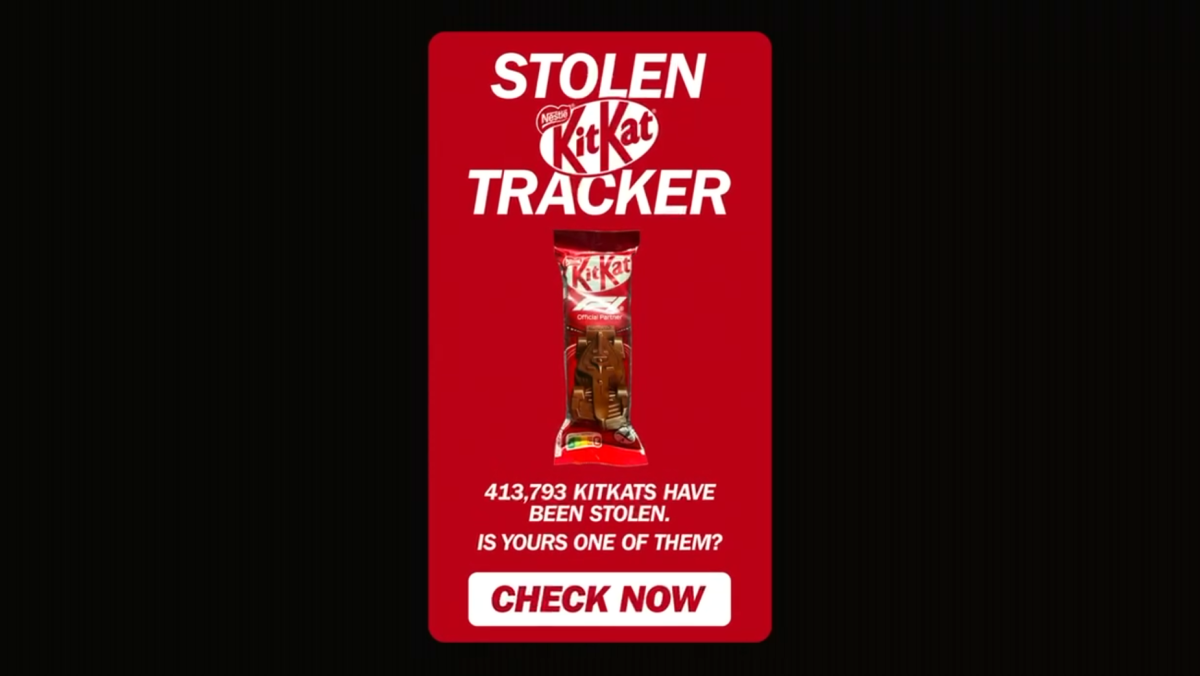
The company also highlighted efforts to better connect with younger consumers. It pointed to influencer-led campaigns, including a partnership between pop star Dua Lipa and Nescafé, and the partnership between KitKat and F1, as examples of the strategy.
The marketing response to a KitKat truck being stolen was also singled out as a good example of the kind of ‘bottom up’, ‘on-tone’, ‘viral’ marketing that Navratil wants to do more of.
E-commerce sales grew organically by 15.4% in the first quarter, and now account for 21.5% of the company’s total sales.
‘We’re also collaborating with many e-commerce partners on supply chain and leaning into retail media,’ said Navratil, adding that ‘retail media has good returns on investment’ also.
Keurig Dr Pepper

What’s the top line? Revenue rose 8.1% to reach $3.98bn. This was primarily driven by demand for cold beverages and booming international markets, which were strong enough to offset a significant decline in coffee sales in the US, as well as shrinking gross margins.
Any interesting highlights? Chief financial officer Anthony DiSilvestro said the increased demand for refreshment beverages was led by ‘healthy trends in carbonated soft drinks, energy, and sports hydration’. In particular, he highlighted strong growth in the company’s zero sugar portfolio, including Dr Pepper Zero Sugar and sports brands like Energy, Rapid Hydration, prebiotic fizzy drinks.
Coffee was weaker, with sales down 2.3%. Higher green coffee costs and tariffs led to a 21.3% drop in segment operating income.
DiSilvestro promised that Keurig Dr Pepper will increase marketing this year, including ‘really dialling up our precision marketing capabilities, and our digital agenda’. He highlighted campaigns that could expect a boost in marketing, including Keurig Coffee Collective and the Keurig Anthem campaign as well as the Dr Pepper Creamy Coconut limited relaunch.
Procter & Gamble (24.4.26)
What’s the top line? Organic sales in the previous quarter (which was the third of P&G’s financial year) were up 3% year-on-year. Despite the geopolitical challenges, the company thinks it will still hit its target for the financial year, although maybe more towards the lower end of the range.
Any interesting insights? Chief financial officer Andre Schulten spelled out how much the increased price of oil will cost P&G. If the price of Brent crude continues to hover around $100, it will hit P&G to the tune of $1bn a year. After tax.
This will likely mean P&G will have to raise its prices, which is difficult when, as Schulten noted, consumers have already been ‘hit with cumulative inflation beyond anything that they’ve seen in recent history.’
P&G’s strategy is to earn the price increases through innovation: create better formulas and charge more for them, while maintaining prices on standard products.
Apart from that, the company’s challenges remain what they were earlier in the year.
‘Media fragmentation and changing consumer media preferences are affecting how consumers are collecting information about our categories, including platforms like social media, retail media, and AI portals,’ said Schulten. ‘The retail landscape is changing, more concentration but also brand proliferation. Retailers are becoming media platforms, and media platforms are becoming retailers. Inflation across food, energy, healthcare, and many other areas of spending has taken a toll on consumers and how they assess value.’
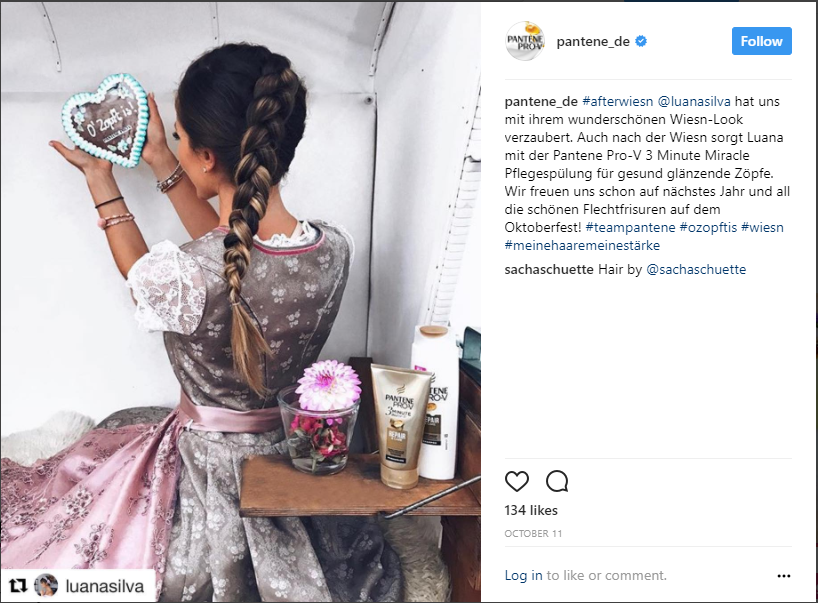
In terms of marketing, Schulten highlighted Pantene in Germany, which invested more in social media and influencer partnerships, and in events like Oktoberfest and Berlin Fashion Week, tripling its reach despite spending 20% less on media.
Coca-Cola (28.04.26)

Whats the topline? A 10% rise in organic revenue, with volume and revenue growth in all regions except Latin American, where a new sugar tax precipitated declines in Mexico. Chief executive officer Henrique Braun predicted overall revenue growth of 4-5% for 2026.
Any interesting insights? Braun said the company is tapping into the consumer demand for ‘all things cherry’, with Coca-Cola Cherry Flow, Diet Coke Cherry and Mr. Pibb.
The re-launch of Coca-Cola Zero-Zero also ‘contributed to the trademark of a Coca-Cola growing volume in Europe,’ said Braun.
Ahead of the World Cup, Coca-Cola was also able to harvest more consumer data via a ticket giveaway that consumers accessed by scanning codes on the product packaging. Braun promised more activations like this in 2026, including around the USA’s 250th anniversary.
Chipotle (29.04.26)
What’s the topline? Chipotle’s revenue rose 7.4% in Q1 to reach $3.1bn, with sales driven by a strong loyalty scheme relaunch that accounted for 32% of sales. Marketing increased to 3.4% of sales, with a particular focus on limited-time offers on protein-heavy dishes and seasonal sauces.
Any interesting highlights? Chief executive officer Scott Boatwright highlighted menu innovation and the campaign to promote Chipotle’s new high-protein line in particular. He said that add-on protein ‘reached nearly a quarter of all transactions’.
The Rewards on Repeat loyalty program, which relaunched on 13 April, was also a focus, and Boatwright told investors that there had been a 25% uplift in new members coming into the funnel.
Boatwright also talked about bringing in former Burger King CMO Fernando Machado as chief brand officer. He said Machado’s ‘proven track record of building iconic brands, driving category-defining innovation and leading customer-centric marketing strategies’ are ‘exactly what we need’ as Chipotle focuses on loyalty and brand value. Machado’s time at Burger King was marked by a heavy focus on growing customer loyalty through apps. He will join the company on 1 June, and Boatwright said that Machado will be working on Chipotle’s ‘culturally relevant’ marketing campaigns, which are starting in the next few weeks with the goal of bringing in new customers.
Adidas (29.04.26)
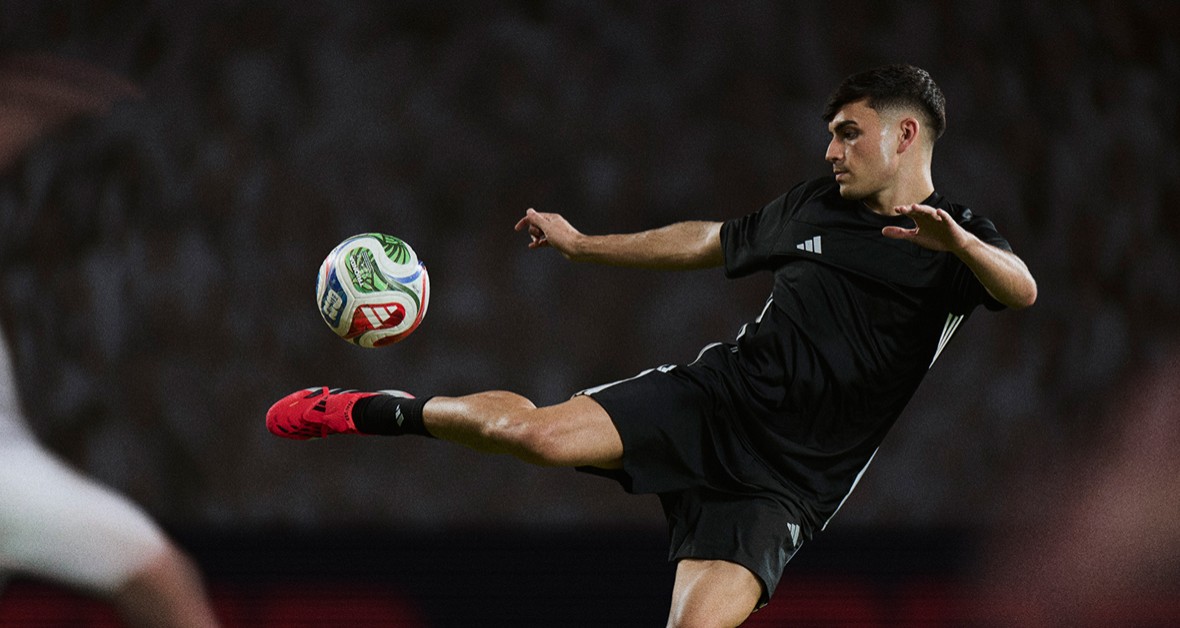
What’s the topline? Revenue rose 14% (currency neutral) to €6.59bn ($7.7bn) in Q1, driven by direct-to-consumer sales which grew 22%. E-commerce was even stronger, growing by 25%. Executives attributed this to product innovation in the running category. The company is reaping the brand benefits of Sabastian Sawe wearing Adizero Adios Pro Evo 3 trainers when he became the first person to run a sub-two-hour marathon in an official race at the London Marathon at the weekend.
Any interesting insights? Chief executive officer Bjørn Gulden acknowledged that the overall athletic gear category is ‘struggling’ at the moment, but said he has high hopes for football boots with fashionable printed elements, praising the style of the ‘lightest speed shoe on the market’.
Football wasn’t the only sport namedropped in the results, with newcomers padel and pickleball both making an appearance (as per MediaCat’s previous prediction). Gulden said that padel is ‘booming’ more than he anticipated and that Adidas has become a market leader in the sport, and hopes to replicate that success in pickleball in the USA and volleyball, which is growing in popularity in Türkiye.
Chief financial officer Harm Ohlmeyer added that while marketing represents 11.5% of sales at the moment, it will increase significantly in the second quarter to capitalise on the Fifa World Cup.
Unilever (30.04.26)

What’s the topline? A 3.8% underlying sales growth in Q1 despite the subdued European market, driven by a 2.9% growth in volumes and small price rises. Chief executive Fernando Fernandez said that he expected ‘a slight recovery’ in Europe despite rising energy prices leading to a fall in consumer purchasing power. He added that Unilever’s brand marketing and investment is fairly high at around 16%, but said that he ‘feels comfortable’ with that level and will likely maintain it going forward.
Any interesting highlights? Fernandez said that Unilever’s share of both digital and ‘old media’ voice is solid, and highlighted several key brands which are growing fast, including Persil Wonderwash which drove the home care division to 6.1% growth in the liquid laundry segment. Hellmann’s Flavored Mayo, which has been expanded into 35 markets and drove volume growth in the nutrition division. Fernandez also hinted that more ‘decisive interventions’, such as the ice cream business demerger and the new agreement to combine Unilever’s foods business with McCormick, may be pursued. These changes will leave Unilever internally entirely focused on home and personal care brands.
He added that Unilever is expecting a boost in performance in beauty and wellbeing products in Q2, driven by the Liquid I.V. and Nutrafol brands with campaigns planned to drive multiple usage occasions and attract new consumers. In particular, he said that ‘simple’ brands ‘rooted in superior science’ like Dove and Vaseline were performing well thanks to word-of-mouth recommendations.
Did Unilever talk about creators? Yes. Fernandez said Unilever now works with 100,000 creators on the Dove brand, and highlighted how impactful creators have been to Vaseline. When asked, he also confirmed that the cost of paying influencers is ‘variable’.
AB InBev (05.05.26)
What’s the topline? AB InBev started 2026 strong, beating expectations for Q1. Revenue reached $15.27bn and the company delivered earnings per share of $0.97, exceeding the $0.91 forecast.
Sales volumes increased 0.8% year-on-year in Q1 — the first rise in sales volumes that the world’s largest brewer has reported in three years. Analysts expected a decrease of 0.5%.
AB InBev said it remained on track for annual underlying earnings growth of between 4% and 8%.
Any interesting insights? Like a lot of alcohol brands, AB InBev has been working hard over the last few years to diversify. One of the fruits of that harvest has been BeatBox, the ‘ready-to-drink’ brand it acquired 85% of in December.
Given that this was its first quarter with BeatBox as part of the family, it was naturally a point of focus. CEO Michel Doukeris described it as ‘very complementary’ to the rest of its mix and ‘not cannibalistic’ to its core products.
BeatBox is part of its Beyond Beer portfolio — portable, cheaper drinks aimed at Gen Z — which Doukeris described as ‘10 years in the making’ and noted that, while gross margin percentage is lower than beer, ‘on absolute dollars, they are way more profitable… 20% to 30% more profitable than our premium beers’. Brands like BeatBox, Cutwater and Mike’s Hard Lemonade saw Beyond Beer’s revenue increase 37%, but Doukeris said they currently have ‘low household penetration’ and are on an ‘S curve’, selling it as a category that will grow more in coming years.
But this was a celebration with beer at the heart of it. ‘Cheers to beer’, Doukeris said, as he paid tribute to the beverage’s ‘important role’ in bringing people together. Sales of the core product surprisingly rose 1.2%, with the brewer citing strong demand for flagship brands Corona and Stella Artois and record high sales across Mexico, Colombia, Brazil, Peru and South Africa. It also benefited from a strong performance from its non-alcoholic beer portfolio, which delivered a 27% revenue increase.
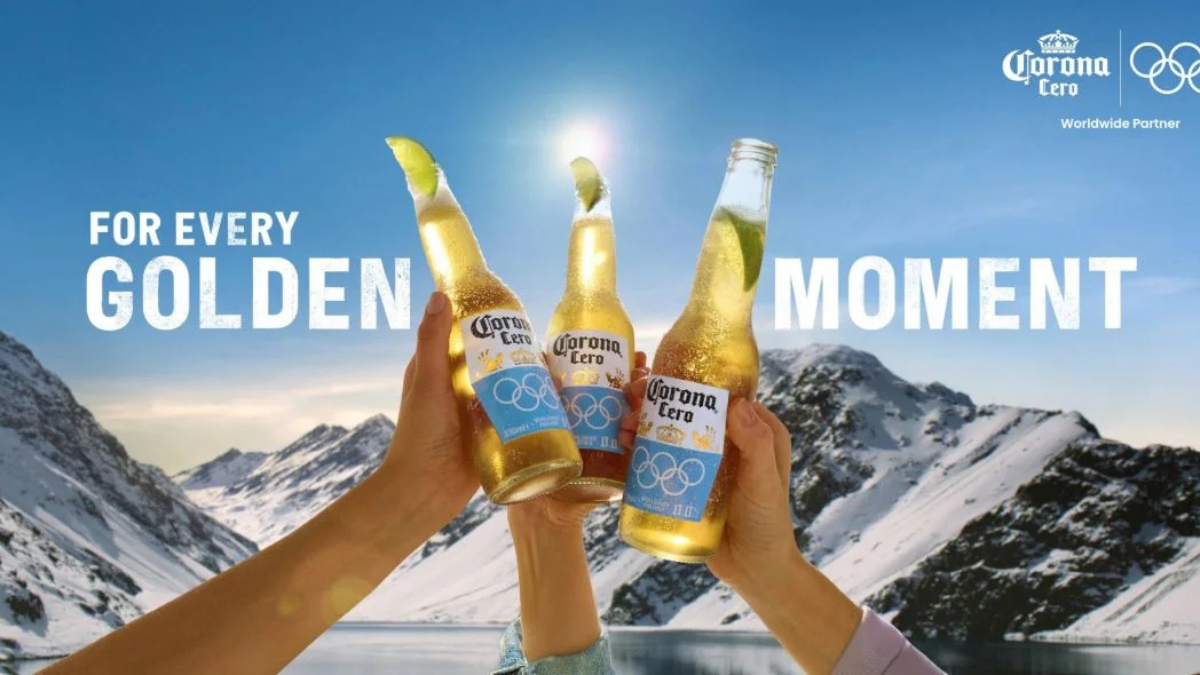
In terms of media spend, AB InBev is all in on sports this year. Q1 saw Corona Cero become the first-ever global beer sponsor of the Winter Olympics, resulting in the ‘astonishing statistic’ that Corona accounted for 60% of all beverages sold during the Games.
The real excitement is for the World Cup though, with AB InBev preparing to pounce during the four weeks when alcohol consumption becomes sportingly-mandated. The Belgian brewer is ramping up marketing spend to capitalise, ready to ‘celebrate the shared passion of beer and football’.
Kraft Heinz (07.05.26)

What’s the top line? Revenue reached $6.05 billion in Q1, beating the forecast of $5.88 billion. But executives are predicting a drop in the next quarter thanks to SNAP (food stamps in the USA) reductions and holiday timings.
Any interesting highlights? Q1 marketing spend was up 37% year-on-year, and chief financial officer Andre Maciel predicted that marketing will be at least 5.5% of revenue. This represents a 20% increase on last year, with most of that budget going to the company’s ‘Win Big’ categories, although those categories have changed somewhat. Frozen has been moved from Win Big to Hold, and hydration from Win to Win Big, due to opportunity assessments and margin outlook. As such the Win Big category now comprises sauces, cream cheese, mac and cheese, and hydration.
Maciel added: ‘If things end up better than we anticipated, we will be willing to lean more into investment, with marketing being one of the key drivers.’
McDonald’s (08.05.26)

What’s the top line? Global comparable sales were up 3.8%, but chief financial officer Ian Borden said the margins of its owned restaurants in the US were ‘not acceptable’. Value strategies were emphasised, with the launch of meal deals in the US and UK, and a new under-$3 menu in the US.
And interesting highlights? Alongside menu innovation, partnerships and marketing were a major feature of the call. Chief executive Christopher Kempczinski highlighted partnerships with Friends, The Super Mario Galaxy Movie and KPop Demon Hunters, which tapped into nostalgia and digitally-native consumers alike. He said that the KPop Demon Hunters partnership performed as expected, emphasising that it was competing against the strong performance of its previous A Minecraft Movie advertising. He added that that ‘one of McDonald’s real advantages’ was taking ‘insights that resonate locally, turn them into brand moments customers want to be a part of and scale them in a way that we believe very few companies can’.
Monster Beverage (08.05.26)

What’s the top line? Record revenue of $2.35bn — a 26.9% year-on-year increase and the first time Q1 revenue cleared $2bn. The strong sales performance was more than enough to make up for a 1.5 percentage point drop in gross profit margin, which was due to increased production and material costs.
Any interesting highlights? Chief executive officer Hilton Schlosberg praised the company’s marketing programmes, highlighting ‘UFC’s transition to a new broadcast partner in late January’, which meant that the number of TV viewers who were exposed to its logo in the middle of the octagon ring increased 3X. Schlosberg also praised the strong performance of Monster’s motor athletes, Marco Bezzecchi and Jeffrey Herlings, and other athletes at the Winter Olympics in Italy earlier this year. In January, Monster became the main sponsor of the UCI Mountain Bike World Series, a premier event in global mountain biking. More athletic sponsorships are almost certain to follow.