


Here’s what some of the world’s top brands and agencies had to say about their performance and outlook during the third quarter of the 2025 calendar year.
Companies:
Airbnb (6.11.25)
What’s the top line? Revenue for the third quarter was $4.1 billion, up 10% year on year. Gross booking value as well as nights and seats booked also rose by 14% and 9%, respectively. Co-founder and CEO Brian Chesky said that ‘both metrics accelerated in Q2 and both exceed expectations’.
Any interesting insights? Airbnb is testing out AI-powered search with a view to rolling it out through its app next year. Chesky said that one of the reasons why the company wants ‘to nail AI search’ is so that they can integrate advertising into this ‘new search paradigm’.
Chesky also tried out an interesting framing of Airbnb in the age of AI, claiming ‘a bet on Airbnb is a bet on AI’ because ‘the more AI proliferates the content we consume on devices, the more people are going to yearn for real connection with real people in the real world’.
He called 2025 a ‘unique year’ for the company, since it launched service experiences and is now piloting hotels. Experiences have performed strongly, with about half of those booking services not having an Airbnb stay associated with their reservation and local demand also growing. The hotel pilot, on the other hand, will be offered as a way to fill Airbnb’s supply gap, where homes may not be the best choice for travellers (eg, short business trips).
But Chesky believes that young travellers ‘aren’t predisposed to stay in hotels’ and that Airbnb will benefit from Gen Z and Gen Alpha, who want to post unique content online: ‘I think for many of them, Airbnb is going to be to go-to way to travel as social media is taking over for travel discovery.’
Monster Beverage Corporation (6.11.25)

What’s the top line? Life’s good in the energy drink category; Monster enjoyed record net sales and income. Net sales were $2.2 billion in Q3 2025, up 16.8% year on year, as ‘energy drinks are becoming more acceptable in society,’ according to CEO Hilton Schlosberg.
Any interesting insights? Monster’s flagship drink, White Ultra Zero, has become a bit of a social media sensation over the past year, with people posting about their love for the product. Monster fuels that word-of-mouth marketing with loads of sponsorships — mostly in motor and extreme sports — and harvests it through ‘robust merchandising activity at retail’.
According to research conducted by the company across Western Europe, 25% of consumers in the past 12 months were new to the category, and came from categories like juice, coffee, and sparkling soft drinks.
Schlosberg said: ‘Coffee house coffees are becoming really expensive, and energy drinks are seen as a more affordable alternative.’
Tariffs aren’t expected to materially affect Monster’s business, although they are hiking up the cost of aluminium in parts of the US.
McDonald’s (5.11.2025)
What’s the top line? Global comparable sales increased 3.6% in Q3, despite what executives called ‘a challenging consumer environment and a difficult QSR industry backdrop’. CFO Ian Borden said the company is still on track to deliver its financial targets for the year, though.
Any interesting insights? Executives said that focusing on what they can control — in this case, ‘menu innovation’ and ‘outstanding marketing execution’ — has helped them deliver results in a challenging external environment.
In the US, McDonald’s reintroduced Monopoly for the first time in nearly 10 years and included digital engagement through its app, similar to campaigns in international markets. The company also had its strongest comparable sales in two years in Germany, where it successfully launched its ‘Taste of the World’ campaign in Q3.
‘Taste of the World exceeded expectations and was complemented by an optimised mailer and strong local marketing, demonstrating our ability to deliver value and innovation simultaneously,’ Borden said. ‘In addition, it provided a campaign blueprint which we plan to replicate across more international markets in 2026 and which is currently live in the UK.’
Executives also spoke about the ‘bifurcated consumer’ in the US, with CEO Chris Kempczinski saying that QSR traffic from lower-income consumers declined nearly double digits in the third quarter, while that from higher-income consumers increased nearly double digits. This, he added, is a trend that has persisted for nearly two years.
Primark (Associated British Foods) (4.11.25)
What’s the top line? Sales for the full financial year increased 1% to £9.5bn, although they declined 2.3% on a like-for-like basis. ‘Consumer sentiment in both the UK and Europe has been weak,’ said Associated British Foods’ CEO, George Weston, ‘and particularly so for Primark’s core customer base.’ Primark’s parent company it considering splitting its retail and food businesses into separate entities.
Any interesting insights? Primark’s interim CEO, Eoin Tonge, acknowledged that ‘the customer journey to our stores is more fragmented and more complex than it used to be’.
He also said that there was more work to be done to remind customers about Primark’s low prices.
Paid social has been working well for the brand, driving good conversion rates with a strong ROI. ‘Revenue from paid media was up 30%,’ said Tonge, and ‘efficiency of paid media was up 5%.’
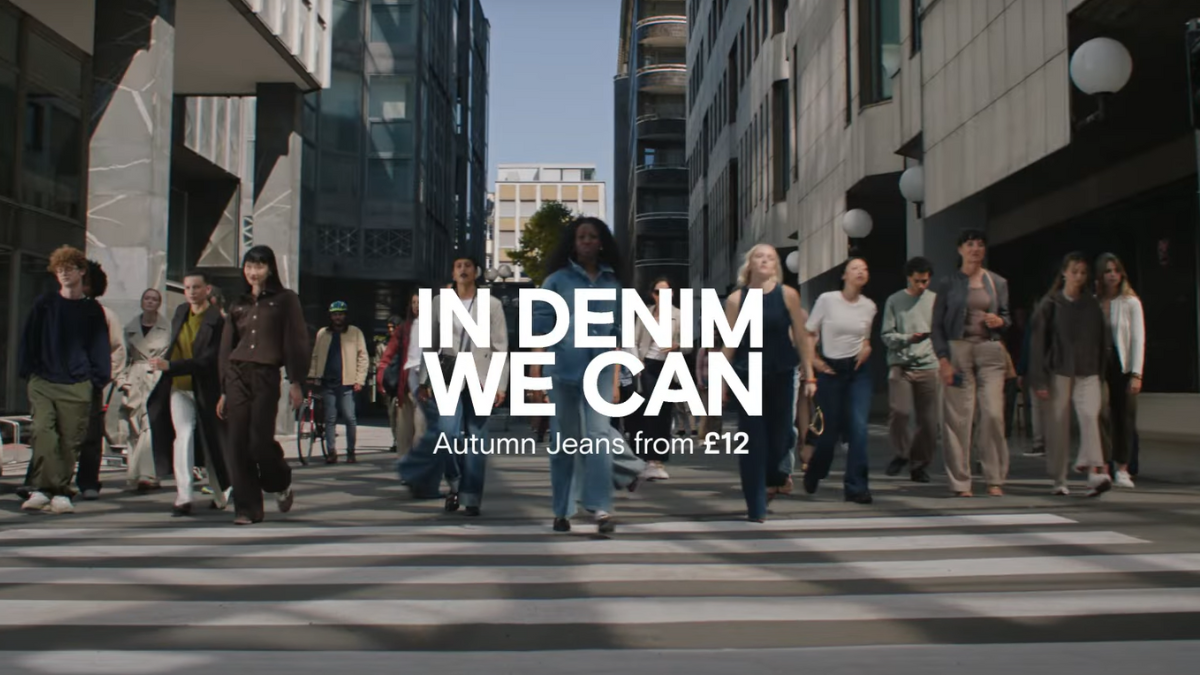
Tonge also mentioned Primark’s In Denim We Can campaign, which was the brand’s integrated performance marketing campaign in the UK, and which preceded a 12% increase in denim sales in the UK. The campaign also ‘had a positive impact on our brand metrics, including consideration and brand reappraisal,’ said Tonge, although he later seemed to say that the creative was too ‘fashion-y’, and not focused on price enough.
Primark will probably increase its digital marketing spend a little over the next year.
Colgate-Palmolive (1.11.25)
What’s the top line? Organic sales increased 0.4% in Q3, as consumer uncertainty, tariffs, geopolitics and inflation put pressure on the business. CEO Noel Wallace said that in the US its premium and super premium products were selling nicely, but that the mid-price and bargain brands were suffering.
Any interesting insights? Ad spend for the full year is on track to roughly match Colgate-Palmolive’s record $2.1bn investment in 2024.
‘We are still spending very robustly against our brands,’ said Wallace, ‘although we pulled back a little bit in some markets where we saw the consumer is much more challenged.’
He added: ‘Where we’re really doubling down now is on building the brand more effectively through our online communication and how we do that and move from basically a more transactional business today with some of these strong online platforms to a more strategic basis on how we advertise, top of the funnel, what we could talk about to build the brand, and ultimately drive persuasion and conversion.’
Wallace also got quite excited about generative AI, saying the company was going to ‘significantly enhance consumer engagement through optimised, real-time, and compelling visual storytelling through AI-developed content.’
AB InBev (30.10.25)
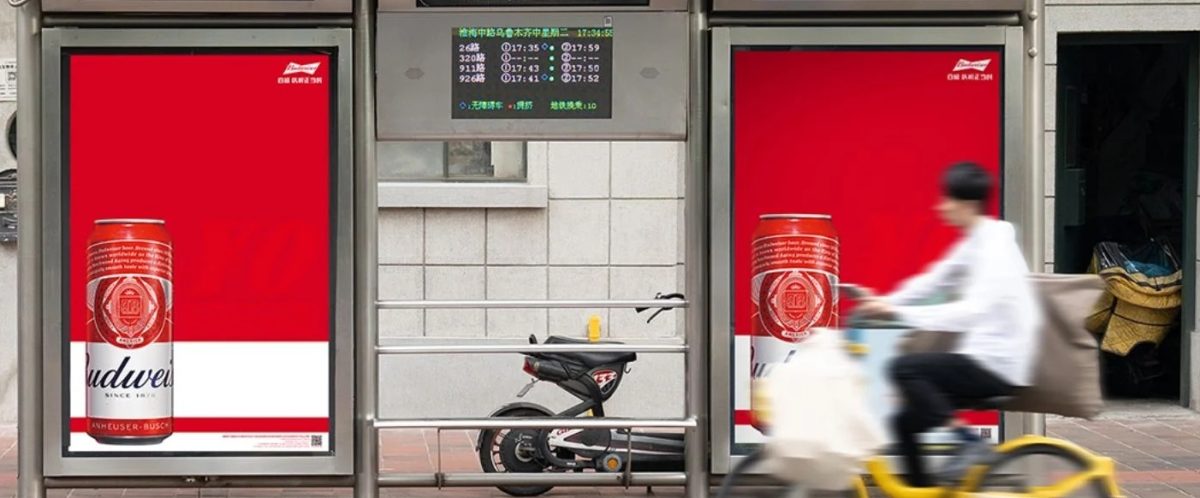
What’s the top line? Despite lower volume sales, AB InBev was able to increase its top and bottom lines (revenue increased 0.9%) and expand its margins through cost cutting and premiumisation. Premium beer, alcohol-free beer and non-beer products led growth. Cutwater, AB InBev’s canned cocktail brand, increased revenue by a triple-digit figure.
Any interesting insights? CEO Michel Doukeris discussed the company’s partnership with Netflix, as well as its sponsorship of the Fifa World Cup and the Uefa Champions League — the latter of which is still being reported as a deal-in-progress, but would see AB InBev replace Heineken after three decades.
‘Consumers are behaving different and consumers are as usual evolving,’ said Doukeris. ‘[and] we are moving fast to where consumers are and will be more and more…Integrating our brands with big partners, big partnerships, big events and relevant cultural moments is key for our brands to win in the long term.’
WPP (30.10.25)

What’s the top line? The group posted third-quarter revenue of £3.26 billion, down 8.4% year-on-year on a reported basis and 3.5% like-for-like (LFL). Revenue less pass-through costs or net revenue of the agency stood at £2.46 billion, down 11.1% reported and 5.9% LFL. For 2025 so far, revenue fell 8% to £9.92 billion, with revenue less pass-through costs dropping 10.5% to £7.49 billion.
Any interesting insights? New CEO Cindy Rose outlined a vision that positions WPP closer to a consultancy than a traditional holding company, one that helps clients navigate a complex, AI-driven marketing landscape.
She said: ‘Large multinationals are going to need trusted partners to help them innovate with AI. The more fragmented and complex this environment becomes, the greater the opportunity for WPP to act as that trusted partner. We’re pushing into enterprise solutions because we think we have an expanded opportunity there to help our clients implement and manage large-scale, end-to-end AI marketing transformation programmes.’
Kraft Heinz (29.10.25)
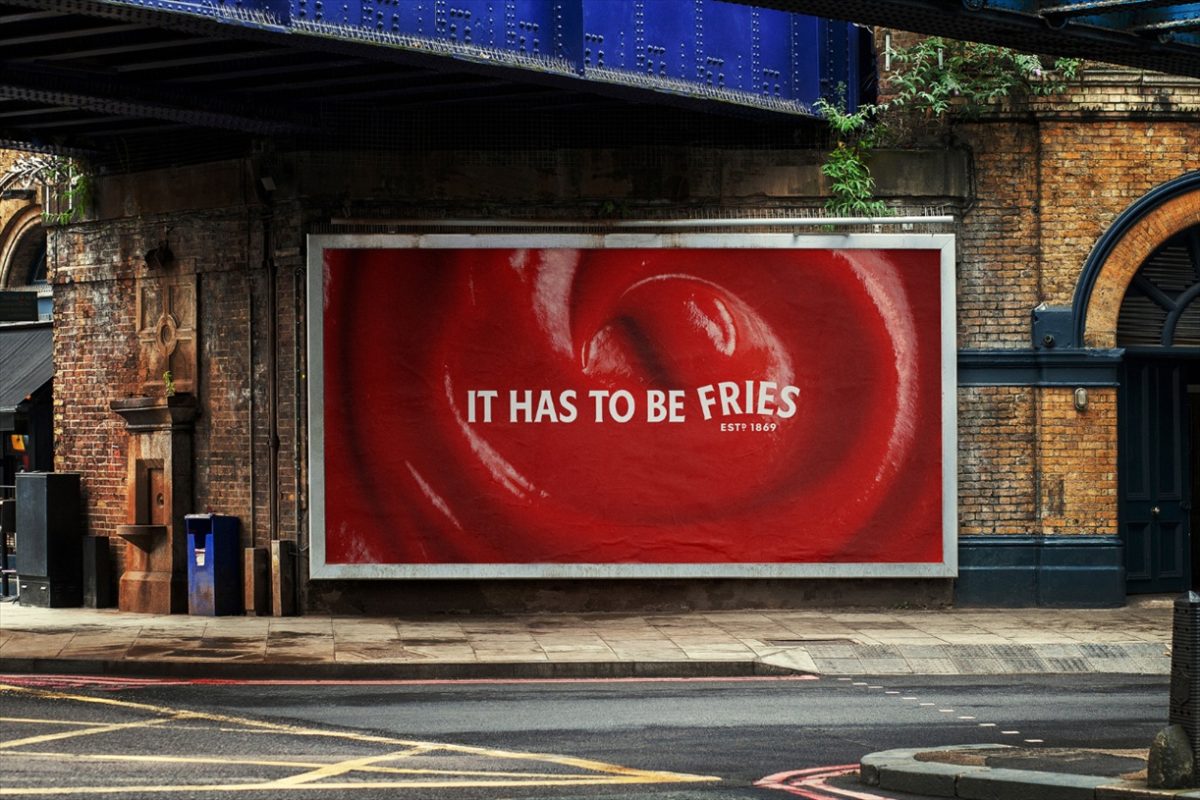
What’s the top line: Organic net sales were down 2.5% year on year, slightly behind expectations, amid what CEO Carlos Abrams-Rivera called ‘one of the worst consumer sentiments we have seen in decades.’
The company is on track to split into two in 2025: Global Taste Elevation — including Heinz, Philadelphia and Kraft Mac & Cheese — and North America Grocery — including Oscar Mayer, Kraft Singles and Lunchables.
Any interesting insights?: Directed by its data-driven Brand Growth System methodology, Kraft Heinz is focusing more of its ad creative on its products. Abrams-Rivera cited Heinz’s Trigger The Taste campaign in the UK as an example.
The company is also focused on exploiting occasions when consumers are going disproportionately to stores. The company increased media investment in core brands 75% YoY during the back-to-school period, reaching 85% of parents five times, on average. ‘As a result, we increased cross-shopping across participating brands by 60 basis points compared to the prior year,’ said Abrams-Rivera.
In common with other food brands this quarter, Kraft Heinz also mentioned that it was emphasising the high levels of protein in some of its brands, a trend that others have mentioned is a consequence of more people taking GLP-1 drugs.
Kraft Heinz expects to spend at least 4.8% of net sales on marketing in 2025.
Alphabet (29.10.25)

Source: Google
What’s the top line? The company had its first ever +$100bn quarter in Q3, with double-digit growth revenue increases in Search and YouTube advertising, subscriptions, platforms and devices, and Google Cloud.
Any interesting insights? Loads, actually.
- Google AI Mode now has +75 million users in the US.
- Alphabet is integrating it’s generative AI models into its cloud services. Over the past 12 months, almost 150 Google Cloud customers each processed around 1 trillion tokens in its models. According to CEO Sundar Pichai, ‘WPP is creating campaigns with up to 70% efficiency gains,’ using the technology.
- Streaming in the living room [on TVs] is the company’s long-term bet for YouTube, according to chief business officer Philipp Schindler.
- In the US, YouTube Shorts now earn more revenue per watch hour than regular, long-form videos.
- ‘Search and its AI experiences are built to highlight the web, sending billions of clicks to sites every day,’ according to Pichai. Far be it from us to call him a liar, but we suspect lots of people in publishing would take issue with that framing.
Meta (29.10.2025)

What’s the top line? Meta apps generated $50.8 billion in revenue over Q3, an increase of 26% year-over-year. But shares in the company fell, as CEO Mark Zuckerberg revised up its spending on AI, and reported a hefty one-off tax charge.
Any interesting insights? Zuckerberg said more than 3.5 billion people use at least one of Meta’s apps every day. Instagram, he added, achieved ‘a major milestone’ with 3 billion MAUs, and Threads surpassed 150 million daily active users.
Meta’s AI recommendation systems have boosted time spent on the apps, Zuckerberg said, with the company recording 5% and 10% more time spent on Facebook and Threads in Q3, respectively. Video, Zuckerberg added, is also ‘a particular bright spot’ for Meta, as video time spent on Instagram has grown by over 30% since 2024.
The number of ad impressions served grew by 14% year-over-year. CFO Susan Li said that stronger ad performance has boosted advertiser demand, resulting in a 10% year-over-year rise in the average price per ad.
Advertisers are also embracing generative AI tools, as Li revealed that the number of advertisers using at least one of the video generation features within Meta’s Advantage+ creative suite was up 20% compared to the prior quarter. As a result, the company is now adding more generative AI features — such as AI generated music — to ‘make it easier for advertisers to optimise their ad creatives and drive increased performance’, Li said.
She added that ‘other revenue’ from Meta’s family of apps was $690 million — up 59% year-over-year — and that this growth was driven by WhatsApp paid messaging revenue growth as well as Meta verified subscriptions. Li further said that ‘business messaging remains a significant opportunity’ for the company and that click-to-WhatsApp ads grew revenue 60% year-over-year in Q3.
Booking Holdings (28.10.25):
What’s the top line? Sales for the quarter increased 13% year-on-year, to $9.01bn, exceeding analysts expectations. Adjusted ebitda increased 15%, to $4.2bn.
Any interesting insights? The company — which owns Booking.com, Priceline, Agoda, Kayak, and OpenTable — increased its marketing spend by 9%, to $2.3bn in Q3. Booking’s CFO, Ewout Lucien Steenbergen, also revealed that the company spent ‘hundreds of millions’ on social media advertising in the quarter, but declined to say what was working best for the brands, because he doesn’t ‘want to make others smarter than they are at this point in time’. Very shrewd.
CEO Glenn Fogel raved about Booking.com’s Genius loyalty scheme. He said members ‘book more often, convert at higher rates, book further in advance, cancel less, and choose to come back more consistently than non-Genius customers’, and also that level two and level three members alone were 30% of its active customer base in Q3.
Fogel also invoked the Genius loyalty scheme as he shrugged off concerns about people using generative AI tools to find accommodation directly. He said that traditional search hadn’t killed its business, and that people still used Booking services because they trust it, and it adds value. ‘Some people are going to go to a large language model. They’ll see a hotel. They’ll go directly there. Sure. But I think that is an overblown threat at this time.’
Mondelez International (28.10.2025):
What’s the top line? Net revenue grew 3.4% in Q3, despite the quarter ‘representing peak costs of the year’, executives said. Mondelēz now expects organic revenue growth of 4% for the whole of 2025, and adjusted EPS to decline approximately 15%.
Any interesting insights? CEO Dirk Van de Put said consumers in the US are shifting channels and formats ‘from food and mass to value, club [wholesale membership retailers like Costco], and online’ and that the company has, therefore, increased its presence in those channels over the past year.
‘We have to increase the number of displays we have in these channels and we need to do some route-to-market investments,’ he said. ‘The other channel that we are pushing very hard is “on the go”. And you can reach the consumer on the go with multipacks.’
He added that protein is a category that is performing well and which they plan to double down on, considering that they have recorded over 20% growth for their Perfect Bar and Builders brands.
CFO Luca Zaramella also spoke about the company’s investments in media, saying that working media is ‘a little bit in decline compared to last year’ but that the amount of working media they have invested in over the last few years has been ‘quite meaningful’ and is one of the reasons why categories are doing well. He added that they have pulled back on non-working media and that this will continue into 2026.
P&G (24.10.25):

What’s the top line? The corporation reported a 3% growth in net sales and a 2% rise in organic sales. The latest earnings mark ‘40 consecutive quarters of organic sales growth,’ according to the company, and also keeps P&G ‘on track for the tenth consecutive fiscal year of core EPS growth’
Any interesting insights? CFO Andre Schulten called agentic shopping ‘an opportunity’ that brands need to be prepared for [MediaCat has mixed feelings about this], adding that he feels P&G is well positioned for it: ‘I feel our data infrastructure, our consumer understanding, our collaboration with retail partners is very good, and so again, for me, this is all opportunity.’
Unilever (23.10.2025):
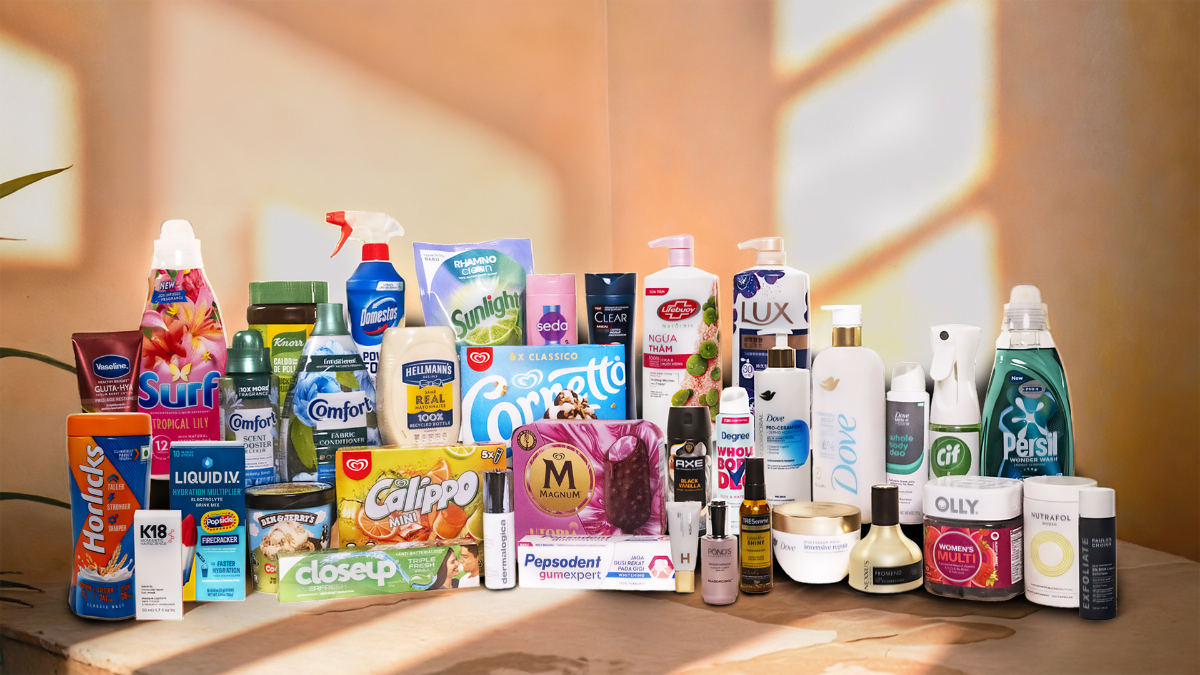
What’s the top line? The company reported a 4% increase in underlying sales growth and confirmed that it’s on track to meet its full year outlook. CEO Fernando Fernadez also said that he expects growth in the second half of the fiscal year to be ahead of the first half.
Any interesting insights? Apart from Fernandez expressing his commitment to turn Unilever into ‘a true marketing and sales machine’ multiple times? Unilever will increase its absolute marketing spend, with CFO Srinivas Phatak adding that marketing spend as a proportion of revenue will be 15-16%. Also, digital commerce now makes up 17% of Unilever’s revenue, and it’s growing on Amazon at 15%, Walmart.com at 25%, Flipkart at 30%, and TikTok at 70%.
AT&T (22.10.2025):
What’s the top line? Total Q3 revenue came in at $30.7bn, just missing its estimate of $30.87 billion.
Any interesting insights? CEO John Stankey said that AT&T is spending a little bit less on mass media when promoting its Internet Air service because, ‘given our targeted approach to how we want to converge customers [ie, get them to use AT&T for both wireless and home internet services], we can get a lot more out of digital marketing based on knowing where the customer is and what the right best offer is to put in front of them.’
Netflix (21.10.2025):

What’s the top line? The streaming platform reported 17% year-over-year revenue growth, thanks to expanding membership and price hikes.
Any interesting insights? Q3 marked Netflix’s best ever quarter for ad sales, and according to the company’s letter to shareholders, it will use AI in Q4 to ‘test new ad formats, to generate the most relevant ad creative and placement for members, and for faster development of media plans’.
Coca-Cola (21.10.2025):
What’s the top line? Organic revenue was up 6% in Q3, and Coca-Cola is on track to deliver on its 2025 guidance of 5-6%.
Any interesting insights? The company is collecting data on how GLP-1s are affecting consumer behaviour. Chairman and CEO James Quincey said people using the weight-loss drugs drink less full sugar soft drinks but more diet soft drinks, coffee, and protein drinks.
He added that Coca-Cola’s protein drinks, Fairlife and Core Power, had been ‘a standout success’ in recent years and continued to grow in Q3. Protein, he said, will also ‘be a growth area for sure in 2026’.
Although there was no mention of whether GLP-1 drugs boosted Diet Coke sales, Quincey said that the product had ‘stabilised’ after more than a decade of decline in English-speaking countries, and was now even beginning to grow again.
Omnicom (21/10/25):
What’s the top line? Organic revenue increased 2.6% globally in Q3, growing 4.6% in the US but declining 3.1% in Europe*. Media and advertising drove revenue growth at the hold co, increasing 9% over the quarter, while CEO John Wren described its creative agencies as ‘stable’.
Any interesting insights? Omnicom spent $60.8m in Q3 on costs related to its scheduled merger with Interpublic Group. Asked what he thinks will be the three biggest revenue synergies arising from the merger, Wren said Omnicom’s media business will get 50% to 60% bigger after it swallows IPG, and also pointed to healthcare and precision marketing.
*[update 28/10/25: It’s worth stating that Omnicom doesn’t report net growth figures and includes pass-through costs in its numbers, unlike the other holding companies]
Nestlé (16.10.2025):
What’s the top line? The company reported a 3.3% organic sales growth, up from 2% this time last year. It also said that it is on track to hit its full-year guidance.
Any interesting insights? CEO Philipp Navratil said he will assess Nestlé’s brands on four questions — is this a growth category? Is the returns profile attractive? Are we positioned to win? And are we actually winning? — and then decide if laggards need ‘fixing, partnering, or selling’. The brands with the best returns, on the other hand, will receive ‘significant’ increases in resources.
‘In terms of marketing spend, what we have said is that we want to invest more behind the biggest opportunity to drive sustained growth,’ Navratil said. ‘But when I say investing more, it’s not only marketing spend per se. When I see a growth opportunity, I think we have to think about investing behind those more broadly as well.’
Publicis (15.10.2025):

What’s the top line? Publicis Group exceeded expectations in Q3, reporting a 5.7% rise in organic growth.
Any interesting insights? The strong results were driven by Publicis’ AI-powered ‘connected media’ model, which integrates media, data, commerce, CRM and influencer marketing and is now responsible for roughly 60% of the group’s revenue.
‘If there’s one thing I want you to take away from this morning’s call, it’s that we are winning today thanks to AI,’ Arthur Sadoun, chairman and CEO, said last week. ‘One area where we are growing, and more importantly making our clients grow, is our ability thanks to AI to connect paid media with commerce and influencers. You need AI to connect those capabilities.’
Havas Group (14.10.2025):
What’s the top line? Havas reported a 3.8% increase in organic growth in Q3, following decent results in Q1 (+2.1%) and Q3 (+2.6%). The hold co has now revised its 2025 guidance, projecting net revenue between 2.5% and 3%, up from 2%.
Any interesting insights? The biggest development at Havas during the last quarter was its new joint venture with Horizon Media, a new agency called Horizon Global which will have $20 billion in combined billings and profit from any vacuum left by the upcoming Omnicom-IPG merger.
Featured image: created using Google Gemini