






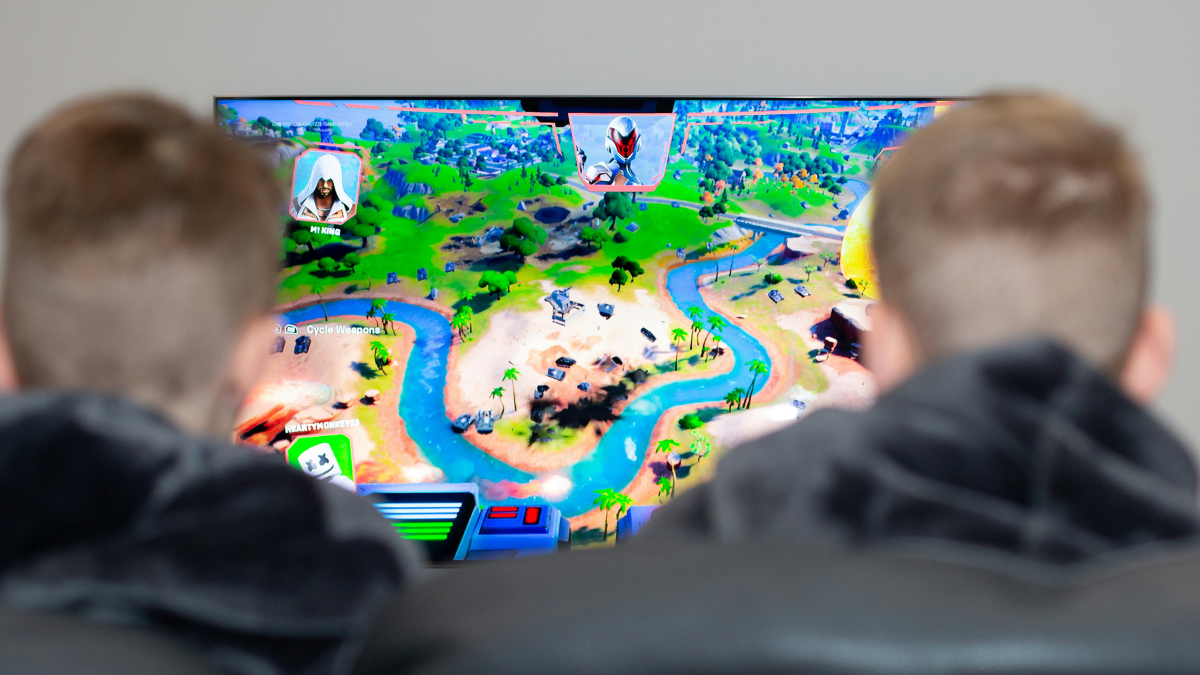
Overwolf’s platform lets developers build in-game apps that run as overlays on top of existing titles, adding features such as live stats, recording tools, and streaming integrations. In games like Fortnite, users can install apps that add Twitch overlays, capture gameplay, or track performance in real time.
It might sound niche, but Overwolf says its ecosystem now reaches around 113 million users globally. A significant share of that comes via CurseForge, the modding platform it acquired from Twitch in 2020, which is used to customise games like Minecraft and World of Warcraft.
Overwolf launched in 2010 and its rise mirrors the broader shift towards user-generated content in gaming. It has also opened up a route for brands to reach gaming audiences through advertising inside its app ecosystem, particularly in environments where traditional in-game inventory doesn’t exist.
So, Nathan Lindberg, VP of global brand partnerships at Overwolf, seemed like a good person to ask about the state of gaming advertising.
Why are brands still so hesitant around gaming?
I hear a lot of ‘I don’t have a gaming strategy’. That’s doing the gaming industry a disservice. I don’t know very many brand marketers who say, I don’t have a sports strategy, or I don’t have a music strategy. There seems to be this connection that gaming is very niche and very difficult to work with.
The reality is everybody’s a gamer at this point. Gaming is such a ubiquitous part of common culture today. I see stats that tell me that 80 to 90% of people under the age of 16 are gamers or playing games at some point, whether those are mobile games, PC games or console games. People are spending their time in virtual environments and that should be a natural thing to think about.
Where does that attitude come from?
I think gaming often does itself a disservice by making it difficult and not acquiescing to traditional advertising means and media. It becomes very integrated and custom, with 18-month build cycles and things like that. For advertisers, that’s just not feasible.
The hardest part is getting past a tester innovation budget, because you’re thinking about gaming in the context of a really deep, really robust, really custom program. And a lot of brands just don’t have the appetite for that.
So what we’ve been really focused on is how do we make it easy? How do we make that connection point a lot simpler? We’re trying to flip the narrative from ‘reach gamers’ to the fact that gaming is a high attention environment.
Is it fair to say that gamers are more hostile to advertising than other mediums?
People say video gamers don’t like advertising. The reality is they just don’t like to be interrupted but no one likes to be interrupted from their experience. Who enjoys watching a broadcast and having an ad interrupt it?
Video games often struggle with how to integrate advertising into experiences. You see it a lot in mobile games with the barrage of advertising, or ‘you’ve got to watch a video to get to the next level’. That’s interrupting the natural game state.
There’s a trade-off. Gamers know there’s a need for advertising to support the creators who are building the apps they use for free. But all they ask is: don’t make it such an interruption that I can’t enjoy my experience.
The biggest failure as an industry is that we haven’t done a better job of making advertising your companion versus your boss. It often feels like another boss battle within your game experience, rather than a teammate helping you level up and have success.
So what does advertising that actually works in gaming look like?
I’m very fortunate to be at a company like Overwolf that has a game DNA. The people here are high level gamers. They understand the value of it. Everything we do on our platform is about allowing people to play, engage and have fun.
If you look at our advertising portfolio, it’s about playing, winning, and adverts that play into that narrative. A recent example is Tropicana, who had never done gaming before. They were working with Dentsu on a campaign for Naked Smoothie. We looked at trends, opportunities, and what we knew about the audience.
Their product is designed for a refuel, so we looked at average session length. We found that around the 78-minute mark, gamers start to take a break. They’ll play a couple of games, take a break, then come back and play another hour or hour and a half. So instead of building something highly custom, the insight was simple: gamers take breaks. People who are playing video games take breaks. It’s about inserting yourself naturally into those environments.
With so much hype around GTA 6, are big launches still the key entry point for brands?
Is GTA 6 going to be a huge release? Of course. Is it going to be the biggest release of all time? Most likely. But these big game releases can redraw attention while also distracting from reality. Gaming is something people do every day, every week, every month. The audience is there all the time, and they’re looking for you to support them on a consistent basis.
Just because the World Cup happens every four years, doesn’t mean there aren’t soccer matches in between. The mistake people tend to make is they focus on that one moment in time and think, let’s just do that one time. It doesn’t have the same impact as being there a year before and building into it.
Brands often struggle because they try to insert themselves into a cultural moment they haven’t built a presence in.
What’s changed in gaming that brands need to understand?
If you look at every other platform that exists, there was a moment where the status quo couldn’t keep up with demand. It happened in music, that’s why we have Spotify now. It happened in video content, where studios couldn’t create enough content for mass demand. So now we have creators like Mr Beast and others, because the appetite outpaced the ability of the professional industry to keep up. That’s what’s happening in video games.
A new game comes out, whether it’s GTA 6 or something else, and people will beat it in a matter of weeks. A game that took 12 years to make can be completed quickly. So how do you keep people in a game after they’ve finished it? You do it by allowing others to create content and opportunities. That’s where we see the value in games that need to keep people consistently playing.
The appetite is too big. That’s why games like Minecraft, Roblox and Fortnite have been so successful because they allow consumers to build in their environments. It’s the same reason GTA Online is still so popular.
How should brands really be thinking about targeting in gaming?
Gaming isn’t a homogenous block. Video games attract a variety of people and geographies.
Instead of thinking ‘we should advertise to Roblox gamers’ or ‘Fortnite players’, we want to flip the script and say: let’s use data to find your audience and understand what games they’re playing. Rather than treating gamers as a target audience, you should look at video games as a platform people spend a lot of time in.
That’s what brands are already doing across premium UGC platforms. No one goes to YouTube to buy YouTubers. They go to YouTube and say, ‘I want to reach an 18–34 female with a high propensity for QSR dining’. It should be the same in gaming. Put brands in the games that make sense for the audiences they actually want to reach.
You’ve talked about making gaming easier and more measurable for brands. How are you doing that in practice?
This week we launched a new product called Gamer Grid, and it combines a proprietary first-party data management platform with third-party data to help brands reach audiences in high attention environments like video games. It’s about pulling data from our apps platform to create a more crystallised picture of the users you’re trying to reach.
It’s not just third-party data that says someone is a female, 25, or similar demographics. It’s: how long do they play games? What software do they have on their computer? What hardware are they using? It’s about understanding audiences in a more deterministic way.
If someone is watching a video on Instagram about coffee, you might tag them as coffee-curious. But if someone is playing for three hours and it’s one o’clock in the morning, they’re probably looking for a caffeine boost. That’s a different level of understanding.
Gamer Grid is designed to help gaming move from being a ‘test and learn’ channel. The current mindset is often: let’s use our innovation budget for a LinkedIn headline or a press release. But this should be something brands can track, serve, deliver on, and then layer data on top of to ensure it’s the right audience.