



What a selection of the world’s top brands had to say about their performance and outlook during the first quarter of the 2026 calendar year.
Companies:
P&G (22.01.26):
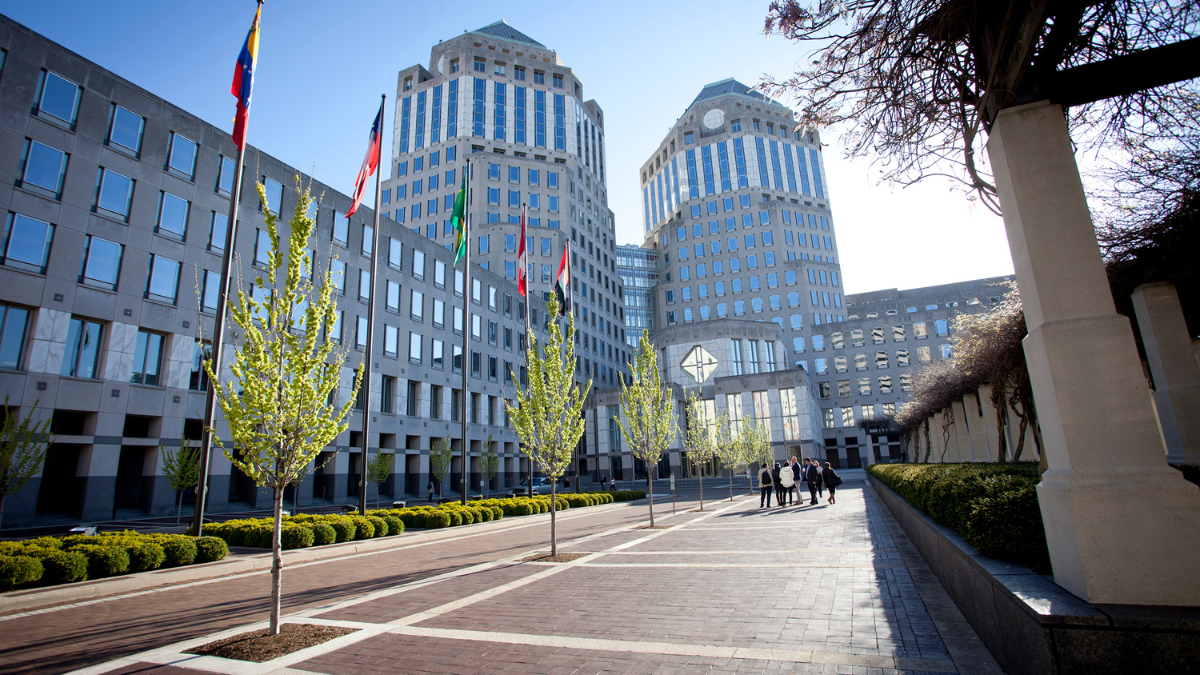
What’s the top line? Procter and Gamble is doing well in international markets, but struggling on its home turf. The Latin American market saw the most organic growth worldwide at 8%, followed by China at 3% and Europe at 1%. But organic sales in North America fell 2%, driven by a 3% fall in volume. Management were optimistic about the outlook for the rest of the year and the company’s positioning within the sector. They do not expect to increase media spending year on year.
Any interesting insights? In the company’s Q2 2026 earnings call on 22 Jan, chief financial officer, Andre Schulten, and chief executive officer, Shailesh Jejurikar, both described the last five years as having been all about price, and posited that 2026 is the beginning of a new landscape for the category.
Procter and Gamble, they said, is positioned to take advantage of the more fractured media landscape. With a ‘data lake’ of consumer insights gathered over the past five years, Jejurikar argued, the company can ‘mine for insights that lead to new product innovation, brand ideas, performance claims, marketing campaigns’.
He added that ‘AI and Gen AI capability help our teams discover consumer-relevant insights at every step of the consumer path to purchase’, and help to translate ‘deep insights’ into ‘a compelling brand idea repeated wherever consumers engage’ to make the brand more memorable and worthy of its price.
Schulten said there was a ‘once-in-a-generation opportunity to leverage the shifts in the landscape and our unique strengths and capabilities to set ourselves apart’, saying that the company needs to ‘adjust the kind of innovation we do’ to take advantage of it.
Jejurikar highlighted campaigns in China and Latin America which had focused on local values to advertise baby products like Pampers as success stories for the company’s consumer insights and marketing teams.
‘The retail landscape is changing,’ he concluded. ‘More concentration, but also brand proliferation. Retailers are becoming media platforms. And media platforms are becoming retailers. In summary, the consumer path to purchase is changing every day, is nonlinear, and littered with millions of possible distractions. We expect an even more intense pace of change in the next three to five years.’
LVMH (27.01.26):
What’s the top line? LVMH delivered mixed results with organic sales growing by 1 per cent in Q4 to €22.7bn ($27.2 billion) compared to the same period a year before, but saw a 1% decline over the full year.
Key fashion and leather goods division saw an organic sales decline of 3% in the fourth quarter, largely in line with expectations, while wine and spirits declined 9%. LVMH’s retail business, which includes beauty brand Sephora, and its watches and jewelry division, grew by 7% and 8% in the quarter.
Chief executive Bernard Arnault said: ‘I am optimistic in the medium term, but in the short term it’s hard to make serious predictions’.
Any interesting insights? The results have had a knock-on effect across the luxury industry. LVMH’s shares dropped by seven per cent following the earnings report, while rivals Kering, Hermès and Richemont all tumbled too as investors expressed doubt over the future of the luxury market.
2025 was a disruptive year for the luxury sector thanks to trade tension between its two biggest markets (US and China). Chinese shoppers, including its tourists abroad, account for almost a third of LVMH’s fashion and leather sales, according to UBS estimates.
LVMH’s return to growth in Asia in Q3 had led to hopes that luxury was turning a corner after a years of downturn, but sales in the region were up just 1% in Q4 — below investors’ expectations.
It was ‘no eureka moment for luxury,’ according to Jefferies’ James Grzinic. ‘The overall uncertainty about consumers’ willingness to spend at the higher price points in the US and Europe and the extent to which the less affluent Chinese consumer will rebound, will be critical.’
Kimberly-Clark (27.1.26)
What’s the top line? Kimberly-Clark reported profits of $499m in Q4, up $52m year-on-year, despite a 0.6% decline in revenue, as a result of increased prices.
The results were slightly below analysts expectations. The maker of Kleenex tissues and Huggies nappies posted revenue of $16.4bn for 2025 in total — down 2.1% from 2024.
The FMCG company committed to achieving at least 40% gross margin by the end of the decade, aiming for profit margins of 18% to 20% by 2030.
Management also used the earnings call to talk about the pending $40bn acquisition of Kenvue, the consumer health company that owns Listerine, Nicorette and other well-known brands. The deal, which was approved by shareholders on Thursday, is expected to close sometime in the second half of this year.
Any interesting insights? CEO Michael Hsu promised to invest in ‘breakthrough marketing’ in 2026, pledging to be ‘even more bullish’, despite marketing spend falling in 2025.
He said Kimberly-Clarke is ‘introducing consumer-directed, science-based innovation and breakthrough marketing across brands and markets faster than ever before’. Hsu claimed the team have ‘rewired’ the organisation for growth, while also exercising cost discipline.
Throughout the earnings report, Hsu said he was ‘not interested in renting [market] share through promotion’. Instead of heavy discounting, the group is leaning into a ‘good, better, best’ pricing strategy [offering products of different qualities at different prices].
‘We feel like that’s a much more powerful lever to pull than trade promotion. And so that’s what we’ve been investing in, and we’re really seeing great results’.
Group president Russell Torres, speaking specifically about the group’s nappy business, added: ‘We’re growing by driving innovation and brand building that grows the category and cascading that to all tiers.’
Starbucks (28.1.26):

What’s the topline? Revenue increased 5% year-on-year in Q1 2026, to $9.9bn, but profit declined 60%, as a result of turnaround costs, coffee prices and tariffs. Investors seemed to buy CEO Brian Niccol’s message that the company turnaround was progressing ahead of schedule, though. Starbucks shares rose 5% in early trading on Wednesday.
Any interesting insights? Niccol came across like he’d been reading How Brands Grow, talking about the need to win the ‘light or infrequent customer’, as well as existing buyers.
‘When Tressie [Lieberman, Starbucks’ chief brand officer] and I set out to discuss how we get back on our front foot, we knew we had to make sure that we had the marketing that was broad,’ said Niccol.
Niccol praised Starbuck’s recent ‘Together’ ad in particular, saying: ‘It makes you start to see the soul of the brand.’ He also said that all the marketing metrics they track (brand affinity, trust, brand value) have been moving up.
Starbucks did not publish its marketing spend, but CFO Catherine Smith said the company had been taking some of the money it previously spent on discounts and putting it into marketing, which has been more effective.
Like a lot of food and drink companies, Starbucks is investing in protein products (putting it in cold foam, apparently), which Smith said had been a driver of footfall.
Main image by Bosco Yun on Unsplash
Colgate-Palmolive (30/01/26)
What’s the top line? Colgate-Palmolive’s Q4 2025 earnings beat expectations, with revenue of $5.2bn (up 5% year-on-year).
Over the full year, the toothpaste brand made $20.38bn, up $200m from 2024. Colgate-Palmolive said that net sales increased 1.4% over the year. The company expects 2026 net sales growth in the range of 2% to 6%.
‘While we expect the difficult operating environment and slower category growth to continue in the short term, we are operating from a position of strength,’ CEO Noel Wallace said.
Advertising was ‘up 5% on a dollar basis year-on-year,’ even as ad spend as a percent of sales declined modestly in Q4.
Any interesting insights? Management repeatedly talked about ‘omni-channel demand generation’, describing how media, content, e-commerce and in-store activity are now treated as one joined-up system. In their words, they are focused on adapting how ‘the right […] content and messages are delivered to the right people at the moments that matter in order to drive purchase behaviour’.
This is a part of Colgate-Palmolive’s 2030 strategy to accelerate growth through increased brand penetration, AI and data analytics. Colgate said it has ‘de-siloed the organisation from an e-commerce business and a brick-and-mortar business’ into a single commercial structure.
Wallace also pointed to China as a key influence on future media strategy. He said Colgate-Palmolive had sent senior marketing leaders there to study local commercial execution, with the aim of applying those learnings globally.
He said: ‘We’ve sent all of our key leaders and marketing directors over to China for immersions into the commercial strategies that they’ve deployed over the last couple of years, which clearly are at the center of our omni-demand generation.
‘They’ve really learned how to deliver in an omni-demand world, with very strong brick-and-mortar, but equally important is a very strong e-commerce and online business, and that learning is clearly getting transferred around the world as we speak.’
PepsiCo (03/02/26)
What’s the top line? PepsiCo’s Q4 2025 revenue was $29.3bn, up 5.6% year-on-year and nearly $500m above analysts’ estimates.
Net income was $2.54bn, up from $1.52bn in the same quarter last year. Advertising spend decreased by approximately $500m in 2025, but management said it plans to increase its budget in the year ahead.
The food and beverage company expects organic revenue growth between 2% to 4% in 2026.
PepsiCo also announced it will introduce price cuts of up to 15% on snack brands including Doritos and Lay’s.
Ramon Laguarta, chairman and CEO, PepsiCo: said: ‘We think that for some consumers, low and middle-income consumers, the biggest friction they have today in our category for faster penetration is affordability. So we have been testing multiple ways to give them affordability.
‘This will be very surgical, very focused on particular brands, particular formats, particular channels investment. And from the tests that we’ve done at scale in multiple markets, this has very good ROI for us.’
PepsiCo shares rose nearly 4% in early trading after the results were announced.
Any interesting insights? During the earnings call, Laguarta outlined how PepsiCo plans to adapt to the increasing use of GLP-1 medications. The usual ideas about reducing portion sizes and introducing more protein were both mentioned, but Laguarta also talked about another, less common pivot.
‘Fibre’, the chairman and CEO said, ‘We know those consumers are looking for fibre. They have some digestive problems. We are innovating around fiber, whole grains. That’s a big space.’ PepsiCo will relaunch Quaker and revamp SunChips as part of its bid to attract consumers using weight-loss drugs.
The popularity of the medications offered ‘more opportunities than threats’. More broadly, PepsiCo is looking to modernise its flagship brands to fit in with consumers’ increasing consciousness about diet anyway.
Laguarta offered Lay’s as an example. The ‘holistic relaunch’ of the Lay’s brand will focus more on the simplicity of the ingredients, ditching artificials and cooking with avocado and olive oil to change the perception of the crisp brand.
‘That is the change in perception we’re trying to do. It is working, and we’ll continue to invest. Think about that, apply to Gatorade, apply to Quaker, apply to Tostitos, and you’ll get a sense of what we’re trying to do.’
Chipotle (03/02/26)

What’s the topline? Chipotle’s total revenue for the last year increased by 5.4% to $11.9 billion, despite a 1.7% decline in comparable restaurant sales.
Chief financial officer Adam Rymer predicted that underlying comparable sales for the next quarter will be in the range of 1-2%, following a Q4 which saw a 4.9% increase in total revenue bringing it up to $3bn. Operating margin fell slightly from 14.6% in the previous quarter to 14.1%.
Marketing expenses represented 3.5% of sales in Q4, and are predicted to remain within that mid-3% range for the next before dropping to the low 3%s for the rest of the year.
Any interesting insights? Chief executive officer Scott Boatwright highlighted the new high-protein menu’s ‘strong’ early results ‘with incidence of extra protein increasing 35% and our recent double protein promotion achieving a record digital sales day’.
‘We’re not discounting the product. We’re just celebrating something that’s on the menu that may have little awareness today,’ he said, highlighting that the protein menu is ideal for anyone drawn in by the current craze for protein, people using GPL-1 drugs, or on a high-fibre diet (another currently popular health trend).
He added that more limited time offers will be rolled out soon, starting with Chicken Al Pastor on 10 February, and would include ‘tried favourites’ from previous menus.
Boatwright added that Chipotle ‘excels at brand marketing’ and that this year’s marketing calendar will be ‘better supported with targeted media than we’ve seen historically’, with effort ‘ramping up’ around ‘moments that bring people together like sports, holidays, and other shared occasions’.
Rymer added that the company ‘made the strategic decision to elevate our marketing activity to ensure Chipotle remained top of mind with our guests’, which he credited for sales growth in the last quarter.
Head of investor relations Cindy Olsen also announced plans to relaunch Chipotle’s rewards programme ‘to widen the funnel, leverage our data and AI to power more personalized and impactful user experiences’.
‘We have a strong campaign planned around the spring launch of a more engaging rewards programme specifically designed to target the in-restaurant guest and remove friction from the checkout experience,’ she said, before confirming that more details of the relaunch would be confirmed in the coming months.
Mondelēz (03/02/26)

What’s the topline? Net revenue was up 4.3% for Mondelēz in 2025, despite a poor performance in North America.
The company’s North America revenue declined 1.9% for the year and 0.5% in Q4. Chair and chief executive officer Dirk Van de Put attributed the drop to ‘soft consumption in US biscuit’.
However, revenue grew in Europe (8.6%), Latin America (4.6%) and AMEA (5.7%) in 2025. Van de Put attributed these successes to ‘robust pricing and revenue growth management’ in Europe and ‘solid price execution’ in Latin America.
Full-year gross profit declined 11.4%, though, in part because of a ’50-year high in cocoa input costs experienced in Q4 2024’.
Any interesting insights? Van de Put said the company is looking at using ‘lab grown’ cocoa to offset any spikes in the ingredient’s price in the future, predicting that this will soon be approved for sale in the US and EU.
The company also addressed concerns about the prevalence of GLP-1 drugs, with Van de Put arguing that ‘we do not see a short-term impact on our business because there is a very modest adoption rate right now, and also the calorie reduction is relatively benign.’
The company did highlight a strong performance by its protein products, which many other corporations have described as a way to recoup losses caused by current trends towards weight loss goals. The soft performance of the US biscuit market was instead attributed to ‘economic anxiety and low consumer sentiment around broader inflation’. Despite these economic concerns, the company is still pursuing price increases, in part due to the concerns about rising cocoa prices.
Accrued marketing costs had increased from $2.6bn in full year 2024 to $2.8bn in full year 2025. ‘We said many times that we didn’t touch the working media line, but we touched the non-working media predominantly. The idea is to continue with lower non-working media but to clearly step up in the working part. And if you look over a couple of years, between 2024 and 2026, we will more than recover what we have to pull back in 2025 into the overall line,’ explained chief financial officer Luca Zaramella.
Under Armour (06/02/26)
What’s the topline? Revenue for Q3 2025 was $1.33bn, a 5% decrease year-on-year. Sales declined heavily in North America (-10%) and APAC (-5%). Footwear slumped 12%.
Founder and CEO Kevin Plank returned to Under Armour two years ago to restructure the business by eliminating ‘complexity’ and streamlining operations and product lines.
In his opening remarks to analysts, he said: ‘If there’s one thing to take away from today’s call, [it’s that] the most disruptive phase of our reset is now behind us.’
The market seemed to like that. Under Armour’s share price rose 20% to hit a 12-month high after the call.
Under Armour modestly improved its forecast for the full year adjusted operating income to $110m, the high end of its previous range. That represents a 4% decline, better than the 5% previously feared.
Any interesting insights? Under Armour’s strong performance in EMEA (revenue +12%) is the ‘clearest expression’ of the brand’s premium strategy, according to Plank, ‘driven by disciplined execution’, with a more ‘intentional approach to promotions that protects brand equity and pricing integrity’.
Plank complained that a lot of other sportswear brands across EMEA are ‘buying business’ with promotions, especially in the UK, which is the brand’s largest market in the region. But Under Armour will stick to its guns.
‘One thing is certain is that the world does not need another capable apparel and footwear manufacturer,’ said Plank. ‘The world needs hope and they need a dream, and that means that it’s our job to make them feel something when they participate with our brand.’
To that end, Plank said: ‘Our storytelling is getting sharper. We’re moving up with greater purpose, connecting the right products to real sports moments, meeting athletes where they are, and driving higher engagement per dollar. Social is leading that effort, particularly on TikTok.’
As a result, awareness, consideration and engagement are all increasing among younger athletes, according to the company, while SMS marketing and TikTok Shop, in particular, are helping to improve e-commerce conversion.
Plank also singled out We Are Football, an advert highlighting the brand’s American football heritage, as an example of successful branding, and praised the brand’s influencer strategy, which ‘continues to expand reach and reinforce credibility’ and encompasses both mega stars and micro influencers.
Later this week, Under Armour is launching a women’s flag football campaign, with an updated version of a 20-year-old spot. The sport is experiencing a surge in popularity in the US and will likely see an increase in global interest when it features at the 2028 Olympic Games. ‘The message is clear, flag football is here to stay’, Plank said.
Coca-Cola (10/02/26)

What’s the top line? Coca-Cola’s first earnings call of 2026 reported 5% organic revenue growth for the last quarter.
Growth in Q4 is a little below Wall Street’s predictions as soft drink sales dwindle under rising grocery bills in many parts of the world. Coke isn’t the only company beset by this, with PepsiCo having reported similar drops earlier this year.
Any interesting insights? Coca-Cola is combating the dropping sales with ever more brand acquisitions bringing them up to 32 brands worth over a billion dollars each, of which three-quarters represent categories outside of soft drinks. These include premium and functional drink brands like Smartwater, Bodyarmor and Fairlife which provide some security in a poor market for soft drinks.
Overall, Coca-Cola’s water, sports, coffee and tea segment saw volume sales rise by 3% worldwide last quarter compared to flat volume in soft drinks — although Coke Zero Sugar saw a volume climb of 13%.
Coca-Cola has projected organic revenue growth of 4-5%, and plans on bringing in more young adult consumers with marketing campaigns that are ‘better integrated’ with commercial execution at point of sale.
The earnings call highlighted several successful campaigns including Coke’s partnership with the Premier League, a festival in Rome to celebrate the Winter Olympics Torch Relay and a number of local campaigns like Cherry Coke in Nigeria and a Halloween campaign for Fanta in Mexico.
In 2026, Coke execs stated that the company will be ‘dialling up’ campaigns around the World Cup, particularly in Mexico, and will likely continue to focus on key sporting events to drive up recruitment.
McDonald’s (11/02/26

What’s the top line? McDonald’s reported $7bn in revenue for Q4, beating expectations with an increase of 9.7% year-on-year.
Net income for the quarter was $2.16bn, a 7% increase from last year. Meanwhile, operating income for the quarter rose 10% to $3.15bn, compared with $2.86bn in the fourth quarter of 2024.
Global sales for the full year totalled $139bn, an increase of 7% compared to 2024.
Any interesting insights? McDonald’s management credited two factors for the solid results: marketing and value.
Chairman and CEO Chris Kempczinski said that the ‘relentless focus’ on delivering affordability was paying off. The launch of McValue in the US at the start of the year and extra value meals in September were singled out.
‘As I’ve said before and I will say again, McDonald’s is not going to get beat on value and affordability. It’s in our DNA, and we will remain agile to respond as appropriate to a dynamic competitive landscape.’
In terms of marketing, the fast-food company had a strong quarter and a strong year. The Minecraft movie collaboration was McDonald’s largest global campaign ever, while Q4 saw both Monopoly and Grinch tie-ins.
The latter drove ‘extraordinary excitement, sparking sell-outs and becoming a true holiday moment for millions of families’, the inclusion of Grinch themed collectible socks in many markets saw McDonalds become the largest seller of socks in the world for nearly a week as they shifted 50 million pairs across the first few days of the campaign.
Management also said efforts to increase use of the loyalty app were paying off. McDonald’s reported nearly 210m ninety-day active users across 70 markets, and said they were on track to reach the 250 million target in 2027.
Ian Borden, chief financial officer, said: ‘An average [US] customer in the 12 months before they joined our loyalty program visited us 10.5 times. In the 12 months after they became a loyalty member, they visited us 26 times. So we increased their frequency of visit by more than 2.5 times, and they also spend more with us over time. That’s why loyalty is important.’
Finally, Kempczinski was asked about the impact of GLP-1 drugs on the franchise and said that they ‘don’t yet see evidence of it really having a material impact on our business’.
While he predicted adoption would grow, he said the high-protein content of McDonald’s menu should prove enough to retain customers on weight-loss medication.
Unilever (12/02/26)
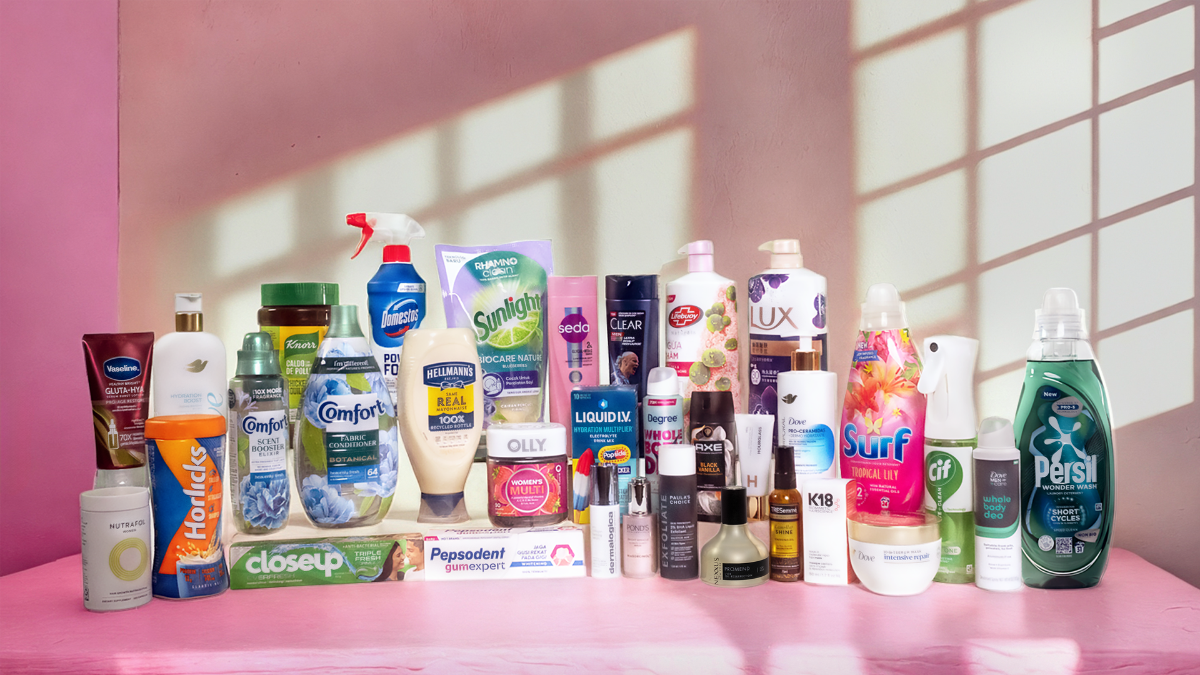
What’s the top line? Unilever delivered underwhelming Q4 results as it posted revenue of €12.59bn ($14.95bn), significantly short of the expected €15.95bn.
The company’s full-year performance was mixed. Underlying sales grew 3.5% but the company’s turnover declined by 3.8% year-on-year, mainly due to currency headwinds. Unleaver projects underlying sales growth to be at the lower end of a range of 4 to 6% in 2026.
Any interesting insights? When CEO Fernando Fernandez took the top job in March last year, he made waves by announcing his intention to oversee a ‘social-first’ marketing strategy. He outlined a target of increasing social media from 30% of its marketing to mix to 50%.
But social media was referenced only sparingly during the earnings call. Fernandez pointed to a ‘decisive shift to social-first demand generation models’ as one contributor to improved brand superiority scores, and in markets such as Indonesia the company cited ‘significantly increased social-first brand activation’ as part of a broader turnaround effort.
Fernandez did not indicate how much of Unilever’s marketing budget was now being spent on social media, however, nor did he restate the target of 50%.
That doesn’t necessarily signal retreat. Social-first language is there in the narrative around demand generation and digital acceleration, and recent acquisitions of digitally native brands such as Minimalist, Wild and Dr Squatch reinforced the strategic direction. But the absence of specific commentary on the pace of the social reallocation is notable, particularly given how prominently the strategy was positioned earlier in the year.
Instead, the emphasis was on overall brand and marketing investment, portfolio reshaping, premium innovation and execution discipline. Brand and marketing investment rose to 16.1% of turnover, its highest level in over a decade, but without further breakdown of channel mix.
Fernandez also talked about making Unilever ‘fit for the AI age’. He spoke of ‘transforming every link in the value chain, particularly around the consumer’, with AI deployed to ‘supercharge demand generation’, scale and hyper-target marketing content, and work alongside retailers on what he termed ‘Agentic Shopping Models’.
L’Oréal (12/02/26)

What’s the top line? L’Oréal grew across all sectors and divisions in 2025, with a 4% like-for-like increase in sales and a 2.4% increase in operating profit. CEO Nicolas Hieronimus said that the company had grown ahead of the market, and highlighted a strong recovery in its biggest markets, the US and China, in the second half of the year.
The company spent 1.2% more on advertising and promotion than in 2024, although this represented the same proportion of sales (32.2%). This drove double digit growth in e-commerce and selective retail, primarily coming from younger consumers.
Any interesting insights? Hieronimus spoke extensively about the role of tech, particularly AI, in L’Oréal’s future. He said that adopting AI has allowed the brand to create ‘more, cheaper, and better’ creative marketing content, and that L’Oréal is building more partnerships with ‘major players’ which will make it ‘the reference source of beauty knowledge for LLMs’.
‘Beauty-tainment’ was also credited as driving L’Oréal’s success — this is what the brand calls product placements in beauty-focused popular media, such as an episode of Emily in Paris which centred on a L’Oréal marketing campaign.
Demographic changes also helped because, apparently, teenagers are using beauty products from a younger age, and aging populations mean older people remain customers for longer.
L’Oréal’s president of professional products, Omar Hajeri, said that the priority for the next year is reaching out to new consumers, particularly younger consumers, with a ‘strong innovation pipeline’.
To this end, head of consumer products Fabrice Megarbane said that the marketing within his division would prioritise expanding top-performing K-beauty products and scaling content creation through ‘local content factories’ to advertise locally relevant products to Gen Z customers.
Nestlé (19/2/26)

What’s the top line? Nestlé has announced organic growth of 3.5% in its annual results for 2025, with momentum picking up in the second half of the year. Margins remained stable in petcare, nutrition, and food; but plummeted in coffee and confectionary due to significant inflation in those categories. This brought overall profits down, along with an increased spend on increased advertising and marketing.
Any interesting insights? Despite falling profits, Nestlé still intends to ‘upgrade’ its marketing in the next year. CEO Philipp Navratil said that future marketing would focus on ‘world-class brand building’, scaling up an operating model built on shared services, and cutting down on the total number of brands under the Nestlé umbrella. That means that this year, Nestlé will be paring its brands down from 400 in 2024 to just 150, allowing the company’s marketing to focus on ‘fewer bigger priorities’. Navratil added: ‘Outside the strategic brands, we will not support the remaining small brands with paid media.’
Walmart (19/2/26)

What’s the top line? Walmart delivered a strong set of Q4 results. For the quarter ended 31 January 2026, total revenue reached $190.65bn, up 5.6% from $180.55bn a year earlier. Net sales increased at the same pace to $188.91bn, while membership and other income edged up 1.1% to $1.74bn.
For the full year, total revenue climbed 4.7% to $713.16bn. Net sales rose 4.7% to $706.41bn and membership and other income also increased 4.7% to $6.75bn. Operating income for FY26 was up 1.6% to $29.82bn.
Walmart president and CEO John Furner, overseeing his first earnings report in the job, struck an upbeat tone: ‘The pace of change in retail is accelerating. It’s exciting. And our financial results show that we’re not only embracing this change; we are leading it. For our customers and members, the future is fast, convenient, and personalised.’
Despite the solid numbers, the market reaction was muted, with Walmart’s stock falling 1.4%.
Any interesting insights? Global advertising income expanded 37% in the quarter, with Walmart Connect in the United States up 41%. Advertising and membership income together accounted for nearly one third of operating profit, underlining the growing importance of higher-margin, non-retail revenue streams.
Executive vice president and CFO John David Rainey said: ‘In terms of overall progress that we’re making with advertising, I don’t really see that slowing down. Some of the areas that we’ve really expanded in are areas like our marketplace business where we’re seeing more of the growth come from that part of the business versus some of the first party brands’.
The retailer’s acquisition of Vizio is also beginning to contribute meaningfully, according to management, with triple-digit advertising growth from the business in Q4. The connected TV footprint gives Walmart another channel through which to reach customers, and leadership suggested this opportunity is still in its early stages.
Automation is another clear theme, with management crediting it for the strong results. Around 60% of US stores now receive freight from automated distribution centres, while 50% of US eCommerce fulfillment centre volume is automated.
Rainey added: ‘You all are starting to see some of the benefits of this supply chain automation and productivity benefits that we’ve been implementing for years, and that’s translating into improved financial performance.
‘This enables better visibility into what inventory we own and inventory we can access, and also improved our labor productivity. We’re increasingly leveraging stores, with the proximity so close to customers, as digital fulfillment nodes to move inventory faster and more efficiently than ever before.’
Keurig Dr Pepper (24/2/26)
What’s the top line? Keurig Dr Pepper reported revenue of $4.5bn for Q4 2025, a 9.9% increase year-on-year.
For the full-year 2025 results, Keurig Dr Pepper reported net sales growth of 8.6%, with operating income up 4.9% and EPS rising 7.3%.
The company expects low double-digit growth in earnings-per-share in 2026.
Any interesting insights? CEO Tim Cofer highlighted how the Fansville campaign for Dr Pepper — a long-running ad series based on a fictional college football town — leveraged newly enhanced ‘precision marketing capabilities to apply personalisation at scale’, generating ‘more than 3,000 unique creative units’ and ‘optimised consumer conversion paths’.
Translated from Linkedinese, this means that they showed different ads to different audience groups, using improved data and measurement to determine what drives response.
The company also used those same capabilities to launch a Keurig brand equity campaign, the first in many years. The ‘data-driven’ campaign showed the benefits of the Keurig coffee-making system through ‘targeted storytelling through thousands of ad permutations’. The brand used coffee purchase history and ‘rich insight into demand spaces’ to pick audiences, with the results producing ‘halo benefits’ across the entire coffee business.
Both campaigns fit the broader shift toward mass personalisation, combining scale with granular audience targeting. The trend was mentioned by many brands speaking at CAGNY, including by Coca-Cola CEO Henrique Braun. Advances in data and automated creative tools now allow brands to combine global scale with highly specific targeting.
Cofer said: ‘We intend to extend this marketing approach as we step up our brand building investment in 2026.’
He also referenced the viral ‘Dr Pepper Baby, it’s good and nice’ jingle that ‘lit up social media and became a cultural moment’. The brand’s ‘agile’ marketing team used a TikTok-er singing the jingle as their official commercial during the Super Bowl.
The result, he said, was that Dr Pepper ‘strengthened its position as the most engaged CSD [carbonated soft drinks] brand on TikTok’. It’s another example of the inspiration brands have taken from Duolingo’s social media management, recognising that leaning into the bit is now the way to gain traction online and beyond.
Diageo (25/2/26)
What’s the top line? Diageo reported mixed interim results for H1 FY2026, with organic net sales and organic operating profit both down 2.8%. The group cut full-year organic net sales guidance from -2% to -3%, with operating profit now expected to be either flat or up low single digits.
Any interesting insights? Sir Dave Lewis, the former Tesco boss, is now at the helm of Diageo, and he’s not called ‘drastic Dave’ for nothing. In a nutshell, Lewis wants to cut prices — but in a careful, targeted way — and reduce Diageo’s ‘premium-only’ bias. This doesn’t mean spending more on advertising and promotion, though. Lewis told one analyst: ‘when you’re looking at price points, which are different from premium, it’s much more about investing in price on shelf and position […] rather than A&P.’
Lewis also wants Diageo to make more ready-to-drink cocktails (RTDs). He thinks these will appeal to younger drinkers, who are increasingly socialising in third spaces and on-the-go settings, rather than traditional bars. Historically Diageo viewed them as margin-dilutive, but RTDs are more convenient than making drinks at home and cheaper than ordering cocktails in a pub, which makes them appealing in this environment. It’s another way that Diageo is open to shifting away from a purely premium spirit focus.
Lewis was also quizzed on the impact of GLP-1 weight-loss drugs on the business. While he said he was ‘cognizant’ of potential impacts, he suggested spirits appear less affected than other alcohol categories and even hinted that some users report increased experimentation and socialising as part of lifestyle changes, which could actually boost sales.
Finally, there was clear enthusiasm for Guinness. Lewis described a ‘very full locker’ of opportunity, including more asset-light expansion models into new markets. However capacity constraints, particularly for Guinness 0.0, could limit short-term upside even as demand momentum builds.
Adidas (5/3/26)

What’s the top line? In 2025, revenue was up 10% year-on-year (€24.8bn), and operating profit rose 54% (€2.06bn), and Adidas expects to deliver high single-digit sales increases each year until 2028. Investors were disappointed.
Any interesting insights? Marketing spend as a percentage of sales was 12.4% in 2025, which is apparently close to the highest it’s ever been at Adidas. In total, Adidas spent €3.1bn on marketing and point-of-sale expenses in 2025.
Otherwise, the executives spent a lot of time talking about how the world is changing.
CEO Bjørn Gulden said the world isn’t going back to ‘one global marketplace where everybody wants the same and where your supply chain can be one big system that works on averages.’ Customer demand and supply chains, he added, ‘will continue to be very complicated’.
Of course, there’s an exception to prove every rule, and Adidas’ executives also talked about how demand for its Tang jacket, which was meant for the China market during New Year, went viral on social and created ‘demand in every market around the globe’
In other changes, Gulden also said ‘the female consumer is now more important than the male consumer,’ at least as far as Adidas is concerned.